
Idea 1
The Dangerous Appeal of Alternative Medicine
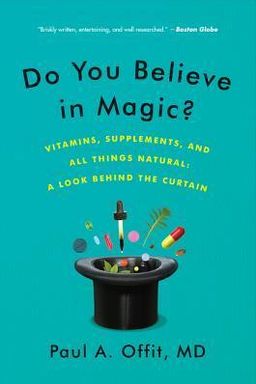
What happens when hope turns into harm? In Do You Believe in Magic?, physician and science advocate Paul A. Offit explores one of the most seductive—and perilous—forces shaping modern health culture: our love affair with alternative medicine. Offit contends that while many people turn to alternatives for comfort, control, and spiritual meaning, the real danger comes when charisma and emotion replace science and evidence. His guiding argument is clear: there isn’t conventional medicine and alternative medicine—there’s only medicine that works and medicine that doesn’t.
Across gripping case studies—from television doctors and celebrity wellness gurus to desperate parents and fraudulent healers—Offit shows how alternative medicine’s popularity has grown despite the harm it can inflict. You’ll explore why Americans distrust mainstream medicine, how charismatic figures like Mehmet Oz, Jenny McCarthy, and Suzanne Somers turned personal stories into national movements, and how politics and profit gutted the FDA’s power to protect consumers from dangerous supplements. He also examines the placebo effect, offering a nuanced look at how belief itself can heal—but only within ethical limits.
The Allure of a Broken System
Offit begins by acknowledging the failures of modern medicine—its clinical coldness, rushed appointments, and pharmaceutical overreach. For many frustrated patients, alternative healers promise the opposite: warmth, attention, and natural remedies. When mainstream practitioners appear distant or dismissive, charismatic healers step in to fill an emotional void. They sell not only treatments but also identity and meaning.
Yet this appeal comes at a cost. Offit reveals that unregulated supplements and therapies are not nearly as safe as their marketing suggests. Vitamins and herbal products sold under the label of “health freedom” cause thousands of hospitalizations, liver injuries, and deaths every year—harms largely hidden from public view because of weak federal oversight and billion-dollar lobbying. Consumers, ironically, have fought for the right not to know what’s in the products they buy.
Stories That Expose the Human Cost
Offit structures his book around vivid modern parables. He traces the story of seven-year-old Joey Hofbauer, whose parents rejected lifesaving chemotherapy for laetrile, a “natural” treatment made from apricot pits. Joey’s death in 1980 foreshadowed the tragedy of countless families misled by pseudoscience. He also chronicles Steve McQueen’s final months spent on coffee enemas and megavitamins, as well as recent stories like Jenny McCarthy’s crusade against vaccines—an advocacy that led to outbreaks of preventable diseases.
These stories show that the search for hope can be fatal when believers abandon scientific medicine. Offit doesn’t mock their grief; he empathizes with the desire to heal loved ones and escape a system that often feels cold. But he argues that empathy without evidence easily turns into exploitation. His portraits of charismatic healers like Stanislaw Burzynski, Rashid Buttar, and Mehmet Oz illustrate how charm and conviction can disguise dangerous delusion.
Why This Matters
What’s at stake isn’t just misinformation—it’s the erosion of scientific literacy and public trust. When people dismiss data as optional or equate belief with proof, medicine becomes religion. Offit’s deeper project is to restore respect for science while recognizing the human emotions that drive denialism. He insists that the antidote isn’t condescension but education: teaching people to evaluate claims through rigorous, transparent studies rather than celebrity endorsements or anecdotal miracles.
Ultimately, Offit challenges you to rethink what “healing” really means. Is it comfort at any cost? Or is it honesty about what works? He closes with a parable about Albert Schweitzer and a witch doctor in Gabon—two very different healers who both understood that every patient carries a doctor inside them. The challenge, Offit writes, is ensuring that this inner healer works alongside, not against, real medicine. His book is a warning and a hope: that healing and truth don’t have to be opposites.