
Idea 1
The Power of a Career Savings Account
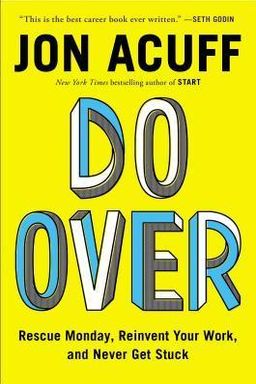
What would it feel like to wake up on a Monday genuinely excited for work? To know that even if your company disappeared tomorrow, your career wouldn’t collapse with it? In Do Over, Jon Acuff argues that true career security—and joy—comes not from a single job, company, or title, but from the investments you make in yourself. His concept of a Career Savings Account (CSA) is the cornerstone of reinventing your work and protecting your future: a personal vault made up of relationships, skills, character, and hustle.
Acuff contends that anyone, at any stage of life, can have what he calls a “Do Over”: a chance to hit reset on your career before you hit a crisis. By strategically building your Career Savings Account, you’ll be ready for any of the four major career transitions every professional faces—Ceilings, Bumps, Jumps, and Opportunities. With humor, honesty, and practicality, Acuff dismantles the fear that surrounds career change and replaces it with a toolkit for long-term resilience.
The Four Career Transitions
Acuff’s chart of the four career transitions is deceptively simple but profoundly helpful:
- Career Ceilings: When you reach the limit of what your current role offers, skills will be the hammer that breaks through the ceiling.
- Career Jumps: Voluntary, positive transitions—like starting a business or changing industries—require rock-solid character to handle chaos and risk.
- Career Opportunities: Unexpected good surprises that fall into your lap—those depend on hustle, your ability to act quickly and make the most of luck.
- Career Bumps: Layoffs, failures, or setbacks that happen to you; in those moments, relationships become your safety net.
You can’t control which transition will hit next, but your CSA ensures you’re prepared for all four. In Acuff’s view, careers aren’t built—they’re continuously rebuilt.
The Four Investments that Build a Strong CSA
The formula Acuff presents—(Relationships + Skills + Character) × Hustle = Career Savings Account—is the foundation of his guidance. He devotes much of the book to explaining how each investment reinforces the others:
- Relationships get you the first gig. They’re the “who you know.” Connection, rather than networking sleaze, drives real opportunity.
- Skills get you the second gig. They’re the “what you do.” Developing new skills and sharpening old ones keeps you employable.
- Character is the “who you are.” It maintains your reputation and helps you handle success without arrogance or greed.
- Hustle multiplies everything else. Without hard work, none of the other three matter—your potential stays theoretical.
These aren’t theoretical qualities; Acuff infuses them with humor and realism. Relationships aren’t about “networking events and business cards” but about staying in touch with people who trust and respect you. Skills aren’t degrees—they’re learnable abilities like communication, adaptability, and even time management. Character requires long-term care, like tending an orchard. And hustle, while critical, must be practiced with balance and awareness to avoid burnout.
Why This Matters Now
In an economy where layoffs, automation, and job-hopping are the norm, Acuff’s framework hits home. “People were taught to work jobs, not build careers,” he writes—a provocative reminder that we often plan for college and retirement but not for the 40 years in between. A CSA is a lifelong safety net that lets you adapt when the unexpected happens. If you’re stuck, disengaged, or afraid to change, this book argues that the solution isn’t a miraculous job post—it’s building a stronger you.
“Good job, bad job, dream job, no job—this is true: you control more than you think.”
Acuff combines research, storytelling, and wit—mixing neuroscience about resilience with anecdotes about burnt popcorn coworkers and balloon artists—to make serious career advice fun and readable. His message is clear: no career is permanent, but with the right mix of relationships, skills, character, and hustle, you can thrive regardless of what happens next. It’s never too late to call a Do Over.