
Idea 1
The Fragile Balance Between Healing and Harming
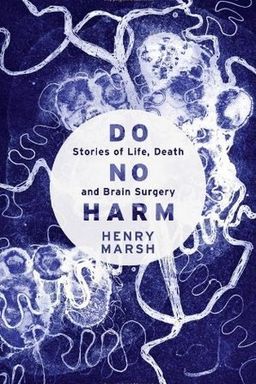
What does it mean to cause harm in order to heal? In Do No Harm, renowned British neurosurgeon Henry Marsh offers a profound and unflinching meditation on the paradoxical nature of medicine — a field built on compassion, skill, and science, yet shadowed by fallibility, failure, and death. Marsh argues that every doctor inevitably must confront the tension between power and humility, control and chance, purpose and regret. Through candid memoir and philosophical reflection, he invites you into the mind of a man who holds other people’s lives in his hands — and knows, better than most, just how fragile those hands can be.
Across decades of operating on the human brain, Marsh explores not just the technical intricacies of neurosurgery but the emotional and moral costs of trying to help others. Each story — from patients who survive against the odds to those irrevocably harmed by misjudgment — illuminates the radical uncertainty inherent in medicine. For Marsh, healing is never guaranteed, and every success is haunted by ghosts of past mistakes. As he writes, every surgeon carries a cemetery within them — the memory of those they could not save.
Medicine’s Existential Paradox
At the heart of the book is a simple yet devastating question: how do you live with the power to save or destroy another person’s life? Marsh contends that no amount of training can ever prepare a doctor for the immense moral weight of that responsibility. Neurosurgery, he notes, is a discipline where mistakes are irreversible and the difference between success and tragedy can be a fraction of a millimeter. As he performs operations to remove tumors or repair hemorrhages, he is acutely aware that one slip of the hand can transform a patient from vibrant adult to vegetative survivor. The surgeon must act decisively and calmly, even when inwardly filled with dread.
Yet Marsh insists that error is inevitable. In one early chapter, he reflects on a patient who awoke paralyzed after what seemed a routine procedure. He describes visiting her afterward, feeling like an accused criminal facing the victim. She gestures to her lifeless limbs and says, “I trusted you before the operation. Why should I trust you now?” The line captures the existential core of the book — every act of medical intervention is an act of faith, both for patient and doctor, and sometimes that faith is betrayed by fate or human frailty.
A Human, Not Heroic, Doctor
Though Marsh is often hailed as one of Britain’s most skilled neurosurgeons, he rejects the myth of the infallible medical hero. Instead, he reveals medicine as a craft — imperfect, intuitive, messy, and deeply human. His writing dismantles the idea that surgeons are clinical masters of fate, showing instead how emotion, fatigue, bureaucracy, and chance shape every decision. “It’s not about being a genius,” he suggests, “it’s about being able to make decisions under unbearable uncertainty.”
As a contrast to the archetypal detached surgeon, Marsh confesses to fear, anger, guilt, and moral confusion. He lashes out at hospital administrators for prioritizing targets over patients. He agonizes over whether to operate on terminal cancer patients when success may simply prolong suffering. And he grapples with the painful reality that compassion cannot always coexist with control. Like Atul Gawande’s Being Mortal or Oliver Sacks’s Awakenings, Marsh’s reflections move medicine from procedure to humanity — from science to philosophy.
Why It Matters to You
You don’t have to be a doctor to feel the tension Marsh describes. His moral landscape — risk, responsibility, and the limits of mastery — applies to anyone who makes choices with permanent consequences: parents, teachers, leaders. His stories remind you that perfection is a fantasy, and that honesty about failure is not weakness but wisdom. The “do no harm” ideal becomes less a literal commandment than a moral compass: you can strive for good while knowing you will sometimes fail. The challenge, Marsh argues, is to keep our humanity intact despite — and even because of — those failures.
In the following key ideas, we’ll explore how Marsh learns to navigate uncertainty (“The Anatomy of Fallibility”), why emotion and ego are both essential and dangerous (“Hubris and Humility in Surgery”), and how compassion complicates decision-making (“The Pain of Caring”). We’ll delve into his encounters with death and forgiveness (“Witnessing Mortality”), his critique of modern healthcare (“The Bureaucracy of Suffering”), and the spiritual insights he draws from cutting into the seat of consciousness itself (“The Brain as Self”). By the end, Marsh’s message becomes both humbling and liberating: to do no harm is impossible, but to face that impossibility with courage and love is what makes us truly human.