
Idea 1
The New Science of Real Toughness
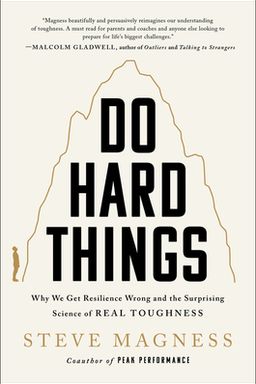
What does it mean to be truly tough? For decades, toughness was equated with pain tolerance, suppression, and domination—images of coaches screaming, soldiers enduring misery, and parents issuing harsh ultimatums. In Do Hard Things, Steve Magness argues that this old model of toughness is broken. It produces people who depend on fear and coercion rather than those who can stay composed and deliberate under stress.
Beyond the myth of brute strength
Magness dismantles the “fake toughness” script—what he calls demandingness without responsiveness. This old model relies on intimidation, humiliation, and control, as seen in figures like basketball coach Bobby Knight or the brutal “Junction Boys” football camp. These cultures reward survival, not growth, and confuse fear-based submission with mental strength. Their results are fleeting and often tragic, as seen in conditioning deaths and burnout.
In contrast, “real toughness” is not about stifling emotion or pushing through blindly. It’s about mastering your internal world: recognizing distress signals, appraising challenges accurately, building inner confidence, and acting with purpose. True toughness is a skill, not a personality type. It’s the ability to face discomfort, think clearly, and make choices aligned with your values under pressure.
The skill-based model of resilience
Magness draws from psychology, neuroscience, and coaching science to redefine toughness as a trainable series of inner skills. Using examples from elite athletes, Navy SERE training, mindfulness research, and leadership studies, he reframes toughness as self-regulated engagement. The book’s central claim: you build toughness the same way you build any high-performance capacity—by teaching skills first, then applying them under graded stress.
These inner skills include accurate appraisal (seeing discomfort clearly), emotional regulation (listening without overreacting), flexible coping (choosing the right strategy for the moment), and autonomy (acting from purpose rather than fear). They help you stay in control instead of collapsing or exploding when life gets hard.
Science meets real-world application
Drawing on cognitive and affective neuroscience, Magness shows that toughness starts with perception. Your appraisal—how you interpret stress—determines whether your body mobilizes energy or tightens defensively. When you appraise a situation as a challenge, adrenaline fuels focus and approach. When you see it as a threat, cortisol drives protection and avoidance. This simple shift separates those who perform well from those who panic.
He also shows why connection and purpose matter. Modern toughness isn’t solitary; it’s social. Resilient people and teams satisfy psychological needs for autonomy, competence, and belonging. Supportive environments engage the brain’s prefrontal circuits, enabling control under duress. Authoritarian environments shut them down, creating learned helplessness.
A roadmap for practicing toughness
The book unfolds as a toolkit for this redefined toughness. First, you learn to read your body and emotions as messengers, not dictators. Then, you train your inner voice, cultivate calm space between feeling and action, and practice responding instead of reacting. You build inner confidence from mastery, not praise, and you ground action in choice and meaning. Flexibility—of thought, focus, and strategy—becomes the hallmark of the truly tough.
Magness connects these ideas to practical examples: from elite marathoners who toggle between intense focus and dissociation mid-race, to teachers who give children moments to reset instead of punishing them, to leaders like Steve Kerr and Gregg Popovich who empower teams through autonomy and trust. Across domains, the evidence points one way: the strongest people are those who stay aware, adaptable, and anchored in purpose.
Core Shift
Toughness isn’t about how much pain you can take. It’s about how clearly you can see reality and still choose wisely.
By the end of Magness’s model, toughness looks less like a clenched jaw and more like calm eyes. It’s less “don’t feel” and more “feel fully, then choose.” It’s not shouting louder—it’s listening better, deciding better, and living better under pressure. That is what makes real toughness durable.