
Idea 1
Disruptive Branding: Turning Change into Opportunity
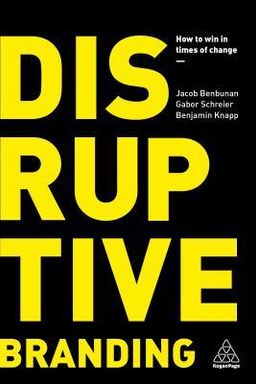
How can you make your brand thrive when everything around it is changing? In Disruptive Branding: How to Win in Times of Change, Jacob Benbunan, Gabor Schreier, and Benjamin Knapp argue that brands must transform how they think about disruption—not as a threat to manage, but as an active mindset to cultivate. They contend that becoming a disruptive brand means embedding creativity, agility, and innovation into every layer of your business—from how you define purpose to how you design, communicate, and serve customers.
This book serves as a roadmap for navigating the realities of business transformation in what the authors call the Fourth Industrial Revolution. They define brands as either “the disruptors or the disrupted,” showing that survival depends on your ability to think differently about who you are and how you behave. Rather than protecting against disruption, the authors urge you to embrace it as a continuous process of reinvention—one that unifies brand strategy, design, culture, and experience.
Disruption as a Mindset, Not an Event
The book begins by reframing disruption as a creative force that has always propelled human progress. From Joseph Schumpeter’s “creative destruction” to Clayton Christensen’s “disruptive innovation,” the authors emphasize that change is not new—it’s constant. What’s new is the pace. The rise of the internet, social media, and global connectivity means that consumers are informed, vocal, and empowered like never before. This environment demands that brands evolve from static symbols of consistency into dynamic systems capable of learning and adapting.
Benbunan and his colleagues show that disruption is not reserved for startups; it’s an attitude. Legacy companies like Apple, Netflix, and SpaceX succeeded because they questioned orthodoxies while staying true to their values. Apple didn’t invent the smartphone, Netflix didn’t invent streaming, and SpaceX didn’t invent rockets—but by rethinking the user experience, they redefined their industries. In each case, the brand’s purpose—simplicity, accessibility, ambition—guided innovation.
From Protectionism to Participation
Traditional corporate thinking treats disruption as something to defend against, often by building moats around existing business models. The authors challenge this fear-based approach, arguing that brands must instead participate actively in change. To do so, they need internal cultures that reward curiosity and flexibility. Every employee, not just the marketing team, becomes responsible for sensing shifts in the market and aligning daily decisions with the brand’s purpose.
Disruptive branding is therefore both a mindset and a practice. It calls for “brand as a lens” through which organizations examine all actions—strategy, design, products, and behavior—to ensure they deliver the promise consistently. The authors’ consulting experience with brands like Vueling, the V&A Museum, and A1 Telekom Austria illustrates how organizations can embed this attitude through every touchpoint, from customer interfaces to internal culture.
A Framework for Managing Change
The book unfolds through eleven chapters that mirror the lifecycle of a brand: understanding change, defining purpose, making strategy visible through design, engaging employees, delivering experiences, and sustaining long-term relevance. Each section provides conceptual grounding paired with concrete examples and case studies. You’ll learn how convergence between digital and physical worlds reshapes expectations, why brand strategy must start with a clear “why,” and how design functions as strategy made tangible.
Later chapters delve into measurement and continuous reinvention, making the case that disruptive branding never ends—it’s a living process of learning and improvement. Brands like Nintendo, Airbnb, and LEGO demonstrate how to evolve without losing authenticity: they merge physical and digital experiences, rethink customers as co-creators (“prosumers”), and build meaning through purpose-driven design.
Why It Matters Now
In an age where half the companies listed on the Dow Jones Index in 1995 have disappeared, the authors argue that embracing disruption is not optional—it’s existential. They insist that brand is the anchor in this volatile environment, the connective tissue between vision and delivery. When treated as more than logos or marketing, brand becomes a compass for every decision. Disruptive Branding therefore offers more than a business guide—it’s a manifesto for the future of organizational identity: authentic, relevant, and constantly evolving.