
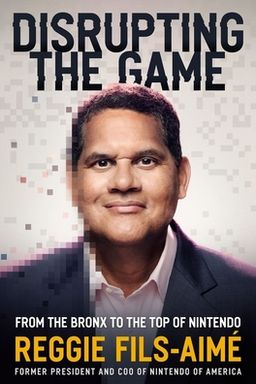
Disrupting the Game cover

Disrupting the Game

by Reggie Fils-Aime

Disrupting the Game chronicles Reggie Fils-Aime''s inspiring ascent from the Bronx to Nintendo''s presidency. Discover invaluable lessons in leadership, career development, and embracing change, as Reggie''s journey reveals how to navigate setbacks and seize unexpected opportunities.

Disrupting the Game: Reinventing Leadership Through Courage and Curiosity

What does it really mean to disrupt—not just products or industries, but yourself? In Disrupting the Game, Reggie Fils-Aimé asks you to confront that question through his remarkable life story. From a humble Bronx tenement to the presidency of Nintendo of America, Fils-Aimé demonstrates how bold curiosity, principled leadership, and strategic courage can transform obstacles into opportunities. His book is both memoir and roadmap—a guide to breaking convention and building a legacy based on authenticity and heart.

From Bronx Beginnings to Global Leadership

Reggie’s story begins in the Bronx where he learned, as the son of Haitian immigrants, that life demands grit and determination. These early lessons from his parents and grandparents—people who confronted dictators and corruption back in Haiti—shaped his lifelong mantra: life is hard, dig deep. He refused to let circumstances define him, and through discipline and academic merit, he earned a scholarship to Cornell University. There, he cultivated a habit of relentless curiosity, exploring subjects far beyond his business major. This hunger for knowledge became a lifelong asset, defining his leadership style.

Capability Meets Opportunity

Borrowing from Seneca’s notion of luck—“preparation meeting opportunity”—Fils-Aimé argues that success rarely comes from chance. You create opportunity by investing in your capabilities and daring to challenge conventions when those opportunities arrive. Whether it was his pivot from ROTC to corporate management or his audacious career transitions—from Procter & Gamble’s precise memo culture to leading innovation at Nintendo—every decision reflected this balance of preparation and risk-taking.

Disruption as a Life Philosophy

At its heart, Disrupting the Game argues that disruption isn’t destruction—it’s renewal. Fils-Aimé frames it as a form of creative evolution that requires courage, self-awareness, and a deep respect for others’ perspectives. True disruption doesn’t mean reckless change; it demands empathetic leadership and informed risk-taking. He applies this lens at every stage—from rescuing brands like Pizza Hut’s faltering business to transforming a declining Nintendo into a global entertainment powerhouse. His method combines analytical rigor (“always be clear on the objective”) with emotional intelligence (“understand people before you push your ideas”).

The Human Side of Leadership

Through vivid stories of mentorship, loss, and breakthrough, the book centers on human connection as the foundation of effective leadership. The chapter about Satoru Iwata’s passing—a moment of grief and renewal—reveals that authentic relationships often fuel professional excellence. Fils-Aimé insists that leaders must balance conviction with compassion, building trust even in disagreement. In his words: “There is a fine balance between staying true to your beliefs and just being stubborn.”

Why This Matters

In a world obsessed with speed, Fils-Aimé reminds you that sustainable disruption begins with reflection. His journey offers timeless lessons for anyone navigating change—from young professionals seeking direction to seasoned leaders confronting stagnation. You’ll learn how curiosity fuels innovation, how courage reshapes industries, and how values sustain authenticity. Most importantly, he teaches that disruption isn’t just about what you do—it’s about who you become as you do it. In that sense, Disrupting the Game isn’t a manual for leadership—it’s a manifesto for living intentionally, boldly, and with integrity.


From Bronx Hustle to Cornell Curiosity

Reggie Fils-Aimé describes his formative years as the crucible that forged his drive. Raised in a gritty Bronx tenement by Haitian immigrant parents, he learned early that life requires resilience. His mother’s fearless confrontation with a group of teenage robbers wasn’t just a childhood memory—it was a moral compass: always do what’s right, no matter the cost. These lessons in courage and accountability became the foundation of his leadership philosophy.

Escaping Limitation Through Learning

Moving from the Bronx to suburban Brentwood, Long Island, transformed Reggie’s world. For the first time, he attended schools where academic excellence was rewarded. In this new environment, he discovered competition as motivation, playing soccer, basketball, and track while maintaining stellar grades. His success wasn’t effortless—it was engineered through hard work. He credits his curiosity and willingness to explore diverse subjects for his ability to adapt to any challenge later in life. (“It wasn’t just knowledge for knowledge’s sake,” he writes, “but knowledge I could use as a leader and a disrupter.”)

The Lessons of Cornell

At Cornell University, Reggie encountered intellectual freedom. As a scholarship student, he meticulously planned his four-year academic journey—overscheduling himself with dozens of courses ranging from finance to mythology. Professor Bruce Anderson challenged him on practicality, but his relentless curiosity became the prototype for his executive thinking. He learned the art of goal clarity and decision methodology: Define the objective, test alternatives, and execute decisively. This Cornell habit of mapping purpose over passion would later guide his every major corporate move, from product launches to leadership decisions.

Defining Opportunity

Reggie’s pivot from Air Force ROTC to brand management at Procter & Gamble illustrates his central message: be open to alternatives. Poor eyesight derailed his planned military career, but instead of despair, he saw divergence as opportunity. That single decision reshaped his life trajectory and embodied Seneca’s wisdom that luck is “a matter of preparation meeting opportunity.” His early years remind you that success starts not with resources, but with resourcefulness.

Why It Matters

You can’t control where you start, Fils-Aimé teaches—but you can control what you learn and how you use it. By combining intellectual hunger with moral conviction, he turned a story of survival into a blueprint for growth. Every risky move—from ROTC exit to Cornell overcommitment—was an act of self-engineered transformation. For you, his journey is a reminder that determination and curiosity aren’t opposites—they’re complementary forces that help you rise above your circumstances and build a purposeful life.


Corporate Culture and the Art of Fit

When Fils-Aimé entered Procter & Gamble, he encountered a radically different world—one made of one-page memos, structured hierarchies, and the principle of up or out. Every idea had to fit on a single page, every career was both opportunity and test. For him, P&G became a training ground for mental precision, clarity, and the skill of cultural adaptation. Understanding organizational DNA, he realized, is essential to disruptive success.

Writing for Discipline and Thought

The one-page memo wasn’t just a communication tool—it was an intellectual forge. Reggie learned to articulate purpose, produce structured arguments in threes, and anticipate objections before they were raised. The process demanded clarity of thinking and cultivated persuasive leadership. (Peter Drucker’s “effective executive” model parallels this discipline: clarity, brevity, and accountability drive influence.) For Reggie, perfecting that page meant mastering his thought process—a skill that powered his later success at Nintendo and beyond.

Finding Fit vs. Fighting Culture

P&G also taught him that corporate culture defines advancement. The five “What Counts” behaviors—superb thinking skills, personal initiative, consumer-led innovation, advertising creativity, and team development—showed what success looked like. But culture could also be limiting. He learned that leaders must consciously evolve it rather than blindly accept it. This insight later guided his overhaul of Nintendo of America, where he transformed the company’s siloed divisions into a unified, collaborative force.

Mentorship and Diversity of Perspective

Within P&G’s system, Reggie met mentors who helped him navigate cultural nuance. Bob Gill, his pivotal guide, encouraged him to be patient and strategic—reminding him that success in rigid systems often requires timing, not rebellion. Later, when Reggie hired Dina Howell—a nontraditional candidate without an MBA—he recognized how diversity of experience fuels better innovation. True disruption, he discovered, grows from diversity combined with inclusion: welcoming different perspectives and enabling them to shine.

Takeaway

Before you can disrupt, you must first understand what you are disrupting. Fils-Aimé’s immersion at P&G taught him to decode organizational values, distinguish between fit and friction, and communicate ideas with surgical clarity. For anyone seeking to lead change, his lesson is timeless: learn the rules deeply—so you can break them intelligently.


Learning to Lead Through Courageous Mistakes

Early leadership tests, particularly at Procter & Gamble and Pizza Hut, taught Reggie that progress often begins with failure. His unauthorized early launch of a Crisco ad campaign cost him politically—but his innovative instincts resulted in record profits. When the brand still punished him for procedural disobedience, he realized that courage means owning mistakes, learning from them, and moving forward stronger.

The Courage to Act

Reggie’s decision to air Crisco ads early was based on sound data. He saw opportunity where others saw rules, and while the move violated authority boundaries, it proved his ability to drive momentum. The aftermath—threats of termination and loss of political capital—became a transformative moment. He learned that taking responsibility, not excuses, earns true professional respect. “We never learn without mistakes,” he writes, “But we must own them ourselves.”

Pivoting at Pizza Hut

At Pizza Hut, he brought this lesson into practice by mastering persuasion and collaboration. His West Coast advertising push for delivery and carryout pizzas turned regional chaos into cohesive strategy. By enrolling skeptical franchisees using data and empathy, Reggie demonstrated what Harvard’s John Kotter calls “leadership through enrollment”—moving people toward innovation rather than forcing compliance. His triumph with Bigfoot Pizza later revealed the same truth: sometimes you must kill your own success to save the brand’s integrity.

The Long-Term View

When Bigfoot Pizza, despite breaking revenue records, began harming Pizza Hut’s quality reputation, Reggie argued to shut it down. His decision to end a billion-dollar success taught that leaders must think long-term, even when short-term wins feel good. True loyalty lies not to immediate profits but to the enduring health of the brand and consumer trust.

Lesson for You

Leadership isn’t the absence of mistakes—it’s what you do with them. Fils-Aimé’s evolution from “dead man walking” at P&G to “transformative change-maker” at Pizza Hut reminds you that courageous decisions forge credibility. When you act boldly, learn humbly, and pivot decisively, failure ceases to define you—it refines you.


Leading with Empathy at Nintendo

When Reggie joined Nintendo in 2003, the company was faltering. Sony’s PlayStation 2 dominated, Microsoft’s Xbox loomed large, and Nintendo’s GameCube lagged far behind. Yet, Reggie saw potential in Nintendo’s craftsmanship and emotional connection with players. His mission was audacious: to revitalize a legendary brand by transforming its leadership culture from cautious hierarchy to fearless creativity.

Learning Kyoto Craftsmanship

In his first visit to Kyoto, Fils-Aimé discovered the essence of Nintendo’s “Kyoto craftsmanship”—a devotion to precision, artistry, and authenticity rooted in centuries-old Japanese tradition. Meeting Shigeru Miyamoto and experiencing the prototype of the Nintendo DS ignited his conviction that innovation begins with emotion: great games should feel crafted, not merely coded. This reverence for quality became the bridge between his Western business acumen and Nintendo’s artisanal soul.

Empathy as Strategy

To break through Nintendo’s internal silos, Reggie built alliances with long-time veterans like Don James and Mike Fukuda. His tactic was simple but revolutionary—listen first, question second. By humanizing himself through stories (like joking about his son’s photo submission to Nintendo Power), he showed that authority doesn’t need intimidation. Leadership, he insists, means understanding others so deeply that collaboration feels natural.

Process and Partnership

Introducing the RACI model—defining who recommends, approves, consults, and informs—he brought structure to Nintendo’s chaotic advertising cycle. This collaboration fostered world-class campaigns for products like the Game Boy Advance SP and built trust between product development and marketing. Through these processes, Reggie made empathy a measurable business skill: transparent communication, shared accountability, and recognition (symbolized by his famed “Reggie Pins”) became hallmarks of Nintendo’s modern culture.

Takeaway

Disruption without empathy is rebellion; disruption with empathy is leadership. Fils-Aimé’s transformation at Nintendo proves that listening and authenticity don’t weaken authority—they amplify it. In your own work, adopting this approach means creating systems that honor people’s voices while driving excellence. That’s how you turn craft into culture and culture into brand power.


Courageous Decisions and Ethical Leadership

Reggie’s leadership philosophy crystallized when he became president of Nintendo of America in 2006. From advocating Wii Sports as an inclusive pack-in game to managing cross-cultural friction between Japan and the West, each decision demanded courage, conviction, and ethics. He teaches that great leaders don’t seek comfort—they seek clarity and act decisively even when it risks reputation.

The Wii Sports Gamble

Persuading Satoru Iwata and Shigeru Miyamoto to include Wii Sports free with the Wii console was more than a marketing choice—it was a philosophical stand. “Nintendo never gives software away,” Iwata reminded him. Reggie countered with data and insight into Western consumer psychology. His courage paid off: Wii Sports became a universal hit, showing that generosity and accessibility could fuel innovation. This bold move disrupted gaming demographics, inviting families, seniors, and non-gamers through intuitive play.

Cross-Cultural Leadership

Fils-Aimé’s partnership with Iwata deepened through moral authenticity rather than hierarchy. Their dinner in Kyoto marked a transformation from boss-protégé to friends. Iwata’s advice—listen before you push—shaped Reggie’s mature philosophy: leaders must blend conviction with humility. It’s a lesson resonant with Jim Collins’s idea of “Level 5 Leadership,” where humility and fierce resolve coexist.

Defining Culture Through Accountability

As president, Reggie instituted weekly executive meetings to break silos and foster company-wide alignment. He clarified behavioral expectations through NOA Competencies across five dimensions—thought, results, self, people, and leadership. This accountability matrix linked ethics to performance: underperformers were coached or released, not ignored. For Reggie, compassion didn’t mean complacency; it meant care through candor.

Lesson for You

Leadership isn’t about being liked—it’s about doing right. Fils-Aimé shows that courageous decisions build credibility and culture simultaneously. When you act from integrity and conviction, others follow—not because they must, but because they believe.


Fail Forward: From Wii U to Nintendo Switch

Between 2012 and 2017, Fils-Aimé faced Nintendo’s biggest setback—the underperforming Wii U—and its greatest triumph—the Nintendo Switch. The period exemplified his mantra of fail forward: diagnosing mistakes, learning fast, and pivoting toward innovation. Like Thomas Edison’s invention process or Andy Grove’s survival principles at Intel, this era showed that resilience and strategic clarity are inseparable.

Diagnosing the Failure

Wii U’s poor performance stemmed from confusion, weak game lineup, and constrained technology. Reggie tackled these issues head-on, stabilizing retailer relationships and lobbying for new marketing resources. His insight—that players loved shifting play between TV and handheld screens but hated short-range limitations—inspired the conceptual leap that birthed Nintendo Switch. He didn’t abandon failure; he mined it for data.

Strategic Recovery

Identifying structural weaknesses, Fils-Aimé pushed Nintendo to adopt global development tools like Unity and Unreal Engine, breaking from its insular culture. These moves attracted independent developers and diversified Nintendo’s creative ecosystem. It was a classic disruptive pivot—open the gates, empower creators, and rebuild momentum from inclusion.

Executing Excellence

The Switch’s design philosophy—play anywhere, anytime—embodied Reggie’s resilience. Tactical brilliance rounded the vision: a $299 price point, strategic media moments (like unveiling on The Tonight Show with Jimmy Fallon), and perfect software timing with The Legend of Zelda: Breath of the Wild. The outcome: record-breaking sales and unprecedented brand revival.

Takeaway

Every failure is raw material for innovation. Fils-Aimé’s rebound from Wii U proves that resilience isn’t passive endurance—it’s active adaptation. In your own career, treat setback as strategy: analyze, simplify, and pivot until success becomes inevitable.


Legacy and Life Principles for the Next Generation

After fifteen transformative years, Reggie retired in 2019 with Nintendo on top of the gaming world. But retirement didn’t mean retreat—it meant reflection. His final chapters distill decades of leadership into five life principles designed to empower the next generation: ownership, grit, openness, courage, and joy.

Own Your Journey

Reggie’s first rule: What happens to you is up to you. Having grown up surrounded by limitation, he learned that responsibility is liberation. Whether confronting biased bosses or career uncertainty, personal ownership transforms circumstance into choice. It’s your roadmap to autonomy.

Dig Deep and Embrace Fear

Life is hard, he reminds you—but difficulty isn’t a signal to stop; it’s the call to dig deeper. His own fear of public speaking became a motivator, leading him to E3 stages and global fame as “The Regginator.” Courage, he argues, comes not from suppressing fear but from embracing it until it transforms into capability.

Be Open and Have Fun

Reggie’s openness—to alternative paths, new ideas, and unconventional candidates—defined his career. It’s the engine of creativity. His advice to you: Stay curious, live in the moment, and remember to enjoy the journey. True innovation thrives where joy and curiosity meet.

Passing the Torch

His post-retirement roles—mentoring at Cornell, serving on boards, and guiding nonprofits serving Bronx youth—complete his mission “to inspire and empower the next generation of leaders.” His closing insight: once a disrupter, always a disrupter. Keep shaking the world—but do it with integrity and heart.

Final Message

In Fils-Aimé’s universe, disruption is not rebellion—it’s responsibility. Leading, learning, and living are intertwined acts of creation. For you, his legacy translates to this: lead with purpose, risk with courage, and always disrupt to make something better.

Dig Deeper

Get personalized prompts to apply these lessons to your life and deepen your understanding.

Go Deeper

Get the Full Experience

Download Insight Books for AI-powered reflections, quizzes, and more.