
Idea 1
Inside the Startup Mirage: Culture, Hype, and Exploitation in Tech
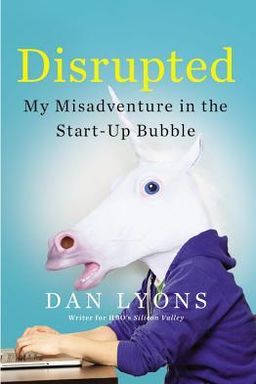
What happens when a veteran journalist walks into the heart of the modern tech dream—and discovers that the dream is hollow? In Disrupted: My Misadventure in the Start-Up Bubble, Dan Lyons tells the darkly funny and disturbing story of what he found when he joined HubSpot, a Boston software startup hailed as one of America’s most innovative tech companies. Lyons argues that beneath the goofy culture, orange hoodies, and exuberant talk of changing the world, startups like HubSpot represent a new form of corporate exploitation—one that hides under the bright banner of fun and freedom while quietly burning out workers, pursuing reckless growth, and manipulating a naïve workforce fueled by hype instead of purpose.
The book offers both a personal memoir and a trenchant critique of startup culture during the second great tech bubble of the 2010s. Lyons explores what happens when the old rules of work—experience, professionalism, and loyalty—collide with an economy driven by youth, marketing jargon, and endless self-promotion. Through HubSpot’s obsession with being “awesome,” his encounters with its cult-like enthusiasm and its jargon-heavy 'Culture Code,' and his eventual humiliation at the hands of insecure twenty-something managers, Lyons exposes how the future of work is being built not on innovation but on illusion.
From Journalist to 'Content Creator'
When Lyons lost his job at Newsweek at 51, he thought joining a tech startup would be a second act—a chance to reinvent himself in an industry thriving amid America’s fading print economy. Instead, entering HubSpot was like entering another planet. The company’s candy walls, beanbag chairs, Nerf-gun battles, and constant pep talks about 'delightion' (their term for delighting customers) presented themselves as a utopian vision of work. But soon Lyons realized that this “awesome” culture masked insecurity, inexperience, and fear. Employees were mostly in their twenties, parroting slogans and posting exclamation-heavy praise emails, while executives acted more like motivational cult leaders than businesspeople.
HubSpot was less a tech innovator than a “hype machine,” selling marketing software with aggressive telesales tactics and cultish fervor. It promised clients—and employees—that technology could make business lovable. But, as Lyons shows, it was built on endless jargon, vanity conferences, and something deeply unlovable: cheap labor and relentless churn.
The Silicon Valley Cult of Youth
Lyons’s story also reflects a larger theme—the brutal ageism and superficial meritocracy driving the modern tech economy. HubSpot’s CEO Brian Halligan openly bragged in The New York Times that “gray hair and experience are overrated,” revealing an industry where youth is lionized and experience treated like disease. For Lyons, then 52, the gap was more than generational—it was epistemological. He valued skepticism and precision; HubSpot valued cheerfulness and jargon. He believed in journalism; they believed in “storytelling” for lead generation. That tension fuels much of the book’s dark comedy and its sorrow: the notion that America’s most celebrated “innovations” rely on a workforce that equates enthusiasm with competence.
Lyons exposes how this fetish for youth isn’t just a cultural preference but a business model. As he reveals, tech startups hire young workers not only for their supposed creativity but because they’re cheap and easier to exploit. Perks like free beer and candy walls keep morale high while wages and job security remain low. Training programs, personality tests, and buzzword-filled meetings aren’t paths to empowerment—they’re mechanisms of control designed to ensure compliance and prevent questioning. In this “New Work,” employees are replaceable widgets in an HR-friendly machine disguised as a family, one where “graduations” mean firings and “unlimited vacation” really means no paid reserves.
Hype as a Business Model
HubSpot’s self-promotion mirrors the larger dynamics of the tech bubble Lyons calls 'the second Internet mania.' He draws sharp parallels between HubSpot’s dream of 'changing the world through marketing automation' and the grandiose visions of Silicon Valley billionaires like Salesforce.com’s Marc Benioff, who turned product launches into rock concerts. Both, Lyons argues, have learned that what matters isn’t a product’s value but its story. The hype itself is the engine of capitalization. HubSpot, like many startups of its time, lost money for years but still pulled off a billion-dollar IPO through storytelling—hence its obsession with “content.” In this economy, narrative trumps numbers.
Misadventure and Revelation
Lyons’s descent through HubSpot’s layers of dysfunction—from being ignored by management, to being bullied by his manager “Trotsky,” to enduring meaningless “HEART” performance metrics—provides both comedy and sociological insight. When his coworkers throw parties and concoct projects like “Fearless Fridays,” he sees a world where infantilization has replaced professionalism. When he witnesses mass layoffs spun as “graduations,” he reveals the cruelty beneath the cheer. And when HubSpot ultimately tries to sabotage the publication of his book (triggering an FBI investigation into corporate hacking allegations), the story ends not as a workplace comedy but as a corporate thriller. What began as satire closes as exposé.
In sum, Disrupted isn’t just the memoir of one displaced journalist. It’s a diagnosis of an entire economic religion—the worship of disruption, youth, and hype—that defines the post-recession tech world. Through one absurd company, Lyons reveals how modern capitalism sells not just products but false hope, and how many of us have become, willingly, both its believers and its victims.