
Idea 1
Building a Dream: Walt Disney’s Vision and the Making of Disneyland
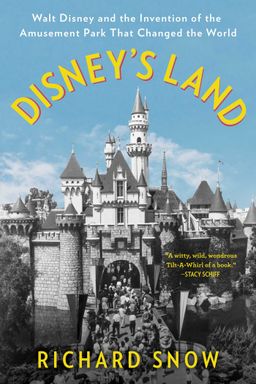
How does one person’s dream reshape culture, design, and media at once? This book argues that Disneyland was not merely an amusement park but a revolutionary act of combining storytelling, engineering, and optimism into a functioning world. Walt Disney envisioned a place where nostalgia for a moral, ordered past met enthusiasm for a bright, technological future. To make that vision real, he risked his fortune, reinvented financing, and cultivated a new creative discipline—Imagineering—that fused art and engineering. The park emerged from his conviction that the public needed reassurance and delight in what he called the "Age of Anxiety" of post‑war America.
A Vision Rooted in Memory and Modernity
Walt’s fascination with trains, small-town America, and moral storytelling guided the park’s DNA. His childhood in Marceline, Missouri, supplied the emotional blueprint for Main Street, U.S.A. The park’s design juxtaposed American nostalgia—represented by riverboats, western frontiers, and cozy shops—with a confident leap toward tomorrow through Tomorrowland’s rockets and monorail. Each element carried symbolic weight: the Rivers of America honored the adventurous past, Main Street sanctified communal decency, and Tomorrowland promised progress. These were not random amusements; they were moral and national allegories framed in painted wood and steel.
The Gamble That Built the Park
The scale of Disney’s ambition demanded new economic daring. He mortgaged life insurance, borrowed from friends, and coaxed his brother Roy into complex financing schemes. The most audacious move was his deal with ABC: by trading television content for capital, Walt created one of the earliest examples of transmedia finance. The weekly show Disneyland both paid for construction and built a nationwide audience that already loved the park before it opened. That strategic marriage of media and physical space became the model for how entertainment ecosystems work today.
Experimentation, Prototyping, and the Birth of Imagineering
The road to Anaheim began in Walt’s backyard, with the Carolwood Pacific Railroad. His miniature steam line and its locomotive, the Lilly Belle, taught crucial lessons about route design, framing views, and storytelling through physical movement. That hobby evolved into large‑scale creative practice when artist Herb Ryman drew the first complete Disneyland map—the Ryman Map—over a single feverish weekend. Together, these prototypes distilled a philosophy: design must choreograph emotion through sequence and space. At WED Enterprises (later Imagineering), Walt institutionalized this principle by assembling filmmakers, machinists, model builders, and landscape designers into one studio. They worked in three dimensions, building scale mockups of castles, trains, and streets, so every sightline and proportion served the story.
The Park as Moral and Technological Statement
Beneath the charm and artifice, Disneyland was Walt’s civic sermon. He believed Americans wanted reassurance that progress and virtue could coexist. Every architectural choice supported that hope: the castle offered beauty and innocence; the monorail and Matterhorn later embodied triumphant innovation. Even trivial decisions—like prioritizing restrooms over drinking fountains during a plumbers’ strike—reflected his practical humanism. "People can drink Pepsi-Cola, but they can’t pee in the street," he quipped, insisting dignity and comfort were moral as well as logistical necessities. Disneyland thus fused fantasy and functionality into a coherent ethics of design.
Legacy and Cultural Meaning
From its chaotic "Black Sunday" opening to its role as America’s urban ideal, Disneyland transformed how people think about experience, entertainment, and community. Critics accused it of sanitized escapism, yet urbanists such as James W. Rouse called it the best American urban design of its time. Its influence extended to planning, architecture, and media economics. Above all, it demonstrated that storytelling and engineering—when fused with moral conviction—could become a new civic art form. For Walt, Disneyland was not an ending but a perpetual experiment in optimism, always subject to plussing—his word for continuous improvement.
Core Insight
Disneyland was built to counter cynicism through design. It is both laboratory and sanctuary—a place proving that imagination, rigor, and faith in human joy can re-engineer the real world.