
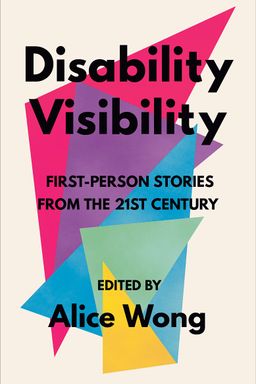
Disability Visibility cover

Disability Visibility

by Alice Wong

Disability Visibility offers a powerful collection of essays that reveal the rich, varied experiences of disabled individuals. Edited by Alice Wong, this anthology challenges stereotypes and amplifies voices often unheard, advocating for a more inclusive and equitable world.

Redefining Disability: Power, Pride, and Presence

What if disability isn’t something that needs to be “fixed”—but a different, ingenious way to live? In Disability Visibility (Adapted for Young Adults), edited by Alice Wong, this question becomes a rallying cry. The book gathers seventeen first-person stories by writers, activists, and artists, each illuminating disability as a complex, creative, and deeply human experience. Wong argues that disability is not an individual tragedy to be cured but a cultural identity to be understood, celebrated, and politically activated. The anthology reimagines disability not as limitation but as possibility, as diverse as humanity itself.

Through these accounts—from love stories and creative awakenings to systemic injustices and radical community-building—Wong curates a mosaic of lived experiences that challenge stereotypes of disabled people as inspirational tokens or medical subjects. Instead, we hear voices that speak of agency, joy, anger, identity, pride, and survival. These essays urge readers to reject pity and embrace the revolutionary notion that disabled lives are not only worth living, but essential to rethinking what humanity looks like.

Disability as Culture, Not Condition

Wong’s introduction establishes the heart of her argument: stories shape how power is distributed. Historically, representation of disabled people has been controlled by others—medical experts, journalists, or filmmakers—casting them as objects of charity or tragedy. By taking control of their narratives, disabled people reclaim storytelling as a form of activism. As Wong puts it, each essay in the anthology “shows disabled people simply being—by our own accounts.” That act of self-definition is transformative. It dismantles the binary between disabled and nondisabled, between broken and whole, between normal and abnormal.

This cultural lens aligns with what disability studies scholar Rosemarie Garland-Thomson calls “the politics of staring”—how society learns what bodies are acceptable to look at (and which are hidden). Wong’s anthology radically centers those hidden stories, insisting that visibility creates space for belonging. The title Disability Visibility itself suggests both public recognition and self-reflection: to see and be seen on one’s own terms.

A Tapestry of Experience

Each essay contributes a new thread to this tapestry. Jamison Hill’s “Love Means Never Having to Say…Anything” explores intimacy between two partners living with chronic illness, demonstrating that love transcends physical limitations. Keah Brown’s “Nurturing Black Disabled Joy” challenges the assumption that disability and happiness are incompatible. June Eric-Udorie’s “When You Are Waiting to Be Healed” unpacks internalized shame within religious spaces, while Haben Girma’s “Guide Dogs Don’t Lead Blind People. We Wander as One.” reframes interdependence—not independence—as strength. Together, these stories resist reduction; they show that the diversity of disability experience mirrors the diversity of the human condition itself.

In highlighting global and intersectional perspectives—Black, Brown, Asian, queer, immigrant, incarcerated, Deaf, blind, chronically ill—Wong builds on the framework of disability justice (a movement developed by activists like Mia Mingus, Patty Berne, and Stacey Milbern). Disability justice expands disability rights to include racial, gender, and economic justice, centering those most excluded. By adapting these essays for young readers, Wong ensures the next generation sees disability not as marginal but foundational to conversations about equity and liberation.

Visibility as Resistance

Visibility, Wong reminds us, is both a political act and a personal one. It can mean stepping onto a red carpet with a cane, as actor Selma Blair did after her multiple sclerosis diagnosis, reclaiming glamor from stigma. It can mean writing about incontinence or bipolar disorder, shattering taboos around health and vulnerability. Or it can mean testifying before the U.S. Senate, like Ricardo Thornton Sr., to prove that people once labeled “institutional cases” can thrive in the community. Visibility is also about building “crip spaces”—communities designed by and for disabled people, as writer s.e. smith describes them—where belonging replaces isolation.

This is not visibility in the superficial sense of representation alone. Wong’s contributors reveal that to be seen authentically, disabled people must resist what writer Stella Young called “inspiration porn”—stories that treat disabled people as lessons for the non-disabled. True visibility, they show, emerges when disabled people define the terms of their own existence.

Why It Matters Now

In a world shaped by systemic ableism—inequities in healthcare, education, media, and architecture—these narratives act as both mirrors and maps. They reflect injustice and map paths toward change. Wong notes that many stories here are not polished “inspirations” but expressions of ongoing struggle, creativity, and pride. They remind readers that disability is not rare or tragic; it’s a normal part of life’s spectrum.

By reading these stories, you glimpse what activist Leah Lakshmi Piepzna-Samarasinha calls “crip brilliance”—the innovation and wisdom born from surviving and thriving in a world not built for you. For readers with disabilities, the book offers validation and solidarity; for others, it’s an invitation to unlearn biases and imagine a more accessible world. Wong’s closing words make this purpose clear: The world is ours. That declaration reframes disability from a condition endured to a culture embodied—a collective force that redefines what it means to live, love, resist, and create.


Stories as Power: Alice Wong’s Philosophy

Alice Wong begins and ends this anthology with a simple but radical idea: stories are a form of power. For her, storytelling isn’t just about sharing experiences—it’s about shaping how society understands what’s normal. Growing up disabled, Wong rarely saw herself reflected in books. Libraries were her refuge, yet they also erased her. By creating the Disability Visibility Project and later this collection, Wong invited disabled people to fill that absence with their own voices.

The Oral History Roots

The book grew out of Wong’s oral history work with StoryCorps, capturing the voices of everyday disabled people across the United States. Oral storytelling—being heard in your own words—becomes a form of reclamation. Instead of experts defining disability, those who live it define themselves. This tradition echoes the civil rights movement and feminist consciousness-raising circles, where telling personal truths redefined collective identity.

Wong’s editing process mirrors this ethos. She doesn’t “speak for” anyone. Rather, she curates a chorus of voices, each distinct in tone, culture, and perspective. She includes content warnings and plain-language summaries, making the book itself an accessible space. Her editorial stance embodies the disability principle “nothing about us without us.”

Reclaiming the Narrative

In mainstream media, disability stories often follow a predictable arc: tragedy, struggle, and either miraculous cure or noble acceptance. Wong’s book rejects that formula. Her contributors are not metaphors or moral lessons; they are whole, complicated humans. Jamison Hill doesn’t seek pity when describing his love story with Shannon; Keah Brown doesn’t perform gratitude for being alive. Instead, they claim emotional complexity—desire, anger, humor, fear—qualities rarely granted to disabled characters.

This narrative reclamation has precedent in movements like Black feminism. Just as Audre Lorde wrote that “our silence will not protect us,” Wong and her contributors use storytelling as resistance to erasure. Their stories make visible what systems of power prefer to keep invisible: disabled joy, sex, family, work, and creativity. By telling your own story, you don’t just describe the world—you change it.

From Isolation to Community

Perhaps the most striking thread throughout Wong’s book is the journey from isolation to connection. Many contributors describe early moments of alienation—feeling like their bodies made them outsiders. Through storytelling, they find belonging. For example, Deaf inmate Jeremy Woody recounts his devastating isolation in a Georgia prison system without ASL interpreters. His testimony, though painful, affirms his humanity and demands systemic change. Similarly, activist Sandy Ho’s “Canfei to Canji” explores reclaiming her identity as an Asian American disabled woman despite cultural stigma, emphasizing that voice itself is freedom. Each narrative transforms personal pain into communal knowledge.

Powerful Reminder

Storytelling allows us to exist publicly in a world that tries to write us out. Wong’s anthology is a living archive of that insistence—a reminder that disabled people have always been narrators of their own lives, even when no one was listening.

By reading and sharing these stories, you participate in that archive, helping to expand what counts as normal, beautiful, and human. Wong invites readers—disabled and nondisabled alike—to see storytelling not just as empathy but as solidarity. Stories, she insists, aren’t decorative; they’re how we build power together.


Love, Intimacy, and Humanity Beyond Ableism

Romance and intimacy are rarely depicted in disability narratives without pity. Jamison Hill’s “Love Means Never Having to Say…Anything” shatters that pattern with aching realism and tenderness. Bedridden by myalgic encephalomyelitis, Hill falls in love with Shannon, who shares his condition. Their love story—told through text messages and silences—challenges the ableist assumption that passion and disability cannot coexist.

Love Without Words

Hill and Shannon’s relationship unfolds almost entirely through screens and gestures. He cannot speak; she cannot travel easily. Yet their connection is profound. In one heartbreaking scene, Hill strains through pain to whisper, “I love you,” only for Shannon not to understand. Still, her response—“You don’t have to say anything. I love you”—transforms silence into expression. Love becomes not about perfection but presence. Their story redefines communication as care, resonating with other depictions of mutual support, such as Haben Girma’s bond with her guide dog Mylo—another partnership built on trust and non-verbal understanding.

Challenging the “Caregiver/Cared-For” Binary

Culturally, we tend to imagine disabled people only as care recipients. Hill and Shannon dismantle that narrative. Both are ill, neither a savior nor a burden. They demonstrate that care is reciprocal, negotiated, and emotional rather than one-sided. “Two sick people can be together,” Shannon insists—“it’s just different.” Their relationship exposes how love adapts to bodily limitations without being diminished by them. (This echoes the philosophy of disability scholar Eva Feder Kittay, who redefined dependency as interdependence—a universal human condition.)

For readers, Hill’s essay prompts reflection on what intimacy really means. When physical ability, speech, and mobility are stripped away, love remains as endurance, empathy, and shared experience. You realize that “normal” romance is itself a social construct—less about physical autonomy than emotional connection.

The Power of Vulnerable Visibility

Hill’s candor is its own act of rebellion. Society often desexualizes disabled people, treating them as innocent or asexual. By writing about affection, bodily functions, and vulnerability (including using a bedpan beside his lover), Hill humanizes what media usually sanitizes. His story refuses to make illness invisible or romanticize suffering; instead, it captures the dignity of being fully seen. This theme echoes through several essays: Selma Blair striding with her cane, s.e. smith finding belonging in a theater filled with disabled bodies, Keah Brown celebrating Black disabled joy. Each moment of visibility cuts through cultural discomfort about disability and love.

Ultimately, Hill teaches that love grounded in acceptance is revolutionary. To say “you don’t have to say anything” is to affirm that affection doesn’t depend on conformity but courage. His story reminds readers that communication, intimacy, and beauty are not limited by body or speech, only by imagination.


Joy as Resistance: Keah Brown’s Radical Self-Love

Keah Brown’s “Nurturing Black Disabled Joy” reclaims joy as a radical act. As a Black woman with cerebral palsy, Brown writes against a culture that insists disability and happiness are incompatible. Her essay is an anthem against shame, demanding that readers reimagine happiness as accessible to all bodies. Brown’s 2017 hashtag #DisabledAndCute went viral because it allowed disabled people to publicly celebrate beauty and self-acceptance on their own terms.

From Shame to Celebration

Brown admits she didn’t always feel joyful. She grew up internalizing ableist messages that her body was wrong, unworthy, or broken. When she began posting selfies with the hashtag, she wasn’t making a statement for others—it was a personal exercise in courage. Yet her decision had cultural ripples. Disabled people across the globe used the tag to claim space online, transforming an act of self-care into collective liberation. As Brown notes, “My joy is revolutionary in a body like mine.”

Choosing Joy Amid Pain

Brown emphasizes that joy doesn’t mean denial of struggle. Some days she cannot leave bed; some days her pain is unbearable. But those moments do not disqualify her from happiness. Joy becomes a form of defiance—a conscious choice to live fully in a world that devalues you. Like Audre Lorde’s essay “Uses of the Erotic,” Brown’s writing reminds readers that pleasure and self-recognition are forms of survival for marginalized people.

Her reflections on airports capture this freedom. Once apologetic for needing a wheelchair escort, she now refuses to say sorry for existing. That unapologetic stance is contagious. When Brown writes, “I won’t leave this earth without the world knowing that I chose to live,” she turns a personal mantra into a political rallying cry.

Why Joy Matters

For readers, Brown’s essay reframes emotional resilience as activism. It teaches you that joy isn’t naïve optimism—it’s a reclamation of agency in hostile systems. Her story resonates beyond disability, speaking to anyone who’s been told they should shrink. In Brown’s world, joy is a tool for liberation, a reminder that pride, pleasure, and presence are just as radical as protest.


Faith, Healing, and Acceptance: Waiting No More

June Eric-Udorie’s “When You Are Waiting to Be Healed” captures the tension between faith and self-acceptance. Born with nystagmus, a condition causing involuntary eye movement, she grew up in a Nigerian Christian family that viewed disability as something to be prayed away. Her essay traces the painful journey from waiting for a miracle to claiming identity without shame.

Healing vs. Wholeness

As a child, Eric-Udorie was told that if she believed hard enough, God would “fix” her eyes. Communion wafers were pressed against her eyelids; prayers promised sight. When healing did not come, she felt both abandoned and defective. The emotional toll of this spiritual gaslighting is palpable: she felt like a “piece of clockwork waiting to be fixed.” Eventually, she realized that her disability wasn’t something broken, but part of who she was. “I come to church happy and whole,” she writes, no longer begging for change.

Her turning point came in adolescence, when a doctor suggested she register as partially sighted, forcing her to confront the label “disabled.” Initially, she resisted, believing she wasn’t “disabled enough.” But reclaiming that identity became a liberation, not confinement. Her solo trip to Bath—a moment of independence—symbolizes acceptance. Sitting in a café, she finally acknowledges, “I was a disabled Black girl,” and feels free.

Faith and Identity Reconciled

Eric-Udorie’s essay resonates with other contributors who confront cultural or religious stigma, like Maysoon Zayid’s reflections on Islam and fasting. Both grapple with communities where devotion intersects with exclusion. For Eric-Udorie, reconciling faith means rejecting the false promise of divine correction and instead embracing divine inclusion—believing that being disabled is not a punishment but a fact of creation. Her story invites you to consider that wholeness might not mean being cured, but being complete as you are.

Ultimately, her essay becomes a quiet manifesto: liberation begins when you stop waiting to be fixed. To live without apology is its own kind of healing.


Creating Crip Spaces: Belonging on Our Own Terms

In “The Beauty of Spaces Created for and by Disabled People,” writer s.e. smith captures a transcendent moment of belonging inside a theater where every detail—ramps, interpreters, lighting, description—centers access. For smith, this sense of community is rare: “This space is for us,” they whisper. That feeling, they write, is what crip space means—a radical environment where disabled bodies are not merely accommodated but celebrated.

What Is Crip Space?

The term “crip,” reclaimed from past slur, now signifies pride and solidarity. Crip space refers to settings intentionally crafted by disabled people for disabled people, free from ableism’s gaze. In such places, no one apologizes for mobility devices or interpreter delays. Everything—from audio description to sensory-friendly lighting—is not an accommodation but a norm.

smith contrasts this with how disabled people are typically isolated—through institutions, prisons, or hospitals. In crip space, that fragmentation dissolves into fellowship. The audience at the performance “Descent,” for example, becomes a microcosm of liberation: wheelchairs shimmer, prosthetics gleam, interpreters sign with artistry. Everyone belongs completely.

Claiming and Protecting Inclusive Spaces

Yet smith also highlights the fragility of such spaces. When nondisabled individuals insist on entering everything, accusing exclusion of divisiveness, they miss the point. Crip spaces are not about separation; they are necessary sanctuaries for healing and innovation. “As long as claiming our own ground is treated as an act of hostility,” they write, “we need our ground.” This echoes feminist and queer calls for safe spaces—protected yet porous. True inclusion requires respecting boundaries built for survival.

smith closes the essay with melancholy: leaving the accessible theater means returning to a world where elevators break, stares return, and barriers reassert themselves. But the memory of crip space lingers as proof of what is possible. It reminds you that belonging is not charity—it’s architecture, culture, and choice.


Creative Survival: Art, Work, and the Disabled Mind

Shoshana Kessock’s “Falling/Burning: Being a Bipolar Creator” explores the intersection of mental illness and creativity with unflinching honesty. A writer and game designer, she describes her bipolar disorder as both catalyst and danger—a tornado that fuels art but can destroy life. Her narrative exposes the myth that suffering is the source of genius, showing instead that stability, not chaos, sustains creativity.

The Myth of the Tortured Artist

Kessock recounts her diagnosis at sixteen and years of poor psychiatric care: misprescribed drugs, dangerous side effects, emotional fog. Popular culture romanticizes mania as inspiration—“flying”—but she calls it “burning.” Mania made her productive yet reckless; depression left her incapable of self-care. Her decade unmedicated, she admits, wasn’t artistic freedom but survival in free fall. Like other writers—Virginia Woolf, Sylvia Plath—her brilliance was too often conflated with illness. Kessock insists that art doesn’t require agony; it thrives on balance and choice.

Recovery as Creative Rebirth

Her breakthrough came in 2012, when a compassionate therapist helped her find the right medication and coping tools. The first day she woke up with a quiet mind felt miraculous: “Is this what normal feels like?” For the first time, she could create deliberately rather than compulsively. This marked her rebirth as an artist. She learned to build structure into expression—proof that creation need not come from pain alone.

Redefining Art and Wellness

Kessock’s story resonates beyond mental illness. It speaks to anyone who equates productivity with worth. Her essay teaches that wellness is not the enemy of creativity—it’s its foundation. In choosing health, she chooses longevity, discipline, and dignity. “Every day,” she writes, “I build myself higher with each word I write.” That image encapsulates the book’s theme: disabled lives are not tragic or pathological—they are acts of continual creation. Kessock’s journey turns burning into building, showing that healing itself is an art form.

Dig Deeper

Get personalized prompts to apply these lessons to your life and deepen your understanding.

Go Deeper

Get the Full Experience

Download Insight Books for AI-powered reflections, quizzes, and more.