
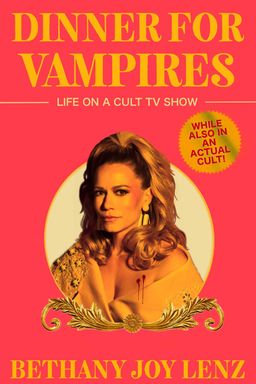
Dinner For Vampires cover

Dinner For Vampires

by Bethany Joy Lenz

The actress, known for her role on “One Tree Hill,” describes her time in a cult and how she stepped away from it.

Belonging, Control, and Choosing Freedom

What happens when the longing to belong becomes the lever others use to steer your life? In this memoir, Joy narrates how a sincere search for spiritual family and creative community slowly morphs into a system of control—and how one stark boundary, set to protect her infant daughter Rosie, snaps the spell. The book’s core claim is simple but sobering: coercive control rarely starts with chains; it starts with hugs, identity-blessings, and a shared language that makes obedience feel holy and dissent feel dangerous.

The story unfolds in three arcs. First, you watch how Joy’s childhood in charismatic Christianity and her training as an actor predispose her to trust leaders and absorb direction. Next, you see how a friendship circle around Les and Pam at the Big House becomes a capital-F Family via rituals, “spiritual parents,” and theological scripts that recast personal choices as spiritual tests. Finally, you follow the break: a sweatshirt thrown across a hotel room, a mother’s boundary, a forensic paper trail, and a costly legal battle that ends with custody, exposure of financial abuse, and a hard-won reconstruction of life, faith, and work.

The promise of belonging

Joy enters the Van Hewitt orbit because the group meets real needs—companionship, creative resonance, prayer, and structure. Saturday nights at the Big House glow with welcome hugs from Pam, Abe’s guitar, open Bibles, and sweet-spot phrases like “precious daughter” and “we are a ship.” Laminated “crafted prayers,” confession cards, and identity proclamations feel like medicine for shame and loneliness. For a woman raised on the Jesus Revolution’s warmth and an actor’s love of being seen, this family feels like home.

How control takes root

The architecture of control is subtle at first. Leaders invoke “spiritual parents” whose authority outranks “bio-family,” and they frame unity as obedience. Dissent is demonized as the “Jezebel spirit,” while curiosity itself becomes “illegal questions.” Private journals are read aloud in basement semicircles as pastoral care; ceremony and surveillance blur. TRIAD, a leadership-run management entity, wraps financial oversight in ministry language. Time, money, and vocabulary all begin flowing toward the center, and normal autonomy gets recast as selfishness or rebellion.

Key dynamic

Affection plus revelation becomes the bait; obedience becomes the price; spiritualized shame becomes the leash. You feel loved, so you hand over the steering wheel.

The costs mount—spirit, body, bank

As authority centralizes, the asks escalate. Les frames Joy’s Broadway offer for Beauty and the Beast as a test of spiritual inheritance; she declines. He nudges her into marrying QB with “obedience first, feelings later.” TRIAD co-mingles assets into ventures like a failing highway-side motel and the Bistro, and Joy’s accounts quietly drain. Patriarchal teaching legitimizes QB’s policing of her clothing, sex life, and scripts. Isolation hardens: bio-family becomes suspect; industry peers whisper “Is this a cult?” (Note: These are textbook patterns of high-demand groups documented by sociologists and therapists.)

The hinge: a mother’s boundary

The prologue compresses years into a moment. QB hurls a sweatshirt and threatens custody—“I will get a lawyer and I will take. Her. Away from you.” Joy has pre-set a tiny rule: if anything is thrown, she leaves with Rosie. She enforces it that instant, choosing safety over submission. That single boundary—clear, immediate, nonnegotiable—becomes the blueprint for every subsequent step.

Exit, exposure, and nuanced recovery

Leaving isn’t one act; it’s a slog of subpoenas, witness statements, and bankers boxes of jumbled records. Harker and Mina’s thoughtful exit email cracks unity. Public violence at a softball game exposes volatility. A foster child, Alice Burke, corroborates broader harm. With Juana’s help Joy opens a separate account, hires a forensic accountant who traces roughly two million missing, and prioritizes custody over restitution. The court grants Rosie to Joy. Danielle flips the Big House. The Bistro burns and later serves as a training site. Joy rebuilds in LA, reconciles with bio-family, and keeps a tender, non-binary faith (think Nadia Bolz-Weber’s and Beth Allison Barr’s insistence that spiritual beauty can coexist with institutional rot).

The book leaves you with dual clarity: belonging is good, but it is not a blank check; spiritual language is powerful, but it can be weaponized. The practical invitation is to anchor your boundaries before you need them, diversify your sources of truth, and treat control hidden inside love-talk as the danger it is.


Faith, Stagecraft, and Suggestibility

Joy’s origin story matters because it reveals how gifts can become vulnerabilities when leveraged by the wrong hands. She grows up under the bright language of charismatic Christianity—God as light that eats darkness, a leather New King James with penciled margins, table prayers, and the memory of the Jesus Revolution’s warm zeal. In parallel, she discovers the stage: community theatre, Grandma Doris’s attic of playbills, audience laughter that lands like blessing. Faith gives her a moral map; performance gives her the thrill of being seen. Together, they train responsiveness to direction and sensitivity to approval.

Faith as lens and lure

Faith shapes how you name your world. For Joy, it promises that light dispels darkness, that words spoken in love can heal. This vocabulary primes her to receive “identity declarations” as sacrament. When Les later calls her “God’s little princess,” the words land in an already-plowed field. “Spiritual parents” sounds plausible because spiritual family has long been a cherished Christian metaphor. The danger isn’t faith; it’s what happens when leaders weaponize sacred language to require compliance (compare Kelsey Osgood’s and Jeff Sharlet’s portraits of piety co-opted by power).

Performance as refuge and template

Acting gives Joy belonging and control amid real-life chaos. Onstage, she follows a director, hits marks, and receives applause. Offstage, that muscle memory—absorb notes, shape yourself to the role—transfers easily to groups that script identity. When Pam greets with a practiced hug and Abe’s songs cue collective emotion, it feels like rehearsal for the soul. The same talents that make you a generous scene partner can make you overly compliant to charismatic leadership.

The double-edged gift

When home is unsteady and applause is steadying, you crave communities where you are reliably seen. The Big House delivers exactly that: love-bombing as hugs, “crafted prayers” laminated like props, communal confession as catharsis. Joy’s heart says, “Finally.” But each ritual also lowers the drawbridge for control. Leaders learn your rhythms, your triggers, your unhealed wounds, and they couch direction in the language that most moves you.

Practical takeaway

The qualities that make you lovable—openness, devotion, talent—need guardrails. Without them, charisma plus ritual can turn affirmation into leverage.

A compassionate lens on susceptibility

This isn’t a story of naivete; it’s a story of normal needs meeting a polished system. Many survivors report the same fusion: a formative rhetoric of chosenness, a hunger for communal purpose, and a craft or calling that relies on external feedback. It’s humane to see how those strands knit. And it’s wise to preempt the risks: diversify spiritual mentors, separate art feedback from life decisions, and test teachings in communities that welcome “legal questions.”

By the time Joy meets the Van Hewitts, all the elements are there. Faith tells her God speaks through elders. Performance tells her to heed direction. Loneliness tells her to say yes. That triad is the entry point the Family exploits—and the very place you can begin to fortify your own discernment.


Engineering a Family System

A friend group becomes a Family not by accident but by design. The Van Hewitts’ Saturdays start simple—hugs from Pam, Abe’s guitar, Bible passages, and free sharing. Over time, repeated rituals harden into a social technology that produces belonging on demand and converts that belonging into compliance. You watch the scaffolding get built: affectionate touch, identity decrees, “crafted prayers” laminated for daily use, and the creeping replacement of bio-family with “spiritual parents.”

Rituals that bind and prime

Hug, sing, confess, proclaim, repeat. The sequence delivers reliable neurological reward: oxytocin from touch, dopamine from music, relief from confession, and elevated purpose from proclamations. Joy’s tears when Les declares she’s not “second place” create a high that bonds her to the group—she feels seen and rewired. The rituals are framed as care, and they do provide comfort. But they also create a dependency cycle where the price of that comfort is deeper exposure and quicker obedience.

Language as identity tech

Words steer reality. Leaders call members “precious daughters,” speak destinies, and teach the trick of saying “I don’t receive that” to block outside critique. The asymmetry is stark: leaders can name you; you cannot name them. Metaphors reinforce hierarchy—the “WE ARE A SHIP” magnet, nautical paintings, even Les’s “I LIKE IT WHEN THEY CALL ME BIG POPPA” mug signal captain and crew. If you internalize the ship story, you accept that captains set course—and that questioning them risks wrecking everyone.

From network to institution

The Hamoatzah council (Les, Marti, Pam, Ed, Kurt, Lucy) formalizes leadership. Geographic hubs emerge—the Idaho Big House becomes a “God spa.” Absences are spiritually suspect; presence becomes proof of devotion. People without strong outside anchors (like Dontay) are elevated; skeptics with healthy bio-ties (like Camille) are sidelined. Inclusion doubles as exclusion: “Not everyone belongs in the war room” defends gatekeeping as wisdom.

The grooming loop

Warm attention makes you grateful; public vulnerability gives leaders data; correction wrapped in love feels like growth; availability becomes righteousness. Doubt gets renamed disloyalty—or “illegal questions.”

Case studies inside the system

Mina’s rapid engagement to Harker and seven-day wedding officiated by Les model the system’s reward economy: surrender yields elevation. Meanwhile, Joy’s Broadway opportunity is reframed as a spiritual trap; obedience means declining. Meetings sprawl into the night because “the Spirit is moving,” and leaders drop last-minute services to keep the flock on call. Confession extends to reading private journals aloud, justifying invasive analysis as pastoral care.

By the time TRIAD centralizes money and time, the Family is already engineered to convert love into leverage. The lesson for you: look past warmth to structure. Who names reality? Who sets the calendar? Who owns the bank keys? The answers tell you what kind of family you’re in.


Patriarchy and Spiritual Obedience

Patriarchy in the Big House isn’t an opinion; it’s policy dressed as theology. Les preaches men as warriors and shepherds, women as obedient supports, and he uses the “Jezebel spirit” to pathologize women’s dissent. This script authorizes male control in workplaces, sanctuaries, and bedrooms—and it recodes women’s boundaries as spiritual immaturity. You see how quickly this morphs from a Sunday sermon into the rules of everyone’s Tuesday.

Male headship codified

Emily gets demoted because “a woman shouldn’t have authority over a man,” framed as doctrine rather than a discussion about competence. Les’s pronouncements seep into operations management (who hires whom) and even housework (how towels must be folded). The message is omnipresent: authority flows down through men. If you internalize that, you outsource your conscience to whichever man claims God’s mic.

Marriage as obedience container

Joy’s marriage to QB is steered as obedience-first, affection-later. Pam and Les bless the match as a spiritual crucible rather than a mutual choice. The fallout is predictable: QB polices Joy’s clothing (no black bra under a white shirt), auditions, and friendships, calling it headship. He forbids her to seek counsel from Harker and monitors sex and scripts. Domestic coercion gets laundered through pastoral language so it feels like holiness rather than harm.

The Jezebel leash

When women like Esther (Dontay’s mom) or Joy’s mother raise concerns, Les frames it as the “Jezebel spirit.” Now a practical question (“Where’s the money going?”) becomes spiritual combat. That framing shames would-be protectors and emboldens abusers. Once dissent equals demon, dialogue dies. (Note: Beth Allison Barr and Kristin Kobes Du Mez document how similar gender scripts sanctify control in evangelical subcultures.)

Crucial consequence

If you honor another person’s “discernment” above your own, you slowly lose your no—and your life bends toward someone else’s convenience.

Career choices recast as tests

Even vocation gets swallowed by obedience. Joy’s Beauty and the Beast offer is not an artistic decision but an attack on her “spiritual inheritance.” Declining proves loyalty. Accepting would “open a door to the enemy.” When career discernment is moralized to demand sacrifice that uniquely benefits leaders, your agency is already hostage.

The warning for you is crisp: theology that shrinks a woman’s choices, mutes her questions, and calls her pushback demonic is not shepherding; it’s scaffolding for abuse. Real spiritual care strengthens conscience and consent; it does not confiscate them.


Money, Ministry, and TRIAD

Follow the money and you’ll see the structure. TRIAD—“Trinity Redemption Investment and Asset Directors”—sounds holy and prudent. In practice, it centralizes financial control under Les and allies (Pam, Kurt, Gretchen), blurring spiritual stewardship with business management. The result mirrors many cult economies: sacrificial language cloaks co-mingled accounts, dubious ventures, and opaque books, making dissent feel like betrayal and due diligence feel like sin.

The ministry-business blur

TRIAD absorbs roles from bookkeeping to property management—functions that in healthy systems demand transparency and checks. In the Family, they become “covering.” Questions about numbers are reframed as disloyalty. Leaders staff roles by loyalty, not expertise; unqualified bookkeepers move money with minimal oversight. The same people who hug you after worship also sign your checks.

Real estate as righteousness

The group buys a motel near a highway and smog—ill-suited for profit. It’s called “ministry.” When it fails, TRIAD declares a spiritual victory and pivots to purchasing the Bistro, rolling debts forward and normalizing comped meals for insiders. Joy’s earlier $10,000 “Kingdom” investment helps tether her to the projects. Investors like Esther (Dontay’s mom) contribute; the ecosystem rewards loyalty and punishes scrutiny.

Mechanics of extraction

You see classic red flags: co-mingled accounts; missing or delayed contracts; shell entities; falsified checks; and payroll irregularities that send value toward leaders. Gifts and freebies to Family blur personal and organizational lines. Over time, Joy discovers massive shortages—roughly two million dollars missing from accounts tied to her name and ventures under TRIAD’s control.

The audit reality

Spiritual abuse often hides in messy ledgers. You don’t get justice with vibes; you get it with a forensic accountant, a paper trail, and time.

Discovery, evidence, and hard choices

With Juana’s help, Joy opens a clean bank account and starts the slow untangling. Bankers boxes pile up as a forensic team traces wires across entities and flags forged signatures. She subpoenas TRIAD records and prepares for court. Legal counsel explains the tradeoff: prioritize custody over financial recovery. She spends roughly $360,000 over three years—an enormous cost—yet secures custody of Rosie and exposes patterns of fraud for prosecutors to evaluate.

The enduring lesson: when leaders claim both your soul and your spreadsheet, insist on third-party oversight. Spiritual language should never be a smokescreen for accounting. If transparency is “unspiritual,” you’re not in a church—you’re in a con.


Isolation, Mirrors, and Social Levers

Control rarely survives fresh air. That’s why the Family cultivates an us-versus-them culture, shrinks trusted voices, and leverages geography and reputation. What’s striking is how these tactics echo in Joy’s secular workplace on One Tree Hill: isolation, narrative control, and reputational pressure show up in both sanctuaries and studios. Add romance and friendship dynamics, and you have a web of incentives that keep people compliant.

Us vs. them by design

Outside opinions become spiritual threats. Bio-family is recast as “unsafe.” Christmas with parents yields to last-minute services. Skeptics like Camille—buoyed by a healthy external family—are quietly nudged out. The Hamoatzah enforces boundaries through whispers and access: “Not everyone belongs in the war room.” You learn to doubt your history and defer to the group’s story.

Reputation as restraint

Whispers leak into the entertainment world. Tyler asks, “Are you in, like, a religious cult?” Epic Records backs away. Ironically, the stigma both harms Joy’s career and tightens the Family’s grip: leaving now risks professional fallout. Shame becomes a fence you build yourself. (Note: High-demand groups often weaponize outside suspicion to argue that only insiders truly understand you.)

Geography as leverage

Place shapes power. The Idaho Big House acts as a pilgrimage site (“God spa” resets), concentrating influence. Wilmington pulls Joy away from LA allies, making her more dependent on phone counsel from leaders. Producers and the Family both benefit from your isolation because it reduces competing narratives and makes proximity to authority feel like safety.

The corporate mirror

On set, showrunners and producers control looks, lines, and arcs; “what’s best for the show” parallels “what’s best for the Family.” Modesty requests get labeled “difficult.” Creative notes become tests of loyalty. In both domains, resistance threatens your future—and both claim moral high ground: art vs. anointing. Seeing the mirror helps you name tactics, not just theology.

Romance and roles as glue

Intimacy patterns stabilize the system. Mina’s marriage to Harker is held up as proof: obedience yields blessing. Joy’s unresolved attachment to “Blue Eyes” amplifies her yearning for belonging, making Family affection feel essential. Dontay’s adoption into Les’s orbit shows how role assignment rewards devotion. When love and status hinge on compliance, relationships become policy tools as much as bonds.

If you’re assessing any community, watch three dials: who you can trust, where you must be, and what people say about you to your world. If those dials tighten together, it’s not just culture; it’s control.


Boundaries, Exit, and Repair

Exiting a high-control system is less jailbreak than marathon. Joy’s turning point is maternal and immediate: a thrown sweatshirt, a custody threat, and a pre-set boundary she enforces without debate—“If you throw something, I leave with Rosie.” That small, clear rule opens the escape hatch. What follows is incremental courage—gathering allies, building evidence, and telling the truth in rooms that demand proof, not pain alone.

The catalyst and the first steps

After the hotel-room incident in West Hollywood, Joy prioritizes safety: she leaves, stays with friends, and begins disentangling finances with Juana at the bank. She reframes her reality—“I was in a cult. And I had to get out.” The moral calculus shifts from “obedience” to “protection,” especially as a mother modeling boundaries for her daughter.

From defiance to docket

Harker and Mina’s thoughtful, theologically sourced exit email weakens the unity myth and emboldens others to question. A softball-field fight—Kurt punching Abe, Les pinning him—shows the system’s volatility in public. Witnesses emerge: Emily, Abe, Harker, Mina, and crucially, Alice Burke, a former foster child alleging abuse by Kurt, broadens the pattern. Joy engages a forensic accountant; bankers boxes stack as wires, checks, and shells are traced. Subpoenas go out. The DA’s office reviews. Courts separate custody from finance, forcing strategy. Joy spends ~ $360,000 over three years and wins custody of Rosie, even as full financial restitution remains uncertain.

Court realities

Truth requires corroboration: witnesses, ledgers, timelines. Healing requires patience and outside expertise. Survival requires prioritization—sometimes you secure the child and let the dollars wait.

Integrating the good without gaslighting yourself

Recovery isn’t tidy. Joy admits the Family also gave gifts—friendship, a daughter, moments where prayers felt true. Standing in Sacré-Cœur, she holds paradox: “This place is you. This place is humanity.” Beauty and corruption coexist. Naming both keeps you honest and helps you resist black-and-white thinking that either sanctifies abuse or erases real grace.

Rebuilding people and places

Post-trial, Joy returns to LA, rebuilds ties with bio-family, and re-enters creative work. Allies matter: Danielle flips the Big House, reclaiming physical space from spiritual captivity; the Bistro burns and later becomes a training site—a fitting end for a vanity project cloaked as ministry. Public truth-telling replaces secrecy’s shame. Joy raises Rosie with sturdier boundaries and a humbler, resilient faith.

If you’re plotting your own exit, borrow her sequence: set a clear safety boundary, secure immediate refuge, open clean accounts, gather witnesses, hire a forensic pro, and tell your story to people who can act—lawyers, judges, journalists, and safe friends. Freedom is not just leaving; it’s rebuilding a life that won’t hand your no to anyone else.

Dig Deeper

Get personalized prompts to apply these lessons to your life and deepen your understanding.

Go Deeper

Get the Full Experience

Download Insight Books for AI-powered reflections, quizzes, and more.