
Idea 1
Decoding Modern Communication in a Digital World
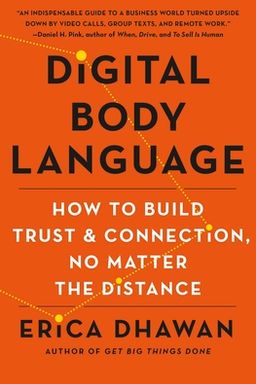
How can you build trust, connection, and clarity when almost everything you say now travels through screens, emojis, and Zoom windows? In Digital Body Language, Erica Dhawan argues that the traditional cues that once guided empathy and collaboration—tone of voice, eye contact, posture—have vanished from daily work life. What replaced them are abbreviated messages, misspelled texts, delayed responses, and virtual meetings. The result? A crisis of miscommunication and misunderstanding. Dhawan contends that success in today’s interconnected world depends on mastering a new set of skills: reading and sending the subtle digital cues that make others feel seen and respected.
Dhawan introduces a new literacy she calls digital body language—the collective signals we send through emails, texts, chats, and video calls. These signals can express respect, urgency, confidence, or empathy, but only if we know how to use them consciously. The book offers a blueprint for decoding these signals and replacing confusion with clarity. She argues that the majority of today’s workplace friction—passive-aggressive emails, ghosting, misread punctuation, disengagement—is caused by the absence of nonverbal communication in virtual spaces. Like learning a new language, digital body language asks us to translate traditional social cues into online equivalents, such as how promptly we reply, what punctuation we use, and how we show appreciation through writing.
The Rise of the Miscommunication Era
Dhawan shares stories of real-world confusion: a couple breaking up over text after misreading the word “through”; coworkers thinking their boss was angry because she ended her email with a period. She cites research showing that 50 percent of emails are misinterpreted. Employees spend hours rereading messages to guess tone—what does that ellipsis mean? Did “Thoughts?” sound passive-aggressive or polite? Meanwhile, companies lose productivity and morale because trust fails to translate digitally. During the pandemic, this problem magnified as remote teams became the norm. Dhawan calls this global shift a “mass migration” into digital life where every worker, regardless of age or industry, is an immigrant still learning the local customs of digital interaction.
Redefining Connectional Intelligence
Drawing on her earlier work in Get Big Things Done, Dhawan emphasizes that strong digital communication isn’t just etiquette—it’s the cornerstone of collaboration. Whether you’re leading a multinational team or texting your partner, every interaction rests on the invisible architecture of signals and norms. She explains that clear writing, responsiveness, and thoughtful online gestures are now critical leadership competencies. Julie Sweet, CEO of Accenture, agrees, noting that the best investment anyone can make in their career is to develop excellent communication skills—especially in writing. For Dhawan, communication is now a competitive advantage, as vital to success as technical or analytical skills.
The Four Laws of Digital Body Language
To make this new skill practical, Dhawan organizes it into four core laws: Value Visibly, Communicate Carefully, Collaborate Confidently, and Trust Totally. Each law reimagines empathy for virtual life—for example, Value Visibly teaches that proofreading is the new form of respect and timely replies the new handshake. Communicate Carefully means leaders must spell out expectations instead of assuming others read between the lines. Collaborate Confidently encourages teams to embrace clarity and inclusion by making digital participation uniform. And Trust Totally calls for creating a psychologically safe environment where people speak up despite the distance.
Why This Skill Matters
Dhawan’s message is urgent: ignoring the nuances of digital communication risks alienating colleagues, customers, and peers. Misinterpretation fosters paranoia and disengagement. But a mindful grasp of digital body language fosters clarity, trust, and innovation. This book teaches you to read meaning in silence, understand timing as a measure of respect, and use words to replace lost gestures. In the same way that body language once shaped leadership presence, digital fluency now shapes credibility and influence. The skills here aren’t optional—they’re survival tools for a world where communication is the foundation of connection.
Ultimately, Digital Body Language is a call to become deliberate communicators. It urges you to pause before pressing Send, to value your colleague’s inbox as much as their time, and to find empathy even behind a screen. By learning to express trust and understanding through pixels and punctuation, Dhawan shows that technology doesn’t have to distance us; used wisely, it can bring us closer than ever before.