
Idea 1
Creating Difference: Building Businesses That Matter
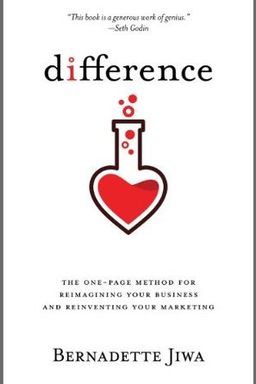
How can you make your work truly matter—not just stand out, but transform how people feel and act? In Difference: The One-Page Method for Reimagining Your Business and Reinventing Your Marketing, Bernadette Jiwa argues that the future of business lies not in being different, but in creating difference. This shift, she says, is the key to building products, services, and brands that people don’t just buy but believe in.
Jiwa contends that traditional marketing has lost its heart. For decades, businesses have been shouting to get noticed—buying ads, polishing taglines, and adding endless features. But what truly drives people isn’t logic or price; it’s emotion, empathy, and meaning. The world no longer rewards the loudest brand but the one that listens, understands, and connects deeply with people’s lives. Her book reframes marketing as a form of storytelling and empathy—a process of discovering what customers care about and building around that truth.
From Being Different to Creating Difference
At the heart of Jiwa’s philosophy is a subtle but powerful distinction: being different focuses on competition, while creating difference focuses on contribution. Instead of trying to outdo rivals with marginal improvements, you aim to make meaning—to reimagine what’s possible by asking, “what difference can this make in people’s lives?” Starbucks didn’t invent coffee, nor did Apple invent the smartphone, yet both transformed everyday commodities into experiences filled with meaning. This is the shift Jiwa wants every entrepreneur and creative to make: stop seeking to be noticed, and start striving to be needed.
Her Difference Model—built on six pillars: principles, purpose, people, personal, perception, and product—provides a one-page framework for doing this. Instead of starting with an idea and working out how to sell it, Jiwa flips the process. She begins with empathy and the truth about the people you want to matter to, then helps you design work that fits seamlessly into their worldview.
Empathy as the Starting Point of Innovation
One of Jiwa’s recurring lessons is that all meaningful innovation begins with empathy. She revisits the story of Steve Jobs and the invention of the mouse to show how insight—not invention—creates value. Jobs’s genius wasn’t that he designed a new device, but that he imagined what it would mean for people: no longer typing obscure commands, they could simply point and click. He flipped the equation from “what can this product do?” to “what could people do with this product?” That human-centered leap, Jiwa argues, is what separates a good idea from a great one.
She also tells the story of Sylvan Goldman, inventor of the shopping cart. Initially, people resisted it. Men thought it looked weak, women thought it was unfashionable, and older shoppers felt it made them look helpless. But by observing behavior and empathizing with people’s pride and self-image, Goldman realized he had to sell the story of using the cart, not the function. So he hired models to use it in stores, shifting perception so powerfully that within years it had become an indispensable part of shopping culture. This is Jiwa’s central point: when you understand the human meaning behind behavior, you can transform not just what people do—but how they feel about doing it.
Why Marketing Is the Story of How You Care
Modern marketing, Jiwa laments, often feels soulless because it’s reduced to techniques and funnels. She views marketing not as the act of selling, but as the act of caring out loud. True marketing, she says, is the story of how you create difference for your customers. It’s about generosity, not manipulation; about emotion, not interruption. We’ve spent decades treating marketing as a transaction—product for money, ad for attention. But in today’s world of infinite choice, people buy meaning. They don’t buy the cookie; they buy the fortune inside it (a nod to Jiwa’s earlier book The Fortune Cookie Principle).
This shift requires seeing customers as stories, not demographics. People want to be someone, not just anyone. Airbnb made travelers feel like locals; TOMS made buyers feel philanthropic; Warby Parker made wearing glasses feel expressive, not corrective. These brands don’t sell features—they sell promises that make people feel like the best version of themselves.
The Difference Model’s Core: Stories that Matter
Jiwa’s Difference Model is both a strategic map and a moral compass. It insists that your brand’s story begins with truth: about you, your market, and the people you want to serve. It asks you to define your purpose—the “why” beyond profit—and express it through a product that not only works but feels right. It challenges you to make that difference personal by improving how your customers feel about themselves in your brand’s presence. And finally, it demands authenticity—because people believe stories that are consistent with what a company actually does.
Through case studies from companies like MOO.com, Sugru, Simple, Uber, and Charity: Water, Jiwa demonstrates how difference-based thinking leads to remarkable results. Whether connecting digital design to craftsmanship or combining convenience with social conscience, these innovators succeed because they start from empathy and end with meaning. Their marketing isn’t an add-on; it’s the logical outcome of how they create difference.
Why This Matters Now
As Jiwa argues, we are living in an era where attention is scarce but trust is scarcer. Traditional advertising can no longer buy loyalty. What wins hearts and wallets now is not noise but nuance. Every brand, from a startup to a global giant, faces the same mandate: stop trying to be the loudest and start working to be loved. The shortcut to more is to matter. That’s what Jiwa’s Difference is ultimately about—the art and discipline of building businesses, products, and stories that people don’t just notice, but will miss if they disappear.