
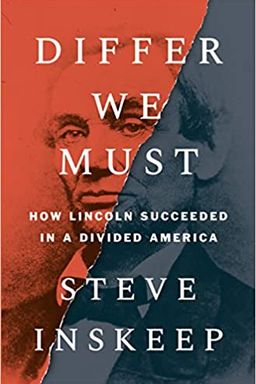
Differ We Must cover

Differ We Must

by Steve Inskeep

A host of NPR’s “Morning Edition” describes encounters Abraham Lincoln had with some who disagreed with him.

Lincoln’s Pragmatic Moral Leadership

How do you hold fast to moral purpose while working inside hard limits? In this book, the author argues that Abraham Lincoln’s distinctive power came from a fusion of pragmatic strategy and principled ends, practiced most effectively through conversation. The narrative presents a leader who listens first, curates his public self, and times action to maximize effect. He treats talk as political work, alliance-making as governance, and language as policy. If you picture Lincoln only as the platform orator of Cooper Union or Gettysburg, this account widens your view: the decisive actions often begin at a desk, a barber’s chair, or a quiet parlor.

You watch him move from a cautious Whig who argues for containing slavery to a wartime president who issues the Emancipation Proclamation as a weapon of war. You also see the costs of progress: strained civil liberties in the Vallandigham case, the tragic failures of U.S. diplomacy with Native nations (Lean Bear’s doomed hope and Sand Creek), and the unfinished business of Reconstruction that his assassination left to less capable hands. The core claim is simple and demanding: Lincoln shows you that moral change in a constitutional republic happens through patience, bargains, and the grammar of events—not through purity alone.

Conversation as Political Work

Lincoln’s “conversational politics” is not chit-chat—it is how he reads people and aligns interests. He listens in frontier cabins, tells jokes that lower defenses, and withholds just enough to keep leverage. Friends say he could “induce the belief that he had communicated all; yet… have communicated nothing.” He uses that mask of modesty from New Salem to the White House, where phrases like “let this be strictly confidential” let him test ideas without committing prematurely. The Lost Speech (1856) and the quiet shelving of his 1849 D.C. emancipation draft reveal deliberate reticence as a tool of progress.

Principle with Timing

On slavery, you track a through-line: slavery is wrong, but the Constitution and the electorate bound federal action—until war recast the legal and political terrain. He backs limits on slavery’s expansion (Wilmot Proviso, Missouri Compromise restoration) and later converts emancipation into military necessity after Antietam. He calls it a “double advantage”: subtract labor and soldiers from the Confederacy, add Black soldiers to the Union. He tells Frederick Douglass that valor on battlefields will move public opinion toward equality faster than mere argument. (Note: This sequencing echoes later rights campaigns that leverage policy pilots and visible performance.)

Coalitions Over Conversions

Lincoln builds a party by combining interests, not imposing ideology. After Kansas–Nebraska, he reframes freedom via the Declaration and brings ex-Democrats, abolitionists, and even some nativists under a Republican umbrella. He works with radicals like Joshua Giddings and Owen Lovejoy, but also with Thurlow Weed and Illinois Know-Nothings like Joseph Gillespie. The 1860 nomination at Chicago displays the craft: present Lincoln as the electable compromise whose team (David Davis, Leonard Swett) counts delegates, not saints.

Crisis, Power, and Civil Liberty

War compresses options. In the Vallandigham affair, General Burnside’s overbroad Order 38 triggers an arrest that Lincoln defends as wartime necessity while searching for a political off-ramp. He offers to ease the outcome if Ohio Democrats sign a loyalty statement; they refuse. He turns overreach into a lesson: use minimal force, maximize persuasion, and never let a single statute wreck the republic. You see the same calculus in reining in Frémont’s premature emancipation in Missouri to keep Kentucky loyal.

Language and Delegation as Policy

You watch Lincoln govern through others—especially William H. Seward. He accepts Seward’s edits (the “better angels” flourish) but keeps command. Later, in Richmond, he plays legal chess with John A. Campbell: three non-negotiables (national authority, no receding on emancipation, end of hostilities) paired with phrasing that never recognizes a rebel legislature. Words become scaffolding for action. (In contrast to leaders who hoard authorship, he welcomes editors yet preserves decision rights—see also FDR’s Brain Trust; note the continuity across successful executive styles.)

Expansion’s Shadow and Moral Limits

The Union still builds a continental power: Pacific Railroad Acts, land policy, and the drift of settlers into treaty lands. Lean Bear’s 1863 visit ends in courtesy without enforcement; Senate edits nullify payments; then Sand Creek shatters any claim that ritual and medals equal justice. The book forces you to see the split-screen: emancipation advances in the East even as Native nations suffer dispossession in the West. Strategy solves one moral catastrophe while deepening another.

A Human-Scale Presidency

Lincoln’s daily mercy—pardons for deserters, orders for back pay, attention to a barber like William Florville—expresses a politics of sympathy. He helps Mary Ellen Wise, a woman who likely fought in uniform, get paid, valuing service over rigid rules. Mary Todd Lincoln’s grief and controversies shape public perception, which he manages with tenderness and patience.

Aftermath and Afterlives

The assassination freezes a method mid-stride. Andrew Johnson inherits tools without Lincoln’s temperament. The Thirteenth Amendment stands; the Fourteenth and Fifteenth follow, but their promise depends on future fights. The book closes by reminding you that language, coalitions, and timing make durable change—but institutions outlast leaders, and their meaning is always up for contest.


Conversation as Statecraft

The book shows you Lincoln leading with his ears. He listens first, then shapes what others think they heard. In frontier Illinois he learns to take dictation for neighbors, absorbing people’s rhythms and needs. That early apprenticeship turns conversation into his executive toolkit. He uses storytelling to translate principle into common sense, and he uses selective silence to keep options open. When allies call him candid, they also note how he keeps a reserve—an edge that protects initiative in a brutal political marketplace.

Listening for Leverage

You can picture Lincoln in a kitchen, leaning across the table, eliciting a farmer’s worry or a veteran’s plea. He treats each exchange as reconnaissance: What persuades this person? What must be left unsaid? That discipline informs everything from his handling of antislavery radicals to his talks with border-state Unionists. His letters sprinkle “confidential” like a seal—signaling trust while creating a private space to test ideas without public backlash.

The Mask of Modesty

Lincoln’s jokes and tall tales—log-cabin nostalgia, rail-splitter imagery, even crude humor—are not fluff. They are relational labor that smooths class divides and disarms elite suspicion. His modesty is both sincere and strategic. The famous observation that he “told enough only… to induce the belief that he had communicated all” captures a leader who protects intentions while earning goodwill. He curates variants of himself for different rooms: the homely attorney with voters, the precise lawyer with colleagues, the sober statesman with foreign diplomats.

Selective Disclosure in Practice

You see this method in the 1849 D.C. emancipation draft: he prepares a cautious, compensated plan, recruits Mayor Seaton, then withdraws when the moment turns volatile. In 1856, after an electrifying anti-slavery speech, he avoids publishing the fiercest lines. During 1862, he withholds emancipation until a battlefield win at Antietam supplies legitimacy. These are not evasions for their own sake; they are steps in a staircase, rising when footing appears.

Conversation as Coalition Work

Lincoln uses talk to combine interests that don’t naturally fit. With Owen Lovejoy he acknowledges moral fire; with Know-Nothing Joseph Gillespie he harvests nativist votes without translating their full program into policy; with Thurlow Weed he borrows a machine to move ideals. Talk knits a movement. Press allies like Horace Greeley and the Chicago Tribune amplify the message, while Lincoln’s self-presentation as accessible and humane broadens the coalition’s emotional base.

Why It Matters to You

If you lead a team or a cause, Lincoln’s conversational statecraft gives you a template. Treat meetings as reconnaissance. Use stories to carry values without triggering reflexive opposition. Keep decisive options in reserve until timing, law, and capacity align. Above all, see conversation not as performance but as policy-making’s workshop, where you trade, test, and tend fragile agreements. (Note: This complements modern negotiation literature—from Fisher and Ury’s “Getting to Yes” to Neustadt’s “Presidential Power”—which treats persuasion as a president’s chief instrument.)

Key Idea

Conversation is not the warm-up to policy; in Lincoln’s hands, it is the policy—gauging allies, shaping narratives, and preserving initiative until action can transform intention into law.


Principle, Timing, and Slavery

Lincoln threads a needle between moral conviction and constitutional constraint. He starts by naming slavery an injustice but treats the federal government’s power as limited outside federal territories and the District. In the 1840s and 1850s, he prefers containment: back the Wilmot Proviso, defend the Missouri Compromise line, and oppose the Kansas–Nebraska Act’s repeal. That posture is not softness; it’s a reading of law and electorate. He refuses to immolate the republic on the altar of purity when he lacks the votes to end slavery nationwide.

Negotiating with Radicals and Moderates

Lincoln moves among antislavery currents without being swept by any single one. He works with radicals like Joshua Giddings and Owen Lovejoy, tolerates scorn from Frederick Douglass, and maintains ties to conservative Unionists. These interlocutors matter: they supply information, pressure, and a spectrum of options. Douglass calls Lincoln’s pace a “slothful deliberation”; Lincoln answers, he adopts “new views so fast as they appear to be true views.” You watch a leader learn in contact rather than convert in a thunderclap.

From Containment to Emancipation

War rearranges the legal and political chessboard. When General Frémont issues a sweeping emancipation order in Missouri (1861), Lincoln reins him in to keep border states—especially Kentucky—inside the Union. After Antietam, he uses the “necessary and proper” logic of war to announce emancipation in rebel-held areas, a move that is at once moral and strategic. He tells allies it’s a “double advantage”: it subtracts enslaved labor and Confederate soldiers while adding Black troops to Union ranks.

Douglass, Valor, and Equality

In August 1863, Douglass presses Lincoln and Secretary of War Edwin Stanton for equal pay, officer commissions, and retaliation policy. Lincoln welcomes Douglass but insists the public must see proof on the field. The 54th Massachusetts’s assault on Fort Wagner provides that proof at terrible cost. Pay equity follows later (1864), with more commissions over time. The pattern is painful and clear: use visible excellence to pry open justice. (Note: This echoes later civil-rights strategies—e.g., Truman’s desegregation of the armed forces building on wartime performance.)

Your Lesson

You can hold principle steady and sequence tactics. Define the end—freedom—and adapt the path as law, capacity, and public will shift. This is not incrementalism for its own sake; it is the shortest available route that actually arrives. Lincoln’s route runs through Antietam, the Proclamation, Black enlistment, and then the Thirteenth Amendment—each step prepared by the one before.

Key Idea

Moral clarity without timing is theater; timing without moral clarity is drift. Lincoln binds them, converting wartime necessity into a lever for emancipation and, ultimately, constitutional change.


Building a Majority

Lincoln does not try to convert every opponent; he organizes enough interests to win and to govern. The Kansas–Nebraska crisis of 1854 gives him the opening. He reframes the antislavery argument through the Declaration of Independence at Peoria, recasting politics as a choice between a nation dedicated to freedom and a nation drifting toward a “don’t care” indifference. He then helps weld ex-Whigs, Free Soilers, disenchanted Democrats, and some nativists into the Republican Party in Illinois.

Mapping Interests, Not Identities

With radicals like Owen Lovejoy, Lincoln aligns on slavery; with Joseph Gillespie’s nativists, he resists their program but borrows their votes; with Thurlow Weed’s network, he exchanges influence for reach. He recruits war heroes, hones a brand (Log Cabin, Rail-Splitter), and crafts slates that can carry districts. You see this in backing William Bissell for governor and in careful distance from nativist extremes. Crafty use of newspapers—Horace Greeley and the Chicago Tribune—helps define Republicans as principled yet practical.

The 1860 Nomination as Case Study

At Chicago, Lincoln’s team—David Davis, Leonard Swett—counts, trades, and soothes. They cast Lincoln as the compromise between Seward’s perceived radicalism and more tepid figures. Delegates receive assurance of electability and moderation without surrendering antislavery backbone. The outcome is not fate but organization: floor management, platform design, and image choreography.

Coalition Maintenance in War

Once in office, coalition maintenance gets harder. Radicals press for immediate emancipation and sweeping social change; border-state Unionists threaten to bolt. Lincoln modulates: restrain Frémont, then proclaim emancipation; woo conservatives with law-and-order language; encourage radicals with tangible steps. This is a continuous balancing act, not a one-time victory lap.

Your Toolkit

If you want to build a majority for change, map interests, not identities. Invite imperfect allies and protect a unifying frame. Brand your cause in imagery that lowers barriers and raises pride. Above all, remember that winning votes is step one; keeping a governing coalition together long enough to act is step two. Lincoln does both by connecting moral aims to voters’ self-interest and national security.

  • Tactics you can borrow: recruit diverse messengers; separate policy alignment from total agreement; measure progress by seats and statutes, not purity.
  • Guardrails to mind: don’t let extremes define your brand; don’t promise what your coalition cannot deliver.

Key Idea

Coalitions win change when they convert shared interest into a durable majority and reserve sacred space for principled ends—Lincoln’s Republican Party becomes that vessel in a polarized age.


Crisis Power and Liberty

War is a brutal teacher. Lincoln learns to defend the Union while trying not to hollow out the liberties he fights to preserve. The Vallandigham affair is the test case. General Ambrose Burnside’s General Order 38 criminalizes “expressions” of sympathy for the Confederacy, a vague net that catches Democratic firebrand Clement Vallandigham. Soldiers arrest him; a military commission convicts him. Lincoln had not ordered the arrest but defends broad wartime authority and looks for a political settlement that deters imitation without martyring the man.

The Bargain That Wasn’t

Lincoln proposes to Ohio Democrats led by George H. Pendleton: he will mitigate the damage if they sign a brief statement acknowledging the rebellion and supporting the army and navy. They refuse, reading it as an admission of illegality. Lincoln then banishes Vallandigham to the Confederacy. The episode shows a leader who uses conditional offers, written explanations (Treasury Secretary Salmon Chase pushes for this), and narrative framing to blunt the political cost of emergency power.

Balancing Acts Elsewhere

Earlier, Lincoln modifies Frémont’s emancipation order to prevent Kentucky’s secession; later, he waits for Antietam before issuing the Proclamation. Each instance ties power to political cohesion and legal standing. He constantly weighs whether a single act, however righteous, might lose the war by dividing the North or pushing border states out.

The Constitutional Argument

Chief Justice Roger Taney says only Congress can suspend habeas corpus; Lincoln replies that the Constitution is silent on which branch may act when Congress is out of session. He insists that letting the government perish to keep one law intact betrays the Constitution’s purpose. This is a classic emergency-powers stance, but Lincoln dresses it in restraint: limited scope, insistence on later review, and constant attention to public opinion. (Compare to less communicative, harsher regimes that use emergency to entrench power—Lincoln seeks to win a war and then stand down.)

Your Guideline

When emergencies force hard choices, treat coercion as last resort and communication as first. Write conditions, publish reasons, and seek bargains that turn opponents into constrained partners. Recognize that legitimacy is a resource: if you spend it recklessly, victory curdles. Lincoln fights to preserve the frame of consent even while tightening it for survival.

Key Idea

In crisis, power works best when yoked to persuasion, bounded by purpose, and constantly recalibrated to the risks of both defeat and overreach.


Leading Through Others

Lincoln governs through a cabinet of heavyweights while preserving his final say. William H. Seward, former rival turned Secretary of State, becomes the indispensable editor and fixer. He rewrites drafts, including the First Inaugural—softening edges, offering the “better angels of our nature” cadence. Lincoln incorporates those edits but sharpens the music. This is intellectual humility paired with executive sovereignty: invite strong counsel, then mark the line where advice ends and decision begins.

Editing as Leadership

You see writing become policy. Seward’s edits change how North and South hear the message; Lincoln’s revisions reclaim ownership. The inaugural becomes a shared artifact that carries conciliation without surrender. Later, when Seward proposes sweeping foreign maneuvers and coordinated domestic policy, Lincoln accepts pieces, rejects hubris, and holds the center: preserve the Union, act when law, capacity, and public will align.

Managing Ego and Patronage

Early in the administration, Seward tests boundaries, angling to dominate cabinet peers. Lincoln absorbs the pressure, flatters where useful, and calmly reasserts hierarchy. When Seward threatens resignation, Lincoln slows the moment, gathers allies, and keeps him. The lesson: do not waste talent; domesticate it. Hold a broad tent of ambitious subordinates together by combining respect with clarity about who decides.

Operationalizing Delegation

The method travels beyond Seward. Edwin Stanton becomes the war’s iron administrator; others manage patronage-fueled logistics. Lincoln leverages newspapers, party bosses, and civic intermediaries to extend reach. In every case, he permits blunt speech up the chain but keeps a single point of presidential accountability. (Note: This anticipates later “team of rivals” leadership playbooks; contrast with leaders who purge strong peers and shrink their aperture.)

Your Practice

If you want better outputs, recruit editors, not echo chambers. Invite the person who can cut your paragraph—and your plan—without fear. Then protect your judgment. This is how you produce language that travels across fault lines and decisions that survive contact with reality.

  • Hire for candor and competence; reward dissent that improves the product.
  • Signal final authority gently but unmistakably; crisis requires clarity.

Key Idea

Lincoln makes collaboration a force multiplier by pairing open-door editing with disciplined, solitary decision rights.


Empire, Rails, and Native Nations

The Civil War doesn’t pause continental expansion. Lincoln signs the Pacific Railroad Acts, sets track gauge, and accelerates a national project that entwines military mobility, commerce, and state capacity. But those same rails and homesteads cut through treaty lands, thrusting the White House into a vortex of diplomacy, settler pressure, and frontier violence. The book compels you to hold two truths at once: a republic freeing enslaved people in the East supports policies that dispossess Native nations in the West.

Lean Bear’s Washington

In March 1863, Cheyenne leader Lean Bear travels to Washington. He speaks with poetic frankness, asking Lincoln to counsel his “white children,” stop encroachment, and protect the buffalo. Lincoln replies with courtesy—and with assimilationist advice: take up agriculture as a path to prosperity. The White House ceremony, photographs, and peace medals project friendship, but behind the theater, enforcement dissolves. The 1861 Denver land treaty promises compensation at $1.25 per acre; the Senate trims terms; the federal government never pays.

Spectacle and Betrayal

Delegations appear at P. T. Barnum’s American Museum, where hospitality blends with exhibition. Then comes Sand Creek (Nov. 29, 1864): Colonel John Chivington’s Colorado militia attack a camp near Fort Lyon after assurances of safety, killing more than two hundred Cheyenne and Arapaho, many women and children. War Bonnet and Standing-in-the-Water, earlier visitors to Washington, are among the dead. A military inquiry exposes the atrocity; Chivington resigns, unpunished. Captain Silas Soule, who refused to fire and later testified, is murdered.

Structure Over Sentiment

The clash is structural. The railroad and migration machine outpaces treaty enforcement; local militias and territorial politics establish “facts on the ground” allies in Washington will not—or cannot—reverse. Courtesy masks capacity limits. The result is retaliation, Dog Soldier warfare, and an expensive, grim cycle on the Plains. (Note: The book refrains from exonerating Lincoln by saying he had no choice; instead it shows how national priorities favored settlement even when policy language claimed peace.)

Your Reflection

Big public works often ride roughshod over prior claims unless institutions build and enforce counterweights. If you lead a large initiative, ask who absorbs the externalities and design redress that survives legislative pruning. Ceremonies cannot substitute for enforcement. Lean Bear’s plea and Sand Creek’s horror are a matched set you cannot unsee.

Key Idea

A state’s rituals mean little if its incentives and institutions empower those who break promises—the Plains remind you that justice requires structure, not sentiment.


Reconstruction by Careful Words

In April 1865, with Richmond fallen, Lincoln turns to rebuilding the Union. He uses language as a policy instrument to keep doors open without conceding law. In conversation with John A. Campbell, a former Supreme Court justice turned Confederate official, Lincoln outlines three non-negotiables: national authority must be restored in every state; the executive will not recede on emancipation; hostilities must end without piecemeal surrenders. Within those lines, he leaves room for political reintegration.

The Virginia Legislature Gambit

Campbell proposes that Virginia’s legislature reconvene to order Lee’s troops home and reconstitute civil governance. Lincoln drafts a permissive note allowing “the gentlemen who have acted as the Legislature of Virginia in support of the rebellion” to meet—carefully avoiding recognition of legal status—so long as they demobilize. Days later, as Appomattox changes the calculus, Lincoln blocks the session, reiterating that he never recognized their legitimacy. His word choice had created a narrow tactical bridge without building a road to recognition.

Moderation with Teeth

Lincoln’s reconstruction is moderate in tempo but firm on core outcomes. He signals quick reintegration under federal authority and leaves many political disputes—Black suffrage, office-holding—to future democratic struggle. He bets that emancipation, once anchored, will interact with politics and courts to extend citizenship. It is a wager on the republic’s capacity to grow. (Contrast with Radical Republicans, who soon argue for dismantling and recasting Southern regimes under congressional supervision.)

Why Wording Matters

Words do not merely describe policy here; they set its legal perimeter. By refusing to validate Confederate institutions, Lincoln protects the possibility of more transformative measures ahead. By avoiding total humiliation, he preserves the chance of peaceful submission. This is language as scaffolding—strong enough to hold the next floor, flexible enough to fit what events demand.

Your Application

When you cannot settle all questions now, write terms that lock in essentials and postpone contested particulars. Keep reversible commitments distinct from irreversible ones. Lincoln’s three pillars—Union restored, slavery ended, arms laid down—become the non-negotiables, while representation and rights move into the arena of later amendments and laws. The risk, as the book shows, is underestimating the ferocity of white supremacist resistance that follows.

Key Idea

In transition moments, precise language becomes the hinge between peace and policy—Lincoln uses it to hold emancipation firm while re-opening the Union’s political space.


Mercy, Gender, and Public Image

Lincoln’s presidency is also built in small rooms where policy meets people. You see a pattern of mercy and pragmatic generosity that doubles as politics. He reads individual circumstances and bends rules when justice and the war effort align. These everyday encounters—women petitioners, wounded privates, a Black barber—are not footnotes; they are the texture of a leadership style that treats sympathy as governance.

Mary Ellen Wise and Rule-Bending

Mary Ellen Wise, a woman who claimed to have fought under male aliases in the Thirty-Fourth Indiana and been wounded three times, arrives in Washington in 1864 seeking back pay. The records are messy; the story varies. Colonel Charles Case vouches for her. Lincoln tells the Paymaster General to settle her balance and offers to be personally responsible if bureaucrats object later. He prioritizes service and public meaning over regulatory rigidity—an act of practical respect and savvy morale-building.

William Florville and the Barber’s Chair

William Florville, a Black barber in Springfield, becomes a confidant and a conduit to a community living under Illinois’s Black Laws. Lincoln’s letter to him in 1863 shows attentiveness to people far from power. It also reflects how style and substance mixed: advice on grooming (the famous beard story circulates through similar channels) and insights on public sentiment move through these personal ties.

Mary Todd Lincoln and Symbolic Politics

Mary Todd Lincoln’s public role—redecorating the White House, hosting salons, grieving for Willie—becomes part of the presidency’s image. She amplifies Lincoln’s humanity and sometimes provokes scandal. His patience and private tenderness steady the household and, by extension, the public’s sense of the man steering the war. Leadership in a democracy is always partly theatrical; Lincoln accepts the stage while keeping the script.

Mercy as Policy Signal

Pardons for deserters, back-pay orders for soldiers, and direct engagement with petitioners advertise a governing philosophy: law is for people, and circumstances matter. This does not mean anarchy; it means calibrated exceptions that build trust. (Note: Compare this to modern prosecutorial discretion debates—signals shape compliance.)

Your Takeaway

If you lead, spend time at human scale. A well-timed exception can do more for legitimacy than a hundred memos. Channel sympathy into procedures that can scale—clear criteria for mercy, transparent records, and stories that reinforce shared values. Lincoln’s reputation for kindness is not a side plot; it is an asset that lubricates a hard war.

Key Idea

In Lincoln’s hands, mercy and symbol-making are not sentimental; they are instruments for stitching a fractured public back into citizenship.


Assassination and Afterlives

The book closes where history often begins: with the shot at Ford’s Theatre on April 14, 1865. John Wilkes Booth fires into the back of Lincoln’s head and shouts “Sic semper tyrannis!” as he flees. Coordinated attacks on Secretary of State William H. Seward and Vice President Andrew Johnson falter. The conspiracy kills the president at the threshold of Reconstruction, freezing some plans and releasing others into new hands.

Immediate Political Whiplash

Andrew Johnson inherits the office without Lincoln’s temperament or conversational patience. Radical Republicans soon clash with him over Reconstruction, leading to impeachment. Lincoln’s careful openings—legal firmness with political room—become contested terrain. In his absence, Congress drives toward a more sweeping, often punitive reconstruction; Southern resistance hardens into Black Codes and then Jim Crow.

Constitutional Legacies

The Thirteenth Amendment, shepherded by Lincoln before his death, abolishes slavery; the Fourteenth and Fifteenth extend equal protection and voting rights. These texts anchor the long civil-rights struggle, even as courts and politics throttle or revive their promises across generations. The book’s point is not hagiography; it’s causality: Lincoln’s sequence—war measures, enlistment of Black troops, constitutional amendment—creates durable levers, even if subsequent operators pull them imperfectly.

Memory and Method

You are left with a method as much as a man: listen first; speak in stories; keep options; build coalitions; act when law, force, and opinion intersect; write precisely; govern through others; and humanize power. Assassination turns that method into a touchstone for later reformers and a foil for those who prefer declamation to persuasion.

Your Final Lesson

Institutions outlast leaders, but their meanings are contested daily. If you inherit a crisis, you cannot legislate virtue instantly; you must sequence it. If you win a victory, you must translate it into texts and practices that others can carry. Lincoln’s life—and abrupt death—remind you that a republic’s moral arc depends on who picks up the tools next.

Key Idea

Lincoln leaves a grammar of change—principled pragmatism—embedded in amendments and memories; the nation keeps rewriting the sentences.

Dig Deeper

Get personalized prompts to apply these lessons to your life and deepen your understanding.

Go Deeper

Get the Full Experience

Download Insight Books for AI-powered reflections, quizzes, and more.