
Idea 1
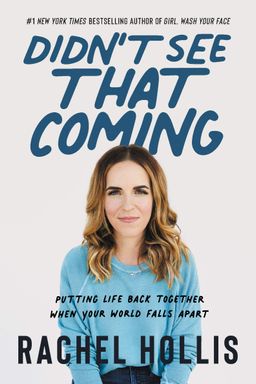
Putting Life Back Together When Your World Falls Apart
Have you ever had a moment when life as you knew it simply stopped—when everything familiar broke apart and you didn’t know how to keep moving? In Didn’t See That Coming, Rachel Hollis explores what it means to rebuild yourself after profound upheaval, whether that’s the loss of a loved one, a painful divorce, or the collapse of what you believed was permanent. Hollis argues that healing isn’t about pretending everything’s okay, but about choosing to confront pain with courage, faith, and deliberate growth.
Writing from inside her own heartbreak—the end of her marriage while finishing this book—Hollis becomes both guide and fellow traveler. She doesn’t offer polished self-help slogans but raw lessons earned through hardship: grief doesn’t disappear, life remains unpredictable, and yet, you have the power to change your mindset, cultivate resilience, and create meaning after loss.
The Heart of Hollis’s Message
At its core, Hollis contends that when our world falls apart, we face two paths—being broken by the pain or being refined by it. Her central idea is simple but powerful: you become either better or worse after grief, never the same. Every tragedy offers a hidden opportunity for rebirth. Drawing from her own experiences—her brother’s suicide, a long marriage’s collapse, parenting through uncertainty—she insists that strength comes not from avoiding pain but from walking through it deliberately. This echoes ideas from authors like Viktor Frankl (Man’s Search for Meaning), who argued that meaning can emerge even from suffering if we choose to respond consciously.
Owning Your Reality
Before transformation can happen, Hollis says, you must first acknowledge that what happened was unfair, painful, and undeserved. Too many people rush past grief in a race to feel strong again. In contrast, she urges readers to stand in the wreckage and say, in her words, “This sucks.” Denial locks you in discomfort; honesty unlocks healing. Her vivid analogy of painting over an avocado-green bathroom without primer shows how covering pain without addressing it only bubbles up later. Like sanding old paint, you must strip away denial and add the primer of truth before new layers—growth, forgiveness, faith—can stick.
Control Versus Response
A key pillar of Hollis’s philosophy is realizing that you were never truly in control of life. What you can control is your response. This acceptance of uncertainty—heightened during crises like the 2020 pandemic—becomes liberating, not limiting. Hollis reframes control from external domination (“I can fix everything”) to internal ownership (“I can govern myself”). Like Stoic thinkers such as Marcus Aurelius, she teaches that our power lies in choosing courage and perspective rather than despair.
Turning Lessons into Action
Throughout the book, Hollis builds a toolkit of strategies for survival and renewal. She teaches readers to identify the “new you” after loss, question their suffering constructively, dismantle guilt, and develop a growth mindset (drawing on Carol Dweck’s research). She explains how to hack courage by focusing on what matters more than fear, how to show up for life even when depleted, and how to rebuild joy through daily habits and gratitude. Each idea is grounded in personal stories—some humorous, some devastating—that make the advice feel lived-in rather than theoretical.
Why These Ideas Matter
In a world full of motivational sound bites, Hollis’s message stands out because it acknowledges both strength and fragility. She doesn’t promise instant positivity but argues that healing is cumulative—a result of small, repeated acts of courage and faith. The book’s conversational tone invites readers to laugh, cry, and reflect on their own resilience. Whether you’re recovering from grief, failure, or unexpected change, the essential takeaway is that the pain cannot erase your purpose unless you let it. You are, as Hollis writes, the potter of your own clay—still moldable, still capable of becoming something new.
By the end of Didn’t See That Coming, you understand that loss isn’t the end—it’s the beginning of a conscious rebuilding. Hollis offers both a map and companionship for that journey: calling your suffering real, refusing paralysis, and choosing growth not because it’s easy, but because it’s the only way forward.