
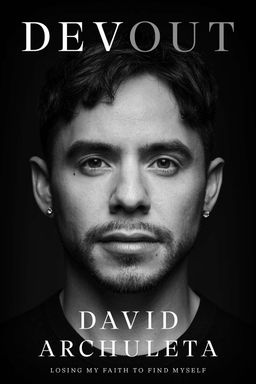
Devout cover

Devout

by David Archuleta

The “American Idol” finalist and international pop star depicts struggles he had as a closeted Mormon teenager.

Finding Courage, Calling, and Compass through Music

What would you attempt if fear didn’t hijack your voice? In Chords of Strength, David Archuleta argues that the way out of fear is through it: you take the first small step, you let your people steady you, and you trust that faith will carry you when talent or confidence feels thin. Archuleta contends that setbacks—panic attacks backstage, a paralyzed vocal cord, and the pressure cooker of American Idol—can become gateways when you choose to act, learn, and serve anyway. His deeper claim: music matters most when it connects people to each other and to God; success is the by-product of character, not the other way around.

Across his story—from a salsa-and-jazz-filled childhood in Florida and Utah, to a life-changing Les Misérables VHS, to singing for Natalie Cole outside a Park City stage door—you watch a shy kid discover that inspiration is contagious, interpretation is a craft, and courage is trainable. He shows you how fear shrinks when you prepare, when you reframe performance as service, and when you let trusted mentors push you past your comfort zone (think Carol Dweck’s “growth mindset,” lived week after week under hot studio lights).

A shy kid with a calling

Archuleta’s family—Honduran and Spanish roots, church-centered life, and a home pulsing with salsa, seventies rock, jazz standards, and holiday harmonies—formed his first conservatory. His mom, Lupe, a powerhouse singer; his dad, Jeff, a jazz trumpeter and arranger; his Grandma Claudia, a musical-theater dynamo: they choreographed living-room numbers, taught harmonies, and turned service (hospital and nursing-home visits) into stages. When a taped PBS anniversary concert of Les Misérables landed in the family VCR, ten-year-old David spent hours mimicking accents and memorizing melodies; he didn’t yet know plot, but he felt the emotion—and that was enough to hook him (echoing Leonard Bernstein’s line that music is “notes plus the feelings between them”).

The book’s thesis

This memoir’s thesis is simple and hard: fear fades when you do the work in front of you, one honest rep at a time, and when your aim is love over ego. Panic subsides when you sing to help people feel something, not to prove something. Prayer clarifies big forks in the road (Should I audition for Idol?), while routine builds resilience (running at dawn; vocal exercises; arranging songs to create a “moment”). Bad breaks—like a partially paralyzed vocal cord after bronchitis during Star Search—can redirect your craft, deepen your gratitude, and ultimately give your sound a unique timbre (a doctor later tells him the stronger cord “grew over” to compensate).

Why this matters to you

You don’t need a stage to use this playbook. If you’ve ever hesitated to ship the project, pitch the client, or apply for the program, Archuleta’s pattern is replicable: ask honestly (pray, journal, seek counsel), act humbly (start with the next doable step), and anchor yourself (family, mentors, values). His Latin-and-LDS household, neighborhood scouts, and teachers formed a safety net—and a standard. He measures success in God’s eyes (character, service, stewardship of gifts) more than in the world’s (ratings, magazine covers). That reframe keeps anxiety from metastasizing when the pressure spikes (Brené Brown would call this leading with values when vulnerability is highest).

What you’ll learn in this summary

You’ll see how inspiration travels person-to-person (Tamyra Gray’s “And I’m Telling You I’m Not Going” sparks years of study), how to turn fear into fuel (Utah Talent Competition tears into a standing ovation), and how to recover with patience when life sidelines you (vocal therapy over risky surgery). You’ll walk the Idol gauntlet—predawn wristbands at San Diego’s stadium, fifteen-second cuts, Hollywood Week where he plays Gnarls Barkley’s “Crazy” on piano—and learn the invisible grind: the scheduling, song clearance lists, building “moments,” rehearsing iTunes cuts at night, and absorbing blunt criticism without crumbling. Then you’ll follow the post-Idol sprint—arena tour, a No. 2 Billboard debut for “Crush,” video shoots on off-days, writing on buses—while he relearns to set boundaries, say no, and keep school and scouting on the radar (he squeezes in his Eagle Scout project in three days between trips).

Core Claim

“Even though I had lost, I had won after all.” Success is doing your best, staying true to your values, and using your gifts to lift others—outcomes you control even when rankings or votes aren’t yours to decide.

Finally, you’ll see why he keeps calling music a gift rather than a talent: gifts are for giving. He sings for firefighters at a 9/11 anniversary, for elders in wheelchairs, for a Make-A-Wish child days before she passes. Those moments—more than finales and confetti—are where his title promise lives: strength through chords, and courage through calling.


How A Voice Gets Made

Archuleta’s voice didn’t appear on a TV stage; it was brewed in a family kitchen and church halls. His mom, Lupe, grew up singing in Honduras, fronted a salsa band in Utah, and drilled harmonies at home; his dad, Jeff, played jazz trumpet, arranged songs, and taught him to “change it up” so a standard felt new. Add Grandma Claudia’s theater chops, and you get a house where Christmas meant three-part carols for the neighbors, not just cocoa. Before fame, there were nursing homes, funerals, and living-room shows where a kid learned that music is both celebration and service.

Roots and rhythms

Born in North Miami to a bilingual, Latin-and-LDS family, David soaked in salsa, seventies rock (Kansas), jazz standards (Erroll Garner, Nat King Cole), and church music. In Florida’s humidity, he and sister Claudia fed ducks, chased lizards, and sang along to Selena and Gloria Estefan. After a move to Utah, the palette widened: Big Band era from great-grandpa the “bugler” and pianist; musical theater from Grandma Claudia; vocal technique seminars with Brett Manning and Seth Riggs. Music wasn’t a class—you lived inside it.

A VHS that changed everything

One move-in day, Jeff popped in a taped PBS special: Les Misérables’ tenth-anniversary concert. Ten-year-old David and little brother Daniel acted out “Look Down,” and David memorized “Castle on a Cloud.” He didn’t grasp the plot; he absorbed the feeling. That afternoon stretched into years of imitative practice—accents, phrasing, dynamics—that quietly built technique (Twyla Tharp calls this “scratching,” the constant search for sources to steal and transform). Soon, a $20 Casio keyboard with lighted keys became a composing lab, where David hunted melodies and learned to hear harmony.

Small stages, big lessons

- Utah Talent Competition (age 10): Backstage hyperventilation, a hallway prayer with Dad, then Whitney Houston’s “I Will Always Love You”—and a standing ovation. He wins the kids’ division and learns that fear shrinks once you step into service.
- Restaurant gigs: For a Garcia’s enchilada and smile, he sang “Castle on a Cloud” and Evita songs. A waitress tipping wasn’t charity; it was a mirror: people felt something.
- Lagoon amusement park performers: Western skits and “Pink Cadillac” planted Natalie Cole in his musical DNA (Aunt Char later gifts a Cole CD; he and a classmate build a cardboard Cadillac for a school duet).

Inspiration is contagious

American Idol’s first season cracked open the canon: Motown, R&B, rock, and Broadway in one syllabus. When Tamyra Gray unleashed “And I’m Telling You I’m Not Going,” David describes a near-spiritual jolt. He and Jeff tracked down Jennifer Holliday’s versions; he sang it to cats in the backyard and to Natalie Cole outside a Park City dressing room at midnight. Cole’s eyes “lit up” as he sang—proof that inspiration travels singer-to-singer (Rick Rubin, in The Creative Act, calls this “tuning your antenna” to a universal signal).

Technique by osmosis—and intention

From Jeff, David learned arrangement thinking: build a “moment,” don’t mimic, stretch a note here, change a melody there to make a classic feel born-again. From Lupe, he learned feel—R&B runs on Christina Aguilera’s “Contigo en la Distancia,” breath control, and tone. From Grandma, stagecraft. Yet he still hated hearing his recorded voice—proof that inner critics coexist with growth (Steven Pressfield would nod: resistance is a sign you’re near the work). The family made experimentation safe, and repetition made emotion reliable.

Craft Takeaway

A voice is built from what you hear, who you serve, and how you arrange. Study your heroes, sing where it matters, and design a moment people can’t forget.

By the time “big rooms” arrived, he’d already logged thousands of micro-reps—kitchen harmonies, church medleys, odd gigs—each teaching him that music lands best when it’s personal, slightly reimagined, and aimed at the heart across from you.


Turning Setbacks Into Gateways

After early TV glimpses (Jenny Jones’ “talented Latino kids” episode, then Star Search), Archuleta hit a wall. Bronchitis during the show scarred one vocal cord; an endoscope later showed it barely moved. Options: high-risk surgery that could ruin his voice, or long, uncertain therapy. He chose therapy—and humility. For a teenager, that meant rethinking identity: the kid with the big voice could now sustain only a song or two, got winded, and watched pitch control wobble. He kept singing at church and community events, but resigned himself to “normal kid” plans: good grades, maybe medicine or dentistry, cross-country running, scouts.

Grieving the old voice—and building a new one

Vocally, he turned his head a certain way to coax the weak cord; he did therapist-prescribed exercises; he quit some lessons when progress felt invisible, then started again. Emotionally, he practiced acceptance. “From Star Search to soul search,” he writes. That detour strengthened something sturdier than laryngeal muscle: patience, gratitude, and the suspicion that gifts are given, not guaranteed. (Angela Duckworth’s Grit frames this as passion plus perseverance over time; David was unknowingly stacking both.)

A slow return of capacity

Around fifteen, stamina crept back. He could sing several songs, then an hour-long corporate set with a friend on keys. He relearned talking-onstage between songs—harder for an introvert than the singing itself. The crowd’s laughter (at his unplanned dry humor) and kind eyes refueled him. That small comeback paved the way for a larger test: American Idol auditions were coming. He had a steady summer job as a sound tech at Murray Park Amphitheater and bosses who warned leaving meant losing it. Hollywood odds were terrible; his story felt “old news.”

Decision by prayer, not pressure

Family, friends, and even church leaders nudged him; he resisted. Then he did the thing he’d been taught to do for real choices: he prayed. He felt a quiet, overpowering yes. That mattered more than any spreadsheet of pros and cons, so he went—expecting to be back by the weekend. (Viktor Frankl reminds us that meaning is found in answering life’s questions with our actions; David answered with a plane ticket to San Diego.)

From trauma to signature

During Idol, when another winter cold spooked him, a doctor scoped him again. The cord was still partly paralyzed, but something wild had happened: the healthy cord had adapted—“grown over”—so they vibrated together. His limitation had forced an unusual mechanics that became part of his tone. What nearly ended his singing contributed to his recognizable sound (compare to guitarist Django Reinhardt, who redefined jazz guitar after a hand injury).

Resilience Principle

A setback you wouldn’t choose can become a signature you couldn’t design. Therapy may be slower than surgery, but compound patience often yields deeper strength.

If you’re staring at your own “paralyzed cord”—a lost client, a derailed semester, a layoff—David’s arc is permission to grieve and permission to rebuild. Accept the constraints. Do the exercises you can’t Instagram. Let time do its quiet work. Then test yourself with a small, real audience. The path back is rarely dramatic; it’s more like tone returning to a tired muscle—until, one day, you can hold the note again.


Inside The Idol Pressure Cooker

American Idol looks like two hours of TV a week; living it felt like a military exercise in stamina, focus, and values. Archuleta’s audition story begins in a San Diego stadium at 2 a.m.—wristbands, gospel choirs warming up at 4 a.m., and a sea of people splitting into lines of four. He starts with “Joyful, Joyful”; the producers stop him, ask for something more “him.” He pivots to Edwin McCain’s “I’ll Be” for 30 seconds. A judge waves him back: golden ticket. Later, with executive producers, they hear wheezing in “I Don’t Want to Miss a Thing”; he casually mentions vocal paralysis. Their eyes widen—the narrative finds its arc—and he advances to sing for Paula, Randy, and Simon. Under blinding lights he forgets some words; Randy starts singing along; three yeses to Hollywood.

Hollywood Week: craft under constraints

He chooses “Crazy” by Gnarls Barkley, accompanying himself on piano—the first season instruments are allowed. Simon calls it “incredible.” He also sings “Heaven.” Then the grind begins: lists of pre-cleared songs, decisions due by deadlines, iTunes versions to record overnight, band arrangements in an hour, camera blocking, interview days where you must be simultaneously candid and TV-ready. As a minor, he also logs three hours of daily studio school. Tuesdays are stage rehearsals and group numbers everyone dreads; Wednesdays, results plus roasts and goodbyes at dinner; then song lists for the next week hit your phone.

Building a “moment” each week

Jeff’s training shows up: they scan each song for a surprise—hold a note longer, reharmonize a line, strip down to piano. In Top 20, his “Imagine,” inspired by Eva Cassidy’s phrasing, lands as a life-changer—reviewers call it luminous. Two days later he gets sick; for Eighties Week he plays piano on “Another Day in Paradise,” a value-aligned choice over “Every Breath You Take” (“stalkerish” lyrics didn’t sit right). Top 12 brings a faceplant—blanking on Beatles lyrics. Simon calls it “a mess.” David surprises himself by not crumbling; he extracts the lesson and resets, later delivering “Smoky Mountain Memories,” “Angels,” and a two-song Elvis night (“Stand By Me,” “Love Me Tender”) that show growth.

Handling praise like pressure

Praise raised stakes more than criticism. After “Imagine,” he feared he couldn’t replicate whatever alchemy people saw. He learned to detach outcomes from process: pick true-to-you songs, prepare insanely, and then surrender. He also refused a common TV-stage move: when asked in Top 7 to choose which trio he “belongs” with on the stage, he sits in the middle rather than sort friends. Values over optics.

Redefining winning

Back home during Top 3 week, Utah greets him like a returning son; he meets fans of all ages, from tearful grandparents to giddy kids. Finale night, he reprises “Imagine,” plus “Don’t Let the Sun Go Down on Me” and the songwriting-contest ballad. He feels a gut certainty he won’t win—and doesn’t want to. “Winning would be too much responsibility,” he admits; he believes David Cook deserves it and says so. Minutes after Cook’s confetti, Simon Fuller and label execs race into his dressing room with a record deal. He didn’t “win,” and he won anyway.

Performance Rule

Define success by effort, integrity, and impact you can feel in the room. Votes and trophies are lagging indicators you don’t control.

If you operate under constant evaluation—sales quotas, grades, follower counts—borrow David’s cadence. Choose for alignment, prepare for excellence, and perform for connection. Then let the scoreboard be commentary, not identity.


After Idol: Work, Boundaries, Growth

The week after the finale wasn’t a return to “normal”; it was a slingshot. New York press (Today show plaza, MTV, Z100), then straight into rehearsals for a three-month arena tour with the Top 10. David curated a mini-set that told his story: “Angels” (fog and a rising piano lift), “Apologize,” “Stand By Me,” and “When You Say You Love Me.” Performing no longer meant competition; it meant camaraderie—running around Portland bookstores with Jason Castro, kayaking in Pittsburgh, and feeling the thunder of two sold-out Utah homecoming shows.

Recording on the move

The label wanted an album by November. That meant recording in Tulsa, Oklahoma City, Minnesota, and New York on off-days, then playing arenas at night. He met with lawyers, publishers, managers—assembling a grown-up team at 18 while also protecting his kid-soul. He battled a new fear: being taken less seriously outside Idol. Would radio play him? Would fans embrace a fresh sound? Then “Crush” dropped on Z100 mid-tour and debuted at No. 2 on the Billboard Hot 100, the best chart debut in over a year. He filmed the video in Atlanta at sunrise on a rare off day, surprised to find acting less terrifying than anticipated when he imagined a live audience behind the camera.

Songwriting as the next mountain

Co-writing scared him more than any high note. Melodies came easier; lyrics felt exposed. But he recognized that if music was his vocation, he needed to learn its language end-to-end (Cal Newport would call this “deliberate practice” at the edge of your ability). Writing rooms in L.A., New York, and Nashville became labs where he learned to trust a messy process: four or five people, dozens of half-ideas, one chorus that finally sticks. He balanced label tastes (smooth pop) with his pull toward songs with depth and purpose.

Boundaries and identity

Fame complicates personhood. David had to relearn how to say no, set limits, and insist the final product reflected who he was—“It’s my face on the cover.” He kept school and scouting alive; between trips, neighbor and bishop Cal Madsen cornered him: could he finish his Eagle Scout project in three days? He did—rallying friends and family to plant 100+ trees along Jordan River Parkway. That sprint mattered symbolically: music would not cannibalize character work.

Fans and responsibility

He learned to receive intense attention without letting it define him. Some fan encounters were quirky (a bag of kitchen gadgets in Pennsylvania); many were holy. He sang for a Make-A-Wish girl, a young singer and cheerleader too weak to open her eyes, who died three days later. In Manila, more than 80,000 fans sang with him—proof that a kid from Sandy, Utah, could be heard an ocean away. He recognized a calling: use “status” to lift, not to posture—supporting Rising Star Outreach, Stand Up To Cancer, Haiti relief, and “Somos el Mundo.”

Sustainable Ambition

Pursue craft growth (write, arrange, perform), protect the person (boundaries, school, scouts), and point the platform outward (cause work). That triangle keeps momentum from eating meaning.

For your own “post-promotion” chapter, take the same approach: build systems for deep work inside a noisy schedule, practice saying a principled no, and turn recognition into contribution. That’s how a sprint becomes a path.


Faith As Operating System

Archuleta calls the animating force behind his choices the “divine frequency.” In practice, that means prayer before big forks (Idol auditions), scripture and gratitude even on 18-hour days, and a constant test—does this song or choice align with who I’m called to be? He distinguishes success “in the world’s eyes” (charts, fame) from success “in God’s eyes” (character, service, stewardship). That filter helped him pick “Another Day in Paradise” over “Every Breath You Take,” politely sit on the stage center when producers tried to force him to “choose a side,” and keep sabbath practices flexible but intentional during months when church attendance was impossible.

Conscience as compass

He treats conscience as God’s prompt—“the Spirit”—and builds the habit of listening: journal, pray, ask mentors, then decide and move. When he felt a deep “yes” to audition despite fear and a threatened summer job, he acted. When he sensed he wouldn’t (and shouldn’t) win the finale, he celebrated David Cook and released outcomes. The steady message: do what is right, and you can live with whatever follows.

Music as worship and service

He refuses to call singing merely “talent”; it’s a gift—something to give away. Childhood Christmas caroling for neighbors, hospital performances, and singing for firefighters at the first 9/11 anniversary in New York cemented this. On Idol, he re-experienced this loop: sing with full heart, feel the room lift, be lifted by it in return (Csikszentmihalyi’s flow with a reciprocal twist). His “Imagine” reframe—often criticized as anti-religion—was, for him, a call to unity and peace consistent with his beliefs.

Guardrails in Babylon

Los Angeles can rewire your sense of normal. David countered with simple disciplines: calling home, honoring sleep when possible, avoiding dairy during shows, and carving prayer into slivers of time. He kept old friendships alive and let his family “de-celebritize” him. He chose collaborators who respected his values and learned to exit gracefully when a fit wasn’t right.

Scouting, service, and sanctification

Finishing his Eagle Scout project under a three-day deadline felt sacramental—a tangible recommitment to becoming a good man, not just a known one. He ties the virtues scouting builds (leadership, citizenship, service) to the virtues artistry requires (discipline, humility, courage). The point isn’t perfection but progress—another word he loves.

North Star

When in doubt, choose the option that helps you stay close to God and people. Career clarity often hides on the far side of character clarity.

Whether or not you share his theology, the operating system translates: anchor in first principles, do small daily practices that keep you aligned, and measure your “wins” by integrity and contribution. It’s a strategy sturdy enough for any high-noise environment.


Music As Communion, Not Display

Archuleta’s most moving pages aren’t about finales; they’re about transfer—the felt handoff between singer and listener. He calls performance a “give and take,” where you send feeling and the room sends it back magnified. This isn’t abstraction; it’s specific faces: an elderly woman in a wheelchair crying during “A Piece of Sky,” firefighters at Station 54 on 9/11’s first anniversary, or a vast Manila crowd singing every word together. The point: music is a shared language that lets people feel-with, which is the root of compassion.

Catharsis you can design for

He learned to craft “moments” where emotion can crest: simplify the arrangement, spotlight the lyric, stretch the breath, and leave room for silence. (In theater terms: build to your button; in pop terms: carve the space for a “whoa” note.) Eva Cassidy became his masterclass—her “Fields of Gold” and “Imagine” interpretations taught him how dynamics, tone, and restraint intensify feeling. He studies melody like a map and lyric like a prayer, then puts both in the simplest frame that can hold them.

Interpretation over imitation

From Dad: “Don’t sound exactly like the record.” From experience: the line that means the most is the one you inhabit, not the one you nail technically. That’s why he could convincingly sing Alicia Keys’s “Fallin’” at twelve without having lived its romance: he sang the energy truthfully. Later, with more lived experience, the same principle deepened—sing what you believe; make lyric choices that align with your character; invite people into meaning, not just melody.

Moments offstage matter most

He treasures the Make-A-Wish bedside song as much as any TV performance, because intent—comfort, not applause—was pure. That clarity bleeds back into the big rooms: when your chief desire is to lift, nerves become purpose. Anxiety becomes arousal for service (sports psychology makes the same reframing).

The feedback loop that grows you

When audiences respond, he feels buoyed; when they’re quiet, he listens harder. Criticism from judges becomes fuel; praise becomes a responsibility to keep learning. He uses both to refine craft choices—song selection, key changes, whether to add piano—and personal ones—rest, hydration, schedule limits.

Performance Ethic

Sing to connect, not to impress. Design for a shared feeling, not a solo flourish. The room will tell you if you succeeded.

Apply this anywhere you “perform”: in pitches, sermons, classrooms, or keynotes. Ask: What is the one feeling I want people to leave with? What can I remove so that feeling can breathe? How do I invite the audience into the song, not just sing at them?


Staying True While Still Dreaming Bigger

The memoir closes with a paradox: stay grounded in who you are even as you stretch into who you could be. For Archuleta, “staying true” means old friends, family dinners, journaling, and constant recalibration of boundaries in an industry that likes to blur them. “Dreaming on” means craft growth (songwriting, guitar), broader communication (singing in Spanish, French, and Latin on a Christmas album), and a long view where college and philosophy classes still beckon.

Redefining success

He insists happiness is the key to success, not the result of it (Schweitzer’s quote opens his final chapter). If you hit a career goal but lose joy or integrity, you didn’t actually “win.” Success is daily progress on worthwhile things, measured by whether you’re becoming a better person and helping others do the same. That’s why he delights in fans who say, “That song helped me,” more than in metrics.

Vision with edges

He dreams of singing at the Olympics, but not just for spectacle: because that event unites nations in shared purpose. He aims to write songs about resilience and hope, not only romance—to offer “triumph of the human spirit” anthems that give people language for their own rising. He wants recognition, yes, but respect more—earned through craft, character, and consistency.

Practice, deadlines, and next reps

He notices he’s happiest when busy with meaningful work. Deadlines help him focus; finishing a task fuels the next. He treats songwriting like weight training—awkward at first, then more natural as you keep lifting. He plans to keep learning guitar, expand co-writing, and say yes to collaborations that stretch him while honoring his center.

Follow your gut

The book’s last exhortation is the same one that put him on a plane to San Diego: your conscience knows before your head does. If he’d ignored that inner “yes,” he’d still be running sound at the amphitheater. You have your version of that decision waiting; the risk of obedience is usually smaller than the cost of regret.

Working Definition

Talent is what you have; a gift is what you share. Aim to be a steward, not a star.

As you plan your own “dreaming on,” keep both sides in view: guardrails and horizons. Protect the morning rituals and the people who keep you you. Then pick the next hard skill to learn, set a short deadline, and take a small, brave step toward a bigger stage—whatever that means in your world.

Dig Deeper

Get personalized prompts to apply these lessons to your life and deepen your understanding.

Go Deeper

Get the Full Experience

Download Insight Books for AI-powered reflections, quizzes, and more.