
Idea 1
Two Civilizations, One Middle World
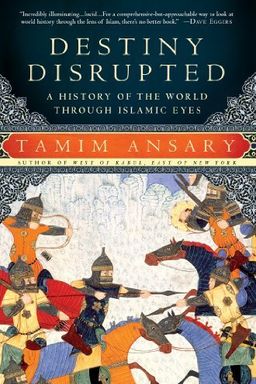
Why do Islamic and Western histories seem like two parallel lines running through the same centuries? Tamim Ansary’s central argument is that geography—and the patterns of connection it fosters—shaped two contrasting but intertwined civilizational stories. The Mediterranean world, bound by the sea, developed loops of trade, naval empires, and a story of city-states culminating in Greece and Rome. The Middle World—the land corridor stretching from the Indus to Istanbul via Mesopotamia, Persia, and the Levant—grew around overland exchange, caravan routes, and imperial bureaucracies. This deep structural difference is the foundation from which Ansary unfolds Islamic history as the second great narrative of Eurasian civilization.
Geography as destiny
You can think of trade routes as civilizational bloodstream. River valleys like the Tigris, Euphrates, and Indus anchored early urban societies, while mountain passes and caravan routes connected far-flung peoples. Where routes converge, civilizations exchange ideas—and claim centrality. The Levant, lying at the seam where sea-based and land-based worlds meet, became a recurring battlefield of ambitions. Its geography made it a perennial crossroads—and the fault line where these two historical narratives most often collide.
Islam’s emergence as Middle World unification
Islam’s rise in the 7th century can therefore be read not as an outsider’s eruption into “Western history” but as an organic reassembly of the Middle World’s land-based connective tissue. When Muhammad migrated from Mecca to Medina—the Hijra—he inaugurated not only a faith but a political community. The Umma embedded theology into governance and legal order. Abu Bakr’s suppression of apostasy linked faith with political unity—establishing Dar al-Islam as both moral vision and territorial reality. This fusion of religion and polity was the Middle World’s answer to Rome’s sea-based empire: a universal order knit by land and law rather than fleets and commerce.
From conquest to culture
Under the Rashidun khalifas, conquest extended Islam’s frontiers with startling speed—across Persia, Byzantium, and North Africa. But the deeper transformation arose when conquerors built institutions. The Umayyads and Abbasids turned the initial military success into bureaucracy, learning, and a cosmopolitan high culture. Baghdad became not just a capital but a symbol of intellectual gravity: translations of Greek science, Persian administration, and Indian numeracy met under one dome. Ansary calls this moment a civilization’s conversion from adrenaline to muscle memory—empire becoming culture.
Authority, law, and the struggle for meaning
Islamic law and theology matured as efforts to preserve cohesion after prophets and khalifas were gone. The ulama emerged as the nerve center of the social organism—interpreters of Qur’an and hadith, guardians of legal continuity, independent of rulers. Their insistence on isnad (chains of transmission) and disciplined reasoning stabilized the realm but also fostered conservatism: joining the learned meant mastering tradition, not reinventing it. Yet out of this intellectual conservatism came extraordinary creativity: Ghazali’s synthesis of law, piety, and mysticism turned philosophy inward, rebalancing the tension between reason and revelation.
Empires, encounters, and reversals
Turks, Mongols, and Ottomans demonstrate a recurring Middle World rhythm: nomadic conquest followed by bureaucratic recovery. The Mongol trauma of 1258 shattered Baghdad, but Islam’s cultural DNA—its legal, educational, and spiritual systems—outlived empire. The Ottomans reassembled the pieces into a new form, combining Turkish martial vigor, Persian bureaucratic craft, and Arabic religious authority. Then, during the “Gunpowder Empires” era, the Ottomans, Safavids, and Mughals welded new technologies of power to distinctive cultural orders—each aligning politics with ritual, language, and art to sustain vast, plural societies.
Intersection and contrast with Europe
While the Middle World stabilized under Islamic frames, Europe redefined itself. The Reformation decentralized spiritual authority, the Scientific Revolution built cumulative method, and nation-states fused commerce with power. Together these gave Europe an expansive drive that eventually overwhelmed the old Islamic heartlands. Through corporate empires—the East India Companies—and later industrial and financial leverage, Europe reversed the ancient trade flow. The Middle World, once nucleus of connectivity, became periphery to new maritime powers. Its empires unraveled not through battle alone but through loans, concessions, and dependency.
Reform, oil, and the modern paradox
The nineteenth and twentieth centuries brought multiple Islamic responses: Wahhabi puritanism, Aligarh modernism, and Jamaluddin Afghani’s pan-Islamism. Each tried to reconcile authenticity with renewal. But oil’s arrival and Cold War geopolitics reconfigured everything: states acquired wealth without taxation and legitimacy without representation. A Westernized elite sat atop dispossessed masses nourished by the language of justice, faith, and identity. The result was a landscape primed for revivalist—and sometimes violent—movements using the vocabulary of religion to contest both foreign dominance and internal inequality.
Key understanding
Ansary’s greater insight is that Islamic history is not deviation but parallel civilization—shaped by distinct geography, rhythms of empire and reform, and interpretations of unity. Reading both worlds together reveals not a clash of faiths but a conversation between different architectures of connection: one maritime, one terrestrial, both seeking universality in their own image.