
Idea 1
Design for How People Actually Learn
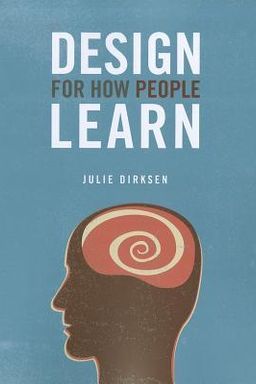
Why do some classes inspire you to change how you think and act, while others fade from memory the moment you leave? In Design for How People Learn, Julie Dirksen argues that the difference isn’t found in better PowerPoints or fancier e-learning tools—it’s in understanding how people actually learn. Dirksen contends that learning design should mirror human cognitive and emotional processes, not just pour information into passive listeners. Instruction, she reminds us, is a journey from knowing to doing.
This book functions as both a manual and a manifesto for anyone creating educational experiences—teachers, trainers, managers, UX designers, or instructional specialists. Instead of focusing solely on content delivery or presentation style, Dirksen emphasizes creating learning environments and experiences that change what people actually do afterwards. She shows that most ineffective learning programs make one fatal assumption: that if people know the right information, they’ll automatically act on it. They won’t.
Understanding the Learner’s Journey
Dirksen invites you to imagine learning as a journey from novice to competent performer. Learners begin with gaps—spaces between where they are and where they need to be. These gaps might involve missing knowledge, but they could just as easily involve motivation, environmental obstacles, or even organizational culture. As she memorably says, “Don’t build a suspension bridge to fix a pothole.” Before designing a learning experience, you must discover what the real gap is.
Borrowing examples from professional training, corporate learning, and education, Dirksen shows how good learning design begins with diagnosis, not dumping information. For example, when a company wants to reduce staff turnover, it rarely helps to produce modules on company history; instead, learning designers must uncover whether the real problem is poor management skills, low motivation, or structural barriers. Once you pinpoint the gap, you can design the right bridge to close it.
Brains, Behavior, and Context
The book bridges cognitive psychology and practical design. We learn why memory is “messy,” why attention is fragile, and why emotion—and not logic—so often drives learning outcomes. Like Daniel Kahneman’s concept of “System 1 and System 2” thinking, Dirksen’s metaphor of “the rider and the elephant” (adapted from Jonathan Haidt) captures the cognitive tug-of-war between our rational and emotional minds. To design effectively, you must talk to both—the rider needs clear reasoning, but the elephant must care enough to move.
Learning design, then, becomes a multidimensional craft: you manage attention, structure memory, elicit emotion, and help learners translate knowledge into action. Dirksen’s toolkit includes principles like chunking information to reduce cognitive load, crafting scenarios that add friction to make learners think, and using feedback loops to turn knowledge into skill. She also calls for “environmental design”—putting knowledge into the learner’s workspace or system, so they don’t have to memorize what can be made visible and actionable.
From Knowledge to Skill to Motivation
Dirksen structures her framework around several essential lenses: designing for knowledge (what learners must remember), for skills (what they must practice), for motivation (why they choose to act), and for environment (where the learning must live). Through vivid examples—like Marianna, the struggling new manager, or Todd, the overwhelmed restaurant trainee—she shows how each layer of design either accelerates or hinders meaningful learning. A perfectly written training manual is useless if it fails to engage the learner’s motivation or ignores the realities of the work environment.
Ultimately, Design for How People Learn is less about instructional theory and more about human-centered empathy. Good design begins with curiosity about the learner’s world—their frustrations, their context, their emotional landscape. Only then can you design experiences that are sticky, accessible, and transformative. As Dirksen writes, the goal is not just understanding but doing—because true learning only happens when someone uses what they know to create change.