
Idea 1
Food, Genes, and Human Potential
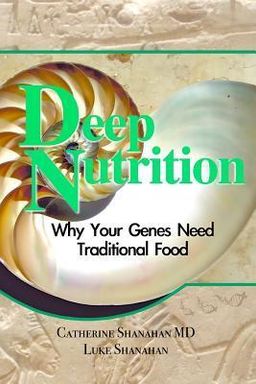
What if your everyday meals could reprogram your genes and shape your descendants’ health for generations? In Deep Nutrition, Dr. Catherine Shanahan—both a physician and a biochemist—argues that modern disease and physical decline come not from bad luck or aging, but from a breakdown in the information our bodies receive through food. The book’s central claim is simple yet radical: your genes are not fixed blueprints. They are responsive instruments that listen to your diet, environment, and lifestyle—constantly tuning performance through epigenetics.
How Your Genes Listen to Food
Epigenetics, meaning “upon the gene,” explains how chemical tags—methyl groups, histone modifications, and small RNA signals—turn genes on or off without altering the DNA sequence itself. Shanahan illustrates this with Dr. Randy Jirtle’s famous agouti mouse study: supplementing pregnant mice with folate, B12, and choline switched their yellow, obese offspring into brown, sleek, healthy ones. Nutrition literally rewrote their genetic story. Similarly, human studies like the Dutch Hunger Winter reveal that famine during pregnancy leaves epigenetic marks still visible in grandchildren.
Genes, she writes, “work fine until disturbed.” Nutrient deficiencies, toxins, and processed foods distort epigenetic signals and misinform DNA. But those effects are reversible—if you repair your environment and diet. Identical twin studies show that as lifestyles diverge, their epigenetic marks drift, proving that genes are dynamic participants in life, not static instructions.
The Four Pillars: Ancient Rules for Modern Health
Shanahan rebuilds nutrition around what she calls the Four Pillars of World Cuisine: meat on the bone, organ meats, fermented and sprouted foods, and fresh raw produce. These represent the global wisdom of traditional diets—from Swiss villagers and Polynesian islanders documented by Weston A. Price, to Maasai herders and Okinawan elders. Cultures following these rules produced strong jaws, straight teeth, robust bodies, and resistance to chronic disease. Their food contained not only calories, but biochemical instructions that calibrated human growth and resilience.
Modern commerce replaced those nutrient-dense traditions with refined sugar, white flour, and industrial fats. Shanahan compares the modern food system to “living in outer space”: highly processed, shelf-stable, calorie-dense, but nutrient-dead. This shift, she argues, is the real cause of degenerating bone structure, weak jaws, fertility decline, and escalating chronic disease.
Vegetable Oils and Sugar: The Twin Destroyers
Shanahan exposes two culprits she calls the “modern kapu,” or forbidden foods: industrial vegetable oils and refined sugars. Combined, they oxidize and glycate your body’s lipoproteins—the delivery vehicles for fat-soluble nutrients—disabling metabolic communication across tissues. Damaged lipoprotein “labels” accumulate on artery walls, ignite inflammation, and eventually form the unstable plaques behind heart attacks and strokes. She weaves in research from Gerhard Spiteller showing that oxidized linoleic acid derivatives inside LDL, not cholesterol itself, predict cardiovascular risk. Sugar makes things worse through glycation: attaching to proteins, stiffening tissues, and erasing apoprotein identifiers that normally keep circulation clean.
These same mechanisms, she argues, underlie Alzheimer’s, diabetes, infertility, and even neurodevelopmental disorders. Oxidized oils assault the brain via seven routes—from gut dysbiosis and impaired blood flow to DNA mutation. Avoiding them, she insists, is the single most powerful modern health intervention.
Beauty, Symmetry, and the Epigenetic Ideal
One of Shanahan’s most provocative claims is that physical beauty is a biological indicator of health. Using Dr. Stephen Marquardt’s “golden ratio” facial mask, she argues that proportionate faces signal optimal nourishment and robust genetic expression. Across races, this dynamic symmetry reflects well-fed growth of bone, collagen, and elastin—the molecular infrastructure of beauty and function. You are not chasing vanity by seeking symmetric, clear-eyed, vibrant offspring; you are pursuing genetic competence. Poor maternal and paternal nutrition, especially when pregnancies are closely spaced, can erode that symmetry over generations—a concept Shanahan calls the “Sibling Strategy.”
Her message is empowering, not fatalistic: with nutrient-dense traditional foods, time between pregnancies, and the elimination of toxic fats and sugars, families can restore lost structural integrity and even reverse visible decline. Beauty, in her view, equals health because it mirrors successful genetic expression.
Modern Medicine’s Blind Spot
Shanahan criticizes conventional medicine for ignoring this nutrition-health link. Medical education devotes minimal time to diet, focusing instead on pharmaceuticals and procedures. Her clinical stories—like patients recovering from migraines or infertility by changing fats—illustrate how neglected the food gene interface remains. Her call is to reclaim ancient culinary skills as modern preventive medicine. Cooking, fermenting, and bone-stock making are not quaint rituals; they are the infrastructure of human biology.
Core insight
Your DNA is not destiny. Food is information, and by restoring the Four Pillars—nutrient-dense, unprocessed, traditional foods—you can reawaken your genetic potential and build stronger, healthier generations to come.
From biochemistry to family planning, from bone broth to epigenetic bookmarks, Shanahan’s synthesis is both scientific and cultural. It’s a manifesto for returning food to its rightful role as the architect of human vitality.