
Idea 1
Biology as an Engine of Action and Evolution
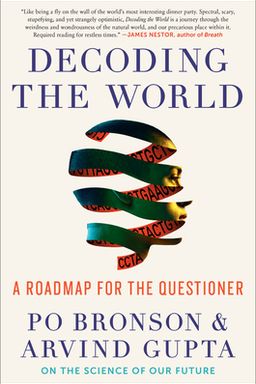
What happens when biology leaves the academy and becomes a startup engine? The book traces that transformation through IndieBio, a revolutionary biotech accelerator founded by Arvind Gupta. Its core argument is that biology evolves fastest when people act—when labs run experiments like living organisms, adapting to uncertainty rather than waiting for perfect plans. That philosophy, born in a shabby San Francisco basement, connects the book’s many threads: from cellular life to climate, from CRISPR ethics to human breath and memory.
The Do‑Tank Ethos
IndieBio replaces talk with action. Situated under a methadone clinic, the basement was deliberately uncomfortable—a filter for talkers. Here, PhDs without labs could build prototypes, not just papers. Gupta’s mantra—“There is no plan, just a way”—shaped a culture where speed mattered more than certainty. The accelerator invested small sums (~$250,000 per team) but high intensity: hundreds of experiments, rapid iterations, and brutal selection. Companies like Memphis Meats (lab-grown meat), Prellis (3D lymph-node printing), and Pembient (synthetic rhino horn) began here as improbable ideas that became real industries.
Experimentation as Human Biology
The COVID crisis became its proof case. When the pandemic hit, IndieBio turned uncertainty into coordinated chaos—teams testing antivirals, diagnostics, and antibody-printing systems within weeks. Akash ordered 735 kilograms of niclosamide for clinical trials in an hour-long decision. Others built CRISPR-based $5 tests or printed lymph nodes to speed antibody discovery. The moral was clear: speed beats certainty. You learn through iteration, as biology itself does—B cells mutate until success, labs mirror that with experimental parallelism.
Oversight and Ethics in Open Biology
As power shifts from institutions to individuals, risk grows. The book revisits Asilomar—the 1975 conference where recombinant DNA researchers self-regulated—to show that scientific communities can manage risk. DNA synthesis firms today flag suspicious orders (~1%), share warnings, and block dangerous sequences. The He Jiankui CRISPR baby scandal underscored global limits of peer pressure and prompted new whistleblower protocols. Oversight, the authors stress, is evolving alongside openness.
The Expanding Canvas of Biotech
Beyond health, biotech now redefines food, environment, and even consciousness. Lab-grown eggs and meats illustrate capitalism’s self-renewal: fight harmful markets by making better alternatives. Carbon capture in Iceland and microbe management reflect biology’s planetary scale. Neuroscience shows how viral genes enable memory—ARC proteins acting like ancient viral capsules—and small RNAs serve as emergency messengers across species. Together, it forms a view of life as data, chemistry, and self-organizing action.
Unifying Insight
Biology mirrors entrepreneurship: systems evolve through failure, feedback, and adaptation. Whether cells, companies, or civilizations, survival hinges on experimentation under pressure—not guarding comfort, but embracing uncertainty as fuel for discovery.
Across sections—from CRISPR patents to climate inertia, robotics, and crypto finance—the authors offer a single lens: life is a thermodynamic, adaptive system. Progress favors those who experiment. Waiting for a perfect blueprint means missing evolution in action.