
Idea 1
Decentering Whiteness to Create Equitable Workplaces
What would your workplace look like if whiteness were no longer its invisible norm? If policies, leadership, and everyday interactions didn’t unconsciously revolve around white comfort, values, and cultural norms—but instead truly reflected equity and inclusion for all?
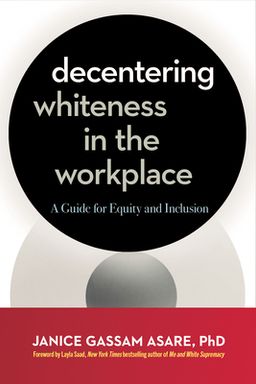
In Decentering Whiteness in the Workplace: A Guide for Equity and Inclusion, Dr. Janice Gassam Asare says not enough organizations are asking this question. She argues that while many companies issued statements or posted Black Lives Matter squares after 2020, most never examined the deep structural problem: the ways whiteness itself is centered in their culture. According to Asare, decentering whiteness—shifting systems, language, and thinking away from white norms—is the only path toward real equity at work.
Understanding White-Centering
Asare defines white-centering as “actions and behaviors that prioritize, uplift, amplify, and venerate white people and white culture above others.” It shows up whenever white comfort dictates decision-making—such as avoiding words like “white supremacy” in trainings—or when white feelings are prioritized over the harm experienced by racialized employees. In a conference anecdote that opens the book, Asare describes how a white woman derailed a Black woman’s story about hair discrimination by comparing it to her own experience as a redhead. This, she says, is white-centering in everyday life: the compulsion to re-center one’s own feelings, even in discussions meant to highlight others’ pain.
White-centering, Asare notes, is just one expression of white supremacy culture, which she defines as a system of beliefs and institutions designed to preserve white power and privilege. “Whiteness” here is not an ethnicity but a social construct—a set of norms and systems built over centuries to associate whiteness with freedom, goodness, and leadership (drawing on historians like Theodore Allen and Nell Irvin Painter, whom she cites). To decenter whiteness, organizations must first recognize their own participation in this structure, then consciously reimagine who their systems serve.
From Awareness to Accountability
The book’s central framework—the 3 A’s model of Awareness, Acknowledgment, and Accountability—proposes that liberation starts with self-recognition. Many organizations become stuck at awareness: issuing statements or hiring consultants but failing to accept that their policies, metrics, and leadership pipelines are built for the comfort of whiteness. Real transformation, Asare argues, demands the kind of acknowledgment that includes apology, transparency, and systemic change. Accountability then requires structures that keep equity continuous and measurable, not optional or symbolic.
This journey applies to individuals as much as institutions. Asare vulnerably shares her own moments of internalized whiteness—longing for straight hair, desiring thinness, equating education with respectability—to show how white beauty and success standards shape identities even among Black professionals. She insists that everyone, including Black and non-Black people, must examine how they’ve internalized and reproduced white-centered thinking in order to uproot it within their workplaces.
Why This Work Matters
Why should white employees or organizations care about decentering whiteness? Asare stresses that white supremacy culture harms everyone: it encourages perfectionism, scarcity mindsets, and disconnection. It limits imagination and empathy for all workers. By creating systems designed for a dominant few, companies suppress creativity and alienate the majority—undermining their long-term sustainability. DEI efforts that leave these systems untouched will always fail, she warns, because they try to diversify within white frameworks rather than redesign them.
Throughout the book, Asare mixes scholarship, case studies, and personal narrative to show how workplaces can instead recenter equity. She unpacks white-centered dynamics in hiring, promotion, evaluation, policy, leadership, and even empathy practices, offering examples—from Wells Fargo’s “fake diversity interviews” to Starbucks’ mishandling of racism cases—that illustrate how good intentions collapse when white perception outweighs marginalized experience.
A Vision of True Inclusion
The book’s message is both confronting and hopeful: equity work is not a one-time training or checklist but a continuous unlearning of whiteness. “Equity will never be a reality while whiteness is being centered in our workplaces,” Asare writes. To achieve justice, institutions must center their most marginalized—especially Black employees—because only then will freedom cascade outward to all. Quoting the Combahee River Collective, she reminds us: “If Black women were free, it would mean everyone else would have to be free.”
By the end of Decentering Whiteness in the Workplace, you’re left with a powerful question: what if we built workplaces where white comfort wasn’t the measure of professionalism, value, or belonging—but where humanity, in all its difference, defined success? That is Asare’s invitation and challenge—to reimagine not just more diverse offices, but workplaces grounded in justice.