
Idea 1
Reclaiming Death: Learning to Live by Facing Mortality
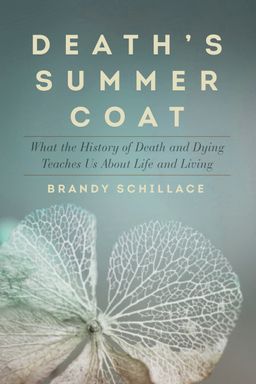
When was the last time you talked about death—really talked about it? Not as a statistic or a tragedy in the news, but as something personal, inevitable, and even meaningful? In Death’s Summer Coat, cultural historian Brandy Schillace invites you to do what most of Western society avoids: confront mortality. Through history, anthropology, medicine, and art, she argues that our avoidance of death has impoverished our experience of life itself. To live fully, Schillace contends, we must reintroduce death into our conversations, our rituals, and our communities.
Across its wide-ranging chapters, Death’s Summer Coat traces humanity’s evolving relationship with mortality—from ancient burial traditions to the polished sterility of modern medicine. It examines how different cultures respond to loss and what we can learn from societies that keep the dead near rather than hidden. Schillace blends scholarship with storytelling, personal reflection with cross-cultural insight, to reveal that remembering our mortality isn’t morbid; it’s deeply life-affirming.
Our Death-Phobic Age
Schillace begins by confronting the peculiar silence around death in contemporary Western culture. In the modern West—especially in the United States and Britain—death has been medicalized and sanitized. Hospitals, funeral homes, and euphemisms shield us from its reality. People no longer ‘die’; they ‘pass away.’ We fight battles with disease rather than prepare for natural endings. Even grief is time-limited: psychiatric handbooks define ‘normal’ mourning as two months, after which sadness may be labeled pathological. The result is not a victory over death, but alienation from one of life’s most universal experiences.
This silence, Schillace explains, is historically new. Across most of human history, death was visible, communal, and woven into daily life. Children saw the dying. Families washed and prepared bodies. Rituals guided communities through grief. In contrast, the twenty-first century’s promise of endless youth and technological innovation encourages denial. Companies like Google’s Calico project and thinkers such as Ray Kurzweil chase biological immortality, echoing what Schillace calls the West’s “war on mortality.” But pretending we can defeat death only heightens our fear of it.
The Human Need for Ritual
Rituals, she argues, are not quaint relics of superstition but structures that give meaning to chaos. They help communities absorb loss and integrate it into shared identity. When those rituals erode—as they have in modern Western societies—grief becomes harder to bear. Anthropology, neuroscience, and personal observation converge on this point: humans need symbolic acts to process death.
To illustrate, Schillace turns to cultures where death is a living presence. The Tibetan sky burial, for instance, feeds human remains to vultures not out of savagery but reverence—returning the body to the natural cycle of life. Among Indonesia’s Torajans, embalmed relatives are kept in the home and treated as “sick” rather than dead until the funeral can be held, a process that can take years. Families continue to lay out food and new clothes for them. Death, here, is not an abrupt end but a transition within community life.
These rituals, as alien as they may seem to Western readers, reveal something profound: they connect grief with belonging. In the author’s words, “Death, when kept near, ceases to threaten us, ceases to be alien.” Modern medicine’s clinical distance—its curtain-drawn deaths in intensive care units—has stolen that familiarity. By rediscovering ritual, we recover empathy.
History as a Mirror
Schillace also shows that even within Western history, our relationship with death has changed dramatically. The medieval ‘good death’ emphasized preparation, confession, and community presence. The Black Death shattered those patterns but also democratized death, challenging church authority. The Reformation further stripped away intercessory rituals—prayers for the dead, masses for souls in purgatory—creating new psychological and spiritual distance. By the Victorian era, industry had commodified grief: mourning jewelry, postmortem photography, and elaborate funerals transformed remembrance into fashion. Today, both religion and science have failed to fill the void left by that loss of shared meaning.
Yet Schillace insists this is not a lament but an opportunity. Just as the Cambodians created new ceremonies after the genocides of the Khmer Rouge, we too can innovate rituals for a secular age. Death cafes, “natural” burials, and the rise of digital memorials represent attempts to recover what the Victorians took for granted: that grief must have form and death must be witnessed.
Learning to Live with Death
Ultimately, Death’s Summer Coat is both diagnosis and prescription. Our crisis, Schillace suggests, is not death itself but our refusal to engage with it. By studying mortuary cannibalism, anatomy theatres, and death-positive salons with the same curiosity, she dismantles the taboo. What unites all these practices—from medieval bones dressed in jewels to modern ‘green burials’—is their insistence that life and death are continuous, not separate. To “wear death’s summer coat” means to honor that continuity, to recognize beauty in impermanence.
Schillace’s exploration leaves readers not with morbidity but with hope: that by reclaiming death as a shared human experience, we recover deeper compassion for one another. Death is not our enemy, she reminds us—it is our oldest teacher. Her call is simple but profound: bring death back into the light, and life will be richer for it.