
Idea 1
Raising a Feminist Means Raising a Whole Human
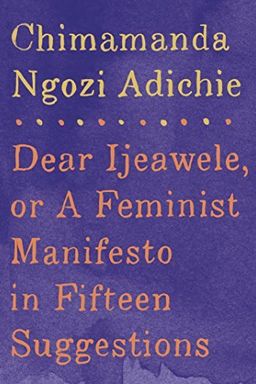
What does it really mean to raise a feminist child? Is it about teaching slogans and fiery speeches—or something quieter, woven into everyday moments? In Dear Ijeawele, or A Feminist Manifesto in Fifteen Suggestions, Chimamanda Ngozi Adichie argues that feminism begins in the ordinary spaces of family, language, play, and self-worth. Written as a heartfelt letter to her friend, who had just become a mother, Adichie offers fifteen deeply personal yet universally relevant suggestions for how to raise a girl who knows she matters equally to everyone else.
Adichie’s central conviction is simple but revolutionary: every child, especially every girl, must learn that she matters equally—no conditions, no caveats, no compromises. This belief is the bedrock of her feminist framework. To live by it, you must first internalize self-worth, then create spaces where equality becomes ordinary, not exceptional. The book’s wisdom isn’t offered as commandments but as encouragements—realistic, tender, and rooted in Adichie’s Nigerian upbringing and her global perspective as a writer who has lived across cultures.
Rethinking What Feminism Really Means
Adichie dismantles the idea that feminism is rigid or angry. Instead, she presents it as contextual and human. Her two foundational tools—the “feminist premise” (“I matter equally”) and the “reversal test” (“Can you reverse X and get the same results?”)—create a practical way to identify inequalities in everyday life. This means constantly asking whether the same rule applies across genders. For instance, if a woman forgives her husband’s infidelity, would the husband forgive hers? The impossibility of the reversal exposes hidden gender hierarchies and cultural double standards.
(As Adichie notes—and sociologists like bell hooks agree—true feminism challenges the structure of domination rather than merely swapping who dominates.)
Why This Conversation Matters Now
This manifesto emerges at a time when global discourse on gender equality is often either politicized or performative. Adichie strips it back to the personal. Feminism, she says, should be taught not through doctrine but through daily modeling—from how we share household tasks to how we talk about marriage and ambition. Every cultural practice must be questioned through the lens of equal worth. Her advice is not just for mothers but for anyone shaping the next generation—teachers, fathers, siblings, even governments. It’s a reminder that equality is a practice, not a policy.
Her letter embodies love and realism. It acknowledges that raising a feminist may mean swimming upstream against tradition, religion, and social pressure. But it also insists that you can anchor this rebellion within joy, wisdom, and compassion. Feminism, for Adichie, is not about denying masculine traits or rejecting femininity—it is about freedom of choice.
The Scope of Her Suggestions
Across fifteen suggestions, Adichie builds a holistic picture of feminist parenting. She begins with self-identity (“Be a full person”) and shared responsibility (“Do it together”). From there, she moves into ideology—rejecting gender roles and “Feminism Lite,” a diluted version that tolerates male dominance as long as men are “kind.” Later suggestions tackle reading and language, body image, sexuality, marriage, love, and cultural pride. Each idea expands feminism from a political label into a living, breathing mode of human respect.
By blending storytelling, humor, and moral clarity, Adichie makes her arguments disarmingly accessible. You’ll find yourself nodding at her anecdotes of Nigerian baby shops separating pink from blue clothing, or smiling at her own mother’s certainty that a child “belongs to the father.” These examples, though local, speak universally—the conditioning of gender begins almost at birth, often so quietly that we don’t notice it until we begin questioning the meaning of “girl” and “boy.”
Beyond Ideology: A Call for Human Wholeness
The deepest layer of Adichie’s message is that feminism isn’t just about women—it’s about wholeness. Her directive to “be a full person” applies to anyone, because the world loses balance when half of humanity is taught to shrink. She urges mothers to reject the glorified exhaustion of “doing it all,” to ask for help, to share parenting equally, and to demand equality not as a favor but a fact. This rhythm of equality weaves through every chapter, connecting care, work, language, and love into a coherent vision of freedom.
(Philosopher Martha Nussbaum’s idea of “human flourishing” resonates here—Adichie’s feminism is ultimately about enabling each person, regardless of gender, to achieve the fullness of their potential.)
Why It Stays With You
What makes Dear Ijeawele unforgettable isn’t just the elegance of its prose, but its emotional honesty. Adichie isn’t prescribing a utopia; she’s building courage for imperfection. You may “do all the right things” and still face resistance, she says, because social norms are deeply entrenched. You may even fail. But what matters is trying—modeling equality, questioning stereotypes, speaking truth with love, and allowing your child to see your humanity.
“For me, feminism is contextual. I matter equally. Full stop.”
In the end, Adichie’s manifesto is both intimate and global—a personal letter written with the urgency of a social movement. It’s an invitation to raise children, and really to live, in a way that honors equal humanity. Because when you raise a feminist child, you’re not just shaping one life—you’re reshaping the world’s expectations of what women, and men, can be.