
Idea 1
Building China’s Modern Economy
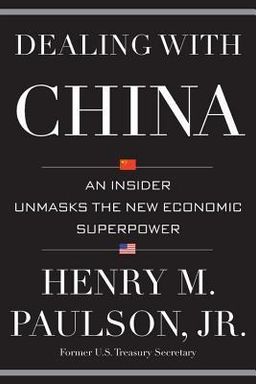
How do you turn a poor agrarian state into an economic superpower within a single generation? Henry Paulson’s account shows that China’s transformation was not a miracle—it was deliberate experimentation, blending state control with market dynamism. Deng Xiaoping’s reforms after 1978 shifted the economy from isolation to integration, building what Paulson calls “socialism with Chinese characteristics.” That hybrid model—part central command, part competitive capitalism—reshaped global trade and investment.
Reform as Experimentation
Deng’s mantra, “crossing the river by feeling the stones,” captures China’s incremental reform strategy. Policies often began as local tests—household responsibility in agriculture, township and village enterprises, and special economic zones like Shenzhen—before scaling nationally. Pragmatism trumped ideology. The state loosened controls where markets worked but maintained authority over strategy, credit, and core assets. By combining an abundant labor force with imported technology, China became the world’s factory floor and the anchor of global supply chains.
Scale, Trade, and Disparity
By the early 2000s, China was an industrial colossus—producing half the world’s coal and metals, consuming staggering volumes of energy, and poised to surpass the U.S. in total GDP. Yet per capita income ranked around 80th globally. That disparity drove a new policy agenda: pursue quality, not just quantity, of growth; raise consumption; and balance efficiency with equity. The combination of world-beating scale and uneven prosperity shaped everything that followed—from privatization to banking reform, urbanization, and diplomacy.
Beyond Growth: Complexity and Reform Cycles
Growth unleashed contradictions: environmental degradation, local debt, and governance gaps. Each reform wave—privatizing SOEs, restructuring banks, opening markets—was both a response to these cracks and a training ground for better management. Paulson’s experience, first as Goldman Sachs CEO and later as U.S. Treasury Secretary, makes the book a study in learning-by-doing at national scale. China’s leaders continually tested and refined the boundaries between state control and market freedom, and foreign advisers like Paulson played critical roles in helping shape pragmatic solutions.
A Core Idea
China’s rise is a story of institutions adapting faster than ideology: markets as instruments, not as creeds, guided by political caution and relentless experimentation.
Why This Matters
For you—as an investor, policymaker, or student of global systems—the takeaway is that China’s transformation is not a closed chapter. Its hybrid model continues to evolve, and understanding how it balances control and openness, growth and risk, cooperation and competition remains crucial to anticipating global economic shifts. Paulson’s lens, grounded in direct dealmaking, banking reform, and high-level diplomacy, reveals not just what China became, but how its methods may now influence the next frontier of global capitalism.