
Idea 1
How Wealth Became Political Power
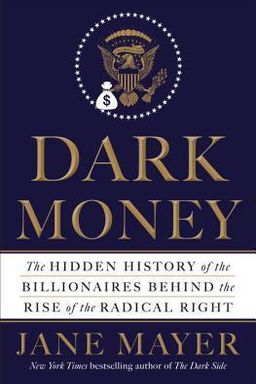
What happens when private fortunes are transformed into a permanent political engine? In Jane Mayer’s Dark Money, you witness how a handful of ultra-wealthy families—including the Kochs, Scaifes, Olins, and DeVoses—quietly reshaped American politics through a strategy that fuses philanthropy, ideology, and secrecy. Mayer argues that the United States now lives within an invisible architecture of influence built by these donors: a system that has redefined what political participation, persuasion, and democracy mean.
This book traces a fifty-year campaign to re-engineer American governance from the top down—and the bottom up—by altering ideas, laws, and public opinion. The story connects the libertarian roots of the Koch brothers to their corporate empire, their support for academic programs and think tanks, the creation of "dark money" political groups, and the eventual coordination of state and federal campaigns that altered national policy. Mayer’s central claim is that this transformation of wealth into power has eroded transparency and accountability while making plutocratic influence appear permanent and legitimate.
From Ideology to Infrastructure
The story begins with ideas. After studying libertarian icons like Hayek and Mises, Charles Koch concluded that American society could only be restructured by first changing the intellectual climate. His early funding of the Freedom School, the Institute for Humane Studies, and the Cato Institute laid the groundwork for a market-centric worldview. When direct politics failed (as in David Koch’s 1980 Libertarian Party run), the brothers shifted to long-term institution building—an effort that would later be dubbed the “Kochtopus.”
By the 1980s, foundation money systematically flowed into think tanks, university programs, and legal training institutes that would populate future administrations and the judiciary. This, combined with corporate-style donor coordination, transformed isolated intellectual support into a vertically integrated propaganda and policy machine.
The Philanthropy Paradox
Mayer exposes how U.S. tax policy turned charitable giving into a tool of political engineering. Foundations such as Olin, Bradley, and Scaife portrayed themselves as educational or philanthropic, but they acted more as private banks for ideology. Because the wealthy could deduct or shield assets by creating foundations and donor-advised funds (like DonorsTrust), political influence became not only legal but tax-subsidized. Fred Koch’s estate structure, which forced his heirs to direct charitable payments for tax reasons, ironically launched his sons into political activism. Philanthropy became a socially accepted disguise for political control.
Secrecy, Language, and Organization
Mayer’s reporting uncovers how donor summits, private retreats, and secret nonprofits evolved into an “operating system” for power. At exclusive Koch meetings—such as Indian Wells or Palm Springs—phones were seized, sound-masking devices ran continuously, and participants pledged anonymity. The rhetoric of “investors” and “return on investment” signaled that politics had become a private marketplace for billionaires pooling funds to “take back” America from regulation and redistribution. With budgets approaching $900 million, the network rivaled the national political parties themselves.
From Climate Denial to Electoral Domination
The same machinery that produced think tanks also financed campaigns of disinformation. In the climate arena, donors funded contrarian scientists and institutes such as the George C. Marshall Institute, Cato, and Heartland to manufacture scientific doubt. The motive was clear: if regulation endangered their core businesses—oil, gas, and coal—then buying influence was rational behavior. By 2010, these networks had become political juggernauts, deploying funds in the wake of the Supreme Court’s Citizens United ruling to sway elections without disclosure.
The 2010 midterm elections revealed dark money’s power: a web of nonprofits and “social welfare” groups funneled millions through intermediaries like the Center to Protect Patient Rights. These mechanisms helped flip Congress and win state legislatures. REDMAP, a data-driven redistricting project, used small targeted investments to secure durable Republican control—a textbook demonstration of how ideological capital could become governing power.
Rebranding Wealth as Virtue
After the 2012 backlash, the Koch network shifted again. Realizing they appeared self-interested, strategists like Richard Fink and Arthur Brooks pushed a “well-being” narrative: free markets improve human flourishing, and deregulation is moral generosity. Foundations poured money into “well‑being centers,” campus programs, and minority outreach. The result was a new moral vocabulary masking class interest under the language of care. Yet beneath this compassionate marketing, the machinery of wealth-driven politics continued intact—more sophisticated, more opaque, and more enduring.
“Dark money,” Mayer insists, “is not just money without names—it’s power without accountability.”
This book shows you how that power operates through universities, courts, legislatures, and media, shaping what citizens believe to be reasonable or inevitable. To understand modern politics, you must recognize the system of hidden giving that has turned private wealth into a privatized democracy.