
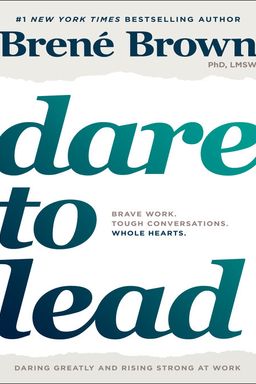
Dare to Lead cover

Dare to Lead

by Brene Brown

Dare to Lead by Brene Brown reveals the power of vulnerability in leadership. Learn to overcome fear, embrace authenticity, and foster a culture of innovation and honesty. This compelling guide empowers leaders to transform their teams and themselves in today''s competitive world.

Leading with Courage Over Comfort

What if courage—not fear—was the defining feature of your leadership? In Dare to Lead, Brené Brown argues that true leadership is not about titles, power, or control. It’s about bravery, vulnerability, and wholehearted connection. Brown contends that daring leaders create cultures where people feel safe enough to bring their whole selves to work—to innovate, to fail, and to rise again. At its core, Dare to Lead is a manifesto for transforming leadership through four teachable skill sets of courage: rumbling with vulnerability, living into our values, braving trust, and learning to rise after failure.

Why Courage Matters in Leadership

The driving question behind this book is deceptively simple: what, if anything, about the way people are leading today needs to change? Through twenty years of research and interviews with 150 global leaders, Brown found one consistent answer—we need braver leaders and more courageous cultures. Fear is rampant in workplaces: fear of failure, fear of criticism, fear of not being enough. Yet Brown reminds us that courage and fear are not opposites—they coexist. If you’re brave, you’re afraid at the same time. Where most leadership disciplines focus on strategy and execution, Brown focuses on the human side—the messy emotional underbelly that shapes decisions, relationships, and trust.

The Four Skill Sets of Courage

Brown reframes courage as a collection of skills that are teachable, observable, and measurable. These skills form the backbone of the book:

  • Rumbling with Vulnerability: The ability to have tough, honest conversations defined by curiosity and empathy rather than defensiveness.
  • Living into Our Values: Aligning words, actions, and intentions with our core beliefs, even when it’s uncomfortable.
  • Braving Trust: Building trust through consistent behaviors represented by Brown’s acronym BRAVING—Boundaries, Reliability, Accountability, Vault, Integrity, Nonjudgment, and Generosity.
  • Learning to Rise: Practicing resilience by owning our hard stories and rewriting their endings through curiosity, emotion awareness, and courage.

Brown’s point is clear: if we want resilient, innovative workplaces, we must normalize failure and teach the skills of rising before the fall. As she puts it, “Leaders must either invest a reasonable amount of time attending to fears and feelings, or squander an unreasonable amount of time trying to manage unproductive behavior.”

Vulnerability as the Foundation of Courage

In Brown’s framework, vulnerability is the beating heart of leadership. It’s not weakness—it’s uncertainty, risk, and emotional exposure. During her speaking career, Brown learned to whisper one word before stepping on stage: “People. People. People.” Removing the armor of titles and status helped her connect authentically with audiences—even those she feared would judge her. Through countless examples, including military commander Colonel DeDe Halfhill’s honest conversation about loneliness among airmen, Brown shows that vulnerability creates connection, and connection drives trust, belonging, and courage.

How This Book Changes Leadership Culture

Brown’s research proves that courage can be taught—and when leaders model it, trust and innovation thrive. She argues that the future of leadership depends on cultures of belonging rather than cultures of fitting in. As modern workplaces wrestle with polarization, perfectionism, and burnout, the antidote is what she calls “wholehearted leadership”—leading from your heart, not your hurt. The message resonates across sectors—from Fortune 50 companies to the U.S. military—because fear, shame, and disconnection are universal human experiences.

Why These Ideas Matter

Leaders today operate in an era marked by uncertainty and emotional overload. Traditional methods—command, control, compliance—no longer work. Brown’s framework gives you practical tools to replace fear with curiosity, blame with accountability, and judgment with empathy. Dare to Lead is not a soft-skills manual; it’s a hard reset for how we define success as leaders. It invites you to step into the arena, dust and sweat and all, and lead with your whole heart.


Rumble with Vulnerability

Brown begins her practical framework with what she calls the “rumble”—a raw, honest conversation where you lean into discomfort instead of armoring up. Vulnerability, she insists, is not confession or oversharing; it’s being open to uncertainty and emotional exposure. The power of rumbling with vulnerability lies in building mutual trust by naming fears and owning emotions rather than deflecting them.

How to Rumble

A rumble starts when someone says, “Let’s rumble,” signaling a shared commitment to stay curious, listen generously, and stick with the messy middle of problem-solving. The rumble requires emotional literacy—the ability to name and manage feelings such as shame, guilt, fear, or disappointment. As Brown notes, “Our ability to be daring leaders will never be greater than our capacity for vulnerability.”

Practical Tools: Permission Slips and Curiosity

Brown gives leaders tools to prepare for tough conversations. Permission slips are brief written notes you give yourself before a rumble: e.g., “Permission to be honest,” “Permission to listen more than speak.” During meetings, Brown encourages rumble starters like “The story I’m telling myself…” and “Help me understand…” These phrases open dialogue without blame.

Example: Colonel DeDe Halfhill

Colonel DeDe Halfhill modeled vulnerability when, confronted by exhausted airmen, she asked, “How many of you feel lonely?” Fifteen people raised their hands. Her honesty created a deeper conversation about connection—a topic rarely discussed in military settings. This moment shifted leadership culture by replacing performative toughness with human truth.

Why Vulnerability Is Courageous

Brown challenges leaders to reject the myth that vulnerability equals weakness. When people hide emotions, creativity and innovation die. She reminds us that every act of courage—whether speaking up about a mistake or asking for help—requires vulnerability. Across thousands of interviews (including military special forces and CEOs), no one could name a single courageous act that did not involve vulnerability.

(Similar emphasis on courageous vulnerability appears in Sheryl Sandberg’s Lean In and Simon Sinek’s Leaders Eat Last, which likewise link trust and openness to team resilience.)


Living into Values

Living into your values means practicing them every day—not just posting inspirational words on the wall. Brown argues that clarity of values is the North Star that keeps leaders grounded when critics roar and pressure mounts. Without defined values, fear and cynicism hijack decisions.

Defining Core Values

Brown urges leaders to identify no more than two core values—the beliefs that define who you are at your best. For her, they are faith and courage. Choosing just two forces focus: “If you have more than three priorities,” she quotes Jim Collins, “you have none.” Your behavior must tether to these values, even when it’s uncomfortable or inconvenient.

Turning Values into Behavior

To avoid “BS values,” Brown insists organizations translate values into teachable, observable behaviors. At her company, “Be brave. Serve the work. Take good care.” are backed by actions like setting boundaries and treating colleagues with respect. Melinda Gates explains that connecting disagreements to core values—like equity—creates productive dialogue even when solutions differ.

Boundaries and Positive Intent

One key behavioral value is assuming positive intent—offering the most generous interpretation possible of others’ actions. But this requires boundaries. “The most compassionate people are the most boundaried,” Brown writes. Boundaries define what’s okay and not okay, allowing generosity to coexist with accountability.

Example: Faith and Courage in Practice

Brown’s story of resisting social media shame comments shows how she lives into courage by choosing voice over comfort, and into faith by refusing to dehumanize others. Living your values, she concludes, is integrity in action—choosing what’s right over what’s fun, fast, or easy.


Braving Trust

Trust is the glue of human connection—and the foundation of effective leadership. Brown defines trust using Charles Feltman’s phrase: “choosing to risk making something you value vulnerable to another person’s actions.” To build brave cultures, she breaks trust into seven concrete behaviors captured in the acronym BRAVING.

The BRAVING Inventory

  • B – Boundaries: Respect what’s okay and not okay, and ask when unclear.
  • R – Reliability: Do what you say you’ll do; don’t overpromise.
  • A – Accountability: Own mistakes, apologize, and make amends.
  • V – Vault: Keep confidences and don’t share what’s not yours to share.
  • I – Integrity: Choose courage over comfort and practice values rather than professing them.
  • N – Nonjudgment: Ask for what you need and allow others to do the same.
  • G – Generosity: Assume positive intent about others’ words and actions.

Trust in Small Moments

Brown’s famous Marble Jar story from her daughter Ellen illustrates how trust forms in small, respectful moments. A “marble jar friend” earns your trust through consistent gestures like remembering your grandparents’ names or sharing a seat at lunch. Trust isn’t built by grand gestures—it’s accumulated through reliability and care.

Relational and Self-Trust

Leaders must practice self-trust first. Using BRAVING on yourself—respecting your own boundaries, speaking kindly to yourself, and following through—builds confidence that radiates outward. As Maya Angelou warned, “I don’t trust people who don’t love themselves and tell me ‘I love you.’”

Application in Teams

For teams, BRAVING becomes a shared vocabulary for courageous feedback. Melinda Gates uses it to evaluate integrity and accountability; Brown’s own team conducts trust-check conversations using the BRAVING worksheet. Whether in a corporate meeting or a family dinner, trust grows when small acts of care and reliability accumulate over time.


Learning to Rise

If you dare greatly, you’ll eventually fall hard. Brown’s final courage skill—Learning to Rise—teaches resilience before failure strikes. Like skydivers learning to land before they jump, brave leaders must know how to recover from setbacks with curiosity and self-compassion.

The Three-Phase Process

  • The Reckoning: Recognize you’re emotionally hooked. Pay attention to bodily signals—tight fists, clenched jaw—and breathe.
  • The Rumble: Get curious about the story you’re making up. Write your “shitty first draft” (SFD) to examine thoughts before acting. Ask: What’s the story I’m telling myself?
  • The Revolution: Rewrite the ending. Integrate the learning and use it to serve others.

Example: The Ham Fold-over Debacle

Brown’s humorous domestic fight began when her husband Steve complained about missing lunch meat. Assuming criticism, she lashed out—until she realized the story she made up wasn’t true. Steve just wanted a sandwich. The real lesson? Our mind fills gaps with fear. By rumbling with vulnerability, Brown discovered her own pattern: offloading hurt through anger. The result was connection instead of conflict.

Emotional Literacy and Curiosity

Resilience demands emotional clarity. Brown teaches leaders to name emotions precisely—disappointment vs. shame vs. fear—and to practice “tactical breathing” (from military training) to stay grounded. Asking, “Do I have enough information to freak out?” interrupts the ego’s rush to judgment. Curiosity transforms pain into learning.

Owning the Story

The book closes with Roosevelt’s “Man in the Arena” quote: owning our story gives us power, while denying it lets the story own us. Brown’s call to arms is both moral and psychological—leadership that faces failure openly becomes the birthplace of wisdom. Choosing courage over comfort, she writes, is the revolution.


Shame and Empathy

At the heart of courageous leadership lies the ability to understand and manage shame—the “fear of disconnection.” Brown calls shame the master emotion that whispers “You’re not good enough” or “Who do you think you are?” Learning to rise, give feedback, or build trust all depend on recognizing shame and countering it through empathy.

Shame vs. Guilt

Brown distinguishes shame (“I am bad”) from guilt (“I did something bad”). Guilt leads to learning and accountability; shame corrodes belief in our ability to change. Where shame thrives—under secrecy, silence, and judgment—empathy is its antidote. When we share our story with someone who responds with understanding, shame cannot survive.

Empathy Skills

Empathy means connecting to the feeling under an experience, not fixing it. Brown cites five components: perspective taking, nonjudgment, understanding feelings, communicating understanding, and mindfulness. In corporate life, empathy means listening first instead of rushing to advice or performance corrections.

Example: The Missed Game Story

When Brown missed her daughter’s senior field hockey game due to flight delays, her colleague Suzanne offered empathy rather than platitudes. “This sucks. My heart is breaking too.” That moment of shared pain embodied real connection—a model for leaders dealing with others' disappointments.

Empathy as Organizational Medicine

Brown’s work at the Gates Foundation and with other global teams shows that empathy builds belonging and trust. When leaders replace “fix-it” responses with “tell me more”—and when teams normalize emotions rather than shame them—cultures transform. As June Jordan wrote: “We are the ones we have been waiting for.”

(Comparable research by Daniel Goleman in Emotional Intelligence similarly emphasizes empathy as the key differentiator between average and exceptional leaders.)


Creating Courageous Cultures

Brown’s ultimate aim is not just individual bravery but collective transformation—a courage culture. In these environments, brave work, tough conversations, and whole hearts are the expectation, while armor is neither required nor rewarded.

Replacing Fear-Based Norms

Her research illuminated ten behaviors that sabotage courage: avoiding tough feedback, gossiping, perfectionism, opting out of hard discussions, and rewarding fear. The cure? Normalize vulnerability. Leaders must model openness by asking questions, acknowledging uncertainty, and saying, “I don’t know but I’m learning.”

From Armor to Heart

In the section “The Armory,” Brown contrasts armored leadership—driven by control, cynicism, and perfectionism—with daring leadership, grounded in empathy and authenticity. To lead with heart, she encourages integration: “strong back, soft front, wild heart.” This means combining grounded confidence with openness and compassion—an idea echoing Buddhist teacher Joan Halifax’s work on courage.

The Ripple Effect of Courage

Courage is contagious. When leaders choose vulnerability, teams follow. From Stefan Larsson’s cultural turnaround at Old Navy to principal Sanée Bell transforming school equity conversations, Brown shows how brave leadership scales to systemic change. Courage, she insists, can and must be taught—because fear, when unnamed, festers into toxicity.

Ultimately, Dare to Lead redefines leadership as a daily practice of humanity. The revolution of courage begins not with grand gestures, but with consistent choices to be vulnerable, to rise after failure, and to lead from heart over hurt.

Dig Deeper

Get personalized prompts to apply these lessons to your life and deepen your understanding.

Go Deeper

Get the Full Experience

Download Insight Books for AI-powered reflections, quizzes, and more.