
Idea 1
The Politics and Culture of Sleepless Work
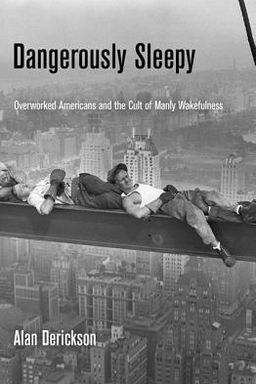
You live in a world that celebrates sleeplessness as strength. The book argues that chronic fatigue is not just a biological fact but a cultural, economic, and political system—one built by business icons, reinforced by gender norms, and sustained by weak regulation. Across American history, the ideal of the tireless worker has become a moral code and productivity metric, entrenching exhaustion as a form of virtue.
From heroic sleeplessness to systemic overwork
Since Benjamin Franklin’s injunctions against sloth and Thomas Edison’s boasts about his three-hour nights, leading men have defined success through wakefulness. Newspapers and management writers glorify this endurance as masculine excellence—Donald Trump’s four-hour routine, Lindbergh’s sleepless flight, and Samuel Walton’s schedules all reinforce the message that real power belongs to those who stay awake. This myth travels through every sector: from industrial leaders to knowledge workers, the sleepless body becomes proof of discipline and ambition.
Law’s uneven protection against fatigue
Legal structures rarely treat sleep as a right. The Supreme Court’s Lochner decision (1905) struck down labor-hour limits for men as infringements on contract freedom. When reformers argued maternal protection instead, they won only gendered exceptions (Muller v. Oregon, 1908). Public safety laws—for railroad crews or pilots—offered the few durable limits, but worker health alone remained unregulated. Later, New Deal policies substituted overtime pay for strict caps, leaving work-time largely negotiable, not biologically constrained.
Race, gender, and dignity within deprivation
Sleep deprivation mirrors social hierarchy. Pullman porters—Black men serving white passengers—were forced to function as custodians of others’ rest while being denied their own. Their union, the Brotherhood of Sleeping Car Porters, reframed rest as a matter of dignity and safety. Similarly, women’s early protections were later stripped in the name of equality, exposing them to male schedules without relief from domestic duties. What emerged is an unspoken expectation: your value depends on your endurance, not your well-being.
Industrial and transportation case studies
Steelworkers in the early twentieth century lived the “long turn”—a twenty-four-hour shift within a twelve-hour day regime. Their bodies were sites of mechanical fatigue, where reform reduced extremes but never cured the fundamental disruption. Truckers later repeated the pattern: balancing independence, stimulants, and thinly enforced rules. From Pullman sleepers to highways, each system converts biological vulnerability into economic flexibility.
The slow awakening of science and the limits of action
Sleep science eventually recognized fatigue as disease, with Nathaniel Kleitman’s circadian research and later works from Eyvind Thiis-Evensen and Merrill Mitler proving health harm. Yet agencies like OSHA and NIOSH struggled to translate knowledge into rules. Disasters—from Three Mile Island to the Libby Zion case—periodically reignited concern, but policy remained piecemeal and reactive. Even today, regulation prioritizes accident prevention over worker health, missing the larger biological and social costs.
A hidden conclusion
The book shows that sleep deprivation is not an individual failure. It is the result of cultural heroism, legal gaps, labor structures, and scientific inertia—all converging to make sleeplessness both profitable and socially rewarded. Real reform would require redefining sleep as a collective right and reimagining work around biological limits rather than market myths.