
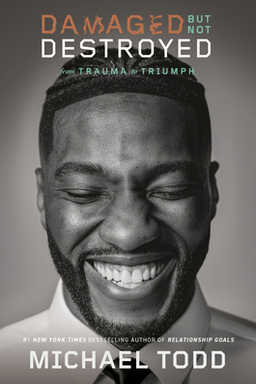
Damaged but Not Destroyed cover

Damaged but Not Destroyed

by Michael Todd

In ''Damaged but Not Destroyed,'' Michael Todd guides readers through life''s struggles, teaching them to embrace honesty, grace, and faith. Discover how to transform trauma into triumph and realize your divine destiny, even amid adversity.

Damaged but Not Destroyed: Finding Value in Your Scars

Have you ever felt so broken by life that you questioned whether you had any value left? Pastor Michael Todd’s Damaged but Not Destroyed begins by asking that haunting question and immediately answering it with hope: no matter what life’s hits have done to you, the value is still in you. The book’s heart beats with a powerful message—that your damage does not disqualify your destiny. Todd argues that the bruises, disappointments, and traumas we carry are not signs of destruction but opportunities for divine restoration.

Todd, known from his viral sermon series and bestselling books Relationship Goals and Crazy Faith, invites readers into an intimate, H.O.T. (humble, open, transparent) conversation about recovering from life’s unexpected hits. By weaving biblical stories—especially the tale of Mephibosheth, a crippled prince redeemed by King David—with raw personal experiences, he shows that God specializes in making masterpieces out of messes. The result is both deeply spiritual and psychological: part theological reflection, part emotional healing guide, and part pep talk for anyone who’s ever felt unworthy.

The Hits You Didn’t See Coming

Todd introduces a metaphor from his childhood—being sucker-punched by his brother in an impromptu boxing match. That moment becomes symbolic of the hits we don’t see coming: betrayal, financial ruin, abuse, rejection, addiction, or loss. Whether “dumb hits” we cause ourselves (like Todd’s insurance fraud fiasco), or “disaster hits” that blindside whole communities (like the Covid pandemic), he emphasizes that every blow leaves damage. But in God’s hands, damage becomes design. It’s not the hit that defines us—it’s how we heal from it.

Understanding Damage as Design

Throughout the book, Todd insists that God doesn’t waste material. He may not cause the damage, but He will use it. Borrowing imagery from gift boxes, Todd distinguishes between our covering (mind), container (body), and contents (spirit). Our minds and bodies can be battered, but the contents—the God-given spirit—remain untouched. “The value is still in you,” he repeats like a mantra, urging readers to stop identifying with their wrapping and rediscover the divine substance inside. This isn’t just positive affirmations; it’s theology with teeth. It reframes Christianity from moral perfectionism to divine restoration—very much in the vein of Brené Brown’s messages on shame and wholeness, but anchored in Scripture.

From Damage to Destiny

Todd structures the book around a seven-step healing process mirrored in Mephibosheth’s story—moving from damage to deliverance, rejection to restoration. God’s kindness transforms Phibs from a crippled fugitive living in Lo-debar (“a place with no pasture”) to a royal guest at the king’s table. For Todd, this ancient story mirrors modern recovery: no matter how deep your wounds, you can be invited into grace. Healing, however, demands honesty. “God won’t heal what you refuse to reveal,” Todd warns. Hence the call to be H.O.T.—humble about your weakness, open about your wounds, transparent about your truth.

Healing Is a Process, Not a Moment

Todd dismantles the myth that faith instantly fixes everything. Healing is often messy, repetitive, and uncomfortable. It requires remembering painful hits, recognizing hurts, realizing how they hinder us, resetting our attitude to humility, and finally receiving God’s healing. The process, both spiritual and psychological, echoes the therapeutic principle that acknowledgment precedes transformation. (In fact, Todd’s openness about therapy makes this book one of the most candid evangelical works about mental health in recent years.)

Why This Message Matters

At its core, Damaged but Not Destroyed is an anthem for resilience—a reminder that God’s grace covers our dents like a divine auto body shop. It addresses a cultural moment when many feel defined by trauma, yet skeptical of healing. Todd’s conversational tone, hip-hop references, and honesty create a bridge between theological hope and real-world pain. You may come to this book broken, but Todd’s contagious faith and hard-won wisdom will challenge you to see your scars as signatures of survival. His goal isn’t to deny damage but to redesign it—a process where your shattered places become portals for divine light.

Central message: You are damaged, but not destroyed. You still hold the Designer’s imprint, and He’s ready to turn your pain into purpose.


The Anatomy of Damage

Michael Todd takes a diagnostic approach to understanding what damage really is. In Chapter 2, “Dang, I’m Damaged,” he confronts the universal human condition of brokenness head-on, turning it into an equation and a metaphor. Instead of treating wounds as vague feelings, Todd helps you identify exactly what hit you, where it landed, and how it still affects you. His framework—dart + domain = damage—transforms emotional pain into something you can examine and heal.

The Darts: Words, Actions, Exposure, and Environment

Todd describes four types of “darts” that wound us. Words pierce with messages we internalize (“You’re worthless”). Actions, like betrayal or abuse, puncture our hearts. Exposure introduces toxicity—pornography, fear, or destructive media. Environment shapes our pain through neglect, scarcity, or dysfunction. These darts, aimed by others or sometimes by ourselves, cause enduring harm. He cites his own molestation by a neighborhood boy as a devastating dart of exposure and action, a wound buried by his child mind until adulthood. When the Holy Spirit brought that memory back decades later, healing began—not through denial but remembrance.

The Domains: Where Damage Lives

The darts land in “domains”—areas like disappointment, false teaching, wrong choices, accelerated success, ignorance, unreasonable responsibility, scarcity, abuse, neglect, or rejection. Each domain represents a part of our identity that can be compromised when pain strikes. For Todd, accelerated success became a domain of damage; his rapid rise as a pastor tempted him to equate fame with faith. When his son MJ’s autism diagnosis collided with his denial, he realized future blessings required facing hidden pain first.

The Equation: Making the Invisible Visible

By simplifying damage into dart + domain = damage, Todd offers what feels like spiritual arithmetic. The weapon and the wound combine to produce a pattern. Once identified, it becomes traceable, treatable, and ultimately transformable. In practical terms, this formula is a faith-based adaptation of psychological approaches to trauma mapping—similar to identifying triggers in therapy. Todd then invites readers to “do the math” of their own pain, writing their equations to uncover the roots of recurring emotional reactions.

From Blame to Responsibility

One of Todd’s most sobering declarations: “The damage isn’t your fault, but healing is your responsibility.” This redefines spiritual maturity as active participation in recovery. You can’t control who hurt you, but you can decide whether you will stay wounded. The equation of damage helps you stop generalizing pain and start targeting its source. (In psychological terms, this reflects Viktor Frankl’s idea that the last human freedom is the ability to choose one’s response.)

Damage, Todd insists, doesn’t mean destruction—it means you’ve been hit, but you can still heal. Once you identify the darts and domains, you can stop bleeding from invisible wounds and begin God’s reconstruction of your identity.


The Labels We Carry

Our deepest wounds often come not from events but from names imposed upon us. In "Say My Name," Todd explores how people and experiences label us by our damage instead of our identity. Using Mephibosheth’s story—where a servant describes him not by name but as “crippled in both feet”—Todd exposes a common trap: letting shame speak louder than purpose.

Renaming Yourself

Mephibosheth’s name means “dispeller of shame.” Ironically, he lives imprisoned by shame. Todd reminds you that God calls you by name, not by your mistake. “Stop answering to names the Father didn’t give you,” he writes, urging readers to turn away from false identities like “addict,” “failure,” or “divorced.” Through this, he reclaims identity as God’s domain, echoing writers like Henri Nouwen, who defined belovedness as the core of Christian identity.

Good Fruit from Broken Roots

Todd’s personal story of rejection—being denied the chance to play drums in “big church”—illustrates how wounds silently shape ambition. His vow to be “great” instead of “good” became a toxic engine, driving perfectionism that looked like excellence but was fueled by insecurity. “Not everything that appears good about your personality comes from a good place,” he warns. That insight becomes a mirror for anyone whose success is rooted in pain.

Checking Your Dashboard

Todd likens our emotional management to a car’s dashboard. Reactionary traits—extremes of pride or insecurity, repression or obsession—signal hidden damage under the hood. When someone joins your “vehicle” (a relationship), they notice all your warning lights. Healing begins by acknowledging them before you blow an emotional gasket. His advice resembles emotional intelligence training but is wrapped in gospel-centered humility: ask for help, because “your healing is hidden in help.”

Todd concludes: names define direction. If you want healing, reclaim the name designed for you—beloved, forgiven, valuable—and allow God’s grace to rename your reality.


Breaking Generational Cycles

One of Todd’s most relatable insights is that unhealed wounds don’t stay still—they multiply across generations. In “Damaged and Still Good,” he describes how behaviors, addictions, and fears transfer like family heirlooms unless transformed by grace. His encounter with his father’s confession about pornography becomes the emotional centerpiece of this truth: what you don’t transform, you’ll transfer.

Inherited Damage

When Todd struggles with pornography, he discovers his father faced the same temptation decades earlier. Instead of condemnation, his father responses with humility: “I should have dealt with this so you wouldn’t have to.” That admission models generational repentance—the biblical idea that confession breaks cycles (Exodus 34:7). Todd reframes it as legacy healing: your courage to confront pain impacts your children’s spiritual inheritance.

From Scarcity to Spiritual Wealth

Todd’s mother, Brenda, teaches him that “even dented cans are good.” Her habit of buying damaged groceries becomes a metaphor for divine economics: though our containers are bent, the contents—the spirit—is perfectly preserved. God transforms dents into delicacies. The transformation, Todd argues, doesn’t just redeem individuals; it creates “transformed generational cycles,” turning family pain into purpose-driven legacy.

Healing for Descendants

Todd dedicates the book to his grandchildren, showing that his own transparency serves as protection for future generations. Healing is communal. By refusing to hide behind shame, he models intergenerational restoration—a theme resonant with authors like Dr. Thema Bryant (Homecoming), who explores healing as collective inheritance.

To break the cycle, Todd insists, accept that your damage isn’t meant to stop with you; it’s meant to heal through you. Transformation isn’t just for survival—it’s for succession.


Leaving Lo-debar Behind

In “Damaged Is Not (Supposed to Be) a Destination,” Todd expands the metaphor of Lo-debar—the barren land where Mephibosheth hides—to symbolize emotional or spiritual stagnation. Whether it’s shame, addiction, or despair, Lo-debar is not where you’re meant to settle. The chapter becomes a rallying cry for hope: “Hope again,” Todd urges, reminding that transformation begins when you believe renewal is possible.

Hope as Holy Defiance

Todd reinterprets Proverbs 13:12 (“hope deferred makes the heart sick”) as a diagnosis for spiritual paralysis. When hope dies, you get stuck. Through vivid storytelling—such as the viral “spit sermon” fiasco—Todd shows that embarrassment and backlash cannot cancel purpose. Even when misunderstanding feels like abandonment, the King is pursuing you.

Carried, Not Condemned

King David sends servants to carry Mephibosheth to the palace, modeling how healing happens through relationships. “Damage is caused by people, but healed through people,” Todd writes. He connects this to modern accountability, urging readers to allow mentors, counselors, and friends to carry them into transformation. Isolation keeps you in Lo-debar; vulnerability gets you to the King.

GPS for the Soul

Just like a phone needs your location to give directions, God can only guide you when you admit where you are. “God won’t bless who you pretend to be,” Todd warns. He encourages readers to acknowledge their current emotional address honestly—poverty, fear, or shame—and trust divine positioning. It’s honest spirituality with psychological resonance: progress starts with awareness.

Lo-debar is not your destination; it’s the detour where grace finds you. Once carried into the King’s presence, all barren places become fertile again.


The Process of Healing

Todd’s practical model of restoration unfolds through five steps—each a chapter-length exploration tied to both his life and Mephibosheth’s redemption. The process moves from acknowledging pain to embracing God’s grace systematically. More than theory, it’s therapy through theology.

Step 1: Remember the Hit

Healing begins with memory. Todd invents the practice of “H.U.S.H.”—Hear from God, Understand progressively, Share intimately, and reach the Heart of the matter. Remembering isn’t reopening wounds; it’s identifying the coordinates of pain. Through stillness and spiritual listening, he transforms avoidance into awareness, echoing John Mark Comer’s teachings on silence in The Ruthless Elimination of Hurry.

Step 2: Recognize the Hurt

Next, he challenges toughness culture—especially toxic masculinity—to simply say “ouch.” Vulnerability is not weakness; it’s worship. As he tells the story of defending his brother from a bully, he reveals how early self-protection teaches men to suppress pain, causing emotional disease. Healing requires letting feelings flow before they fester.

Step 3: Realize the Hindrance

Todd’s perfectionism, embodied in his musical flop “The Prototype,” teaches that damage can become self-sabotage. He uses Jesus’s teaching about logs and specks to show how blindness to personal flaws blocks progress. Becoming self-aware—often through honest community feedback—turns hindrance into healing.

Step 4: Reset to Humility

Humility, Todd writes, “makes space for the Holy Spirit.” Mephibosheth models this when he faces King David unwashed and unshaven, choosing humility over self-defense. Todd parallels this with his own viral controversy, choosing repentance instead of defensiveness. Real healing requires surrender, not spin.

Step 5: Receive God’s Healing

Finally, the release: healing is a gift, not an achievement. Todd calls it “sneaky deliverance”—gradual transformation visible only when your reactions change. The heavy lifting belongs to God; your role is openness. Over time, scars become not signs of shame but signatures of authenticity, like the patina of Venetian mirrors whose damage proves their craftsmanship.

Healing is not linear—it loops. You’ll revisit these five steps repeatedly, but each time, you’ll move closer to the Heart of the King.


Designer Damage: Purpose Through Pain

The book’s final message, "Designer Damage," ties together Todd’s theology of wounds: your damage is proof of divine design, not defect. Using fashion analogies, he compares us to luxury sneakers intentionally distressed by designers like Balenciaga or Gucci. Scratches and scuffs aren’t flaws—they’re features that authenticate value. Likewise, your scars testify to divine craftsmanship.

Signature of the Creator

When you belong to God, Todd says, you bear His signature. “Don’t cheapen your worth,” he warns. The Creator’s name is your label, and it guarantees quality even under distress. This imagery powerfully rebrands damage as destiny—the worn edges of a life that’s been used by God.

Venetian Mirrors and Authenticity

Todd closes with a comparison to antique Venetian mirrors whose imperfections prove authenticity. If your reflection shows cracks, it merely confirms you’re genuine. This poetic metaphor summarizes his theology of grace: damage doesn’t destroy your reflection, it deepens it. The more cracks, the more light refracts.

Healing as Purpose

Todd’s own restoration after public humiliation reveals that pain often becomes the proving ground of purpose. Healing isn’t about returning to innocence but advancing into wisdom. “Let Me, not anyone else, define what I’ve designed,” he hears God say in prayer. The result is radical acceptance: growth through grit, beauty through brokenness.

In the end, Todd’s theology of designer damage redefines success and holiness. You don’t need to be spotless to be sacred; your restoration story is the gospel in motion.

Dig Deeper

Get personalized prompts to apply these lessons to your life and deepen your understanding.

Go Deeper

Get the Full Experience

Download Insight Books for AI-powered reflections, quizzes, and more.