
Idea 1
The Power of Routine in Creative Lives
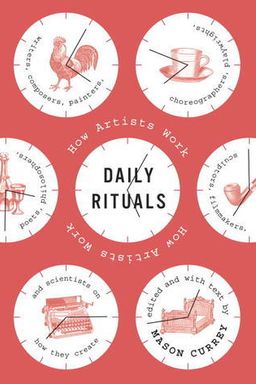
How can you make creativity a dependable part of your daily life instead of waiting for inspiration to strike? In Daily Rituals: How Artists Work, Mason Currey argues that inspiration is less a divine moment and more the result of disciplined daily routines. Through hundreds of stories spanning four centuries—from Voltaire scribbling in bed to Toni Morrison writing before dawn—Currey reveals that the creative process thrives within the structure of ordinary habits.
Currey contends that every artist, whether a poet, painter, composer, or scientist, faced the same problem you likely face: how to balance creative work with the demands of life. Some woke before sunrise to steal quiet hours; others worked through sleepless nights. There was no single ideal schedule, but all discovered their own rhythm—a blend of time, stamina, ritual, and obsession—that allowed genius to emerge through repetition and persistence. The book’s central insight is that creativity is not mysterious—it’s pragmatic, methodical, and shaped by self-imposed boundaries.
Structure as Freedom
Currey’s portrait of creative life is a paradox: freedom is born from structure. Writers like Anthony Trollope woke before dawn, clocking in 250 words every fifteen minutes like a factory worker. Painters like Henri Matisse followed strict daily sittings from nine to six. This discipline liberated them to work “without the tyranny of moods,” a concept borrowed from philosopher William James, who believed good habits free the mind for “the real fields of action.” By automating part of life—when to wake, eat, walk, and work—creators preserved their mental bandwidth for ideas.
This book asks you to reimagine your own routine not as confinement but as scaffolding. When Joyce Carol Oates writes eight hours a day, her schedule doesn’t suppress inspiration; it cultivates it. When Beethoven counts exactly sixty beans per cup of coffee before composing, his obsessive precision grounds his creativity. What appears mundane becomes sacred—a ritual of readiness.
The Beauty and the Burden of Habit
Of course, not all habits were wholesome. W. H. Auden fueled his productivity with daily amphetamines; Francis Bacon painted through hangovers and insomnia; Simone de Beauvoir worked around her lovers’ schedules in Paris cafés. Currey never romanticizes these behaviors; he presents them as personal maneuvers—each artist’s way of “wriggling through by subtle maneuvers,” as Kafka wrote to his beloved Felice Bauer. The point isn’t moral discipline but persistence. You don’t need comfort or chaos, he suggests, as much as you need a repeatable pattern that gets you to the desk.
These creative workers operated on every possible spectrum—morning birds and nocturnal owls, tea drinkers and whiskey devotees, hermits and socialites. Their shared success wasn’t timing but consistency. Trollope wrote novels before breakfast for thirty-three years; Balzac composed through the night, powered by fifty cups of coffee; Proust lay in a cork-lined room writing through lung spasms. The extremes are personal but the principle universal: show up daily, regardless of circumstance.
Ordinary Routines, Extraordinary Results
Currey’s project began from his own procrastination, searching for comfort in the habits of others. He found that most creators were neither monolithic geniuses nor relentless machines—they were simply human beings who built creative consistency out of chaos. Even the most unpredictable lives—Kafka’s midnight writing, Maya Angelou’s daytime retreats to anonymous hotel rooms, or Haruki Murakami’s physical training regimens—served one purpose: to make creativity inevitable.
Why does this matter to you? Because the myth of spontaneous inspiration leaves many would-be creators paralyzed by waiting. Daily Rituals reminds you that it’s much simpler: creativity is management. If Beethoven could transform coffee beans into symphonies and Jane Austen worked amid household chatter without complaint, you too can structure the time and energy you already have. What separates the prolific from the blocked is not talent—it’s rhythm. Currey’s book is both comfort and challenge: stop chasing muse moments and start mastering days.
Ultimately, this collection shows that art, like life, is built on ordinary choices repeated obsessively. Whether you work at dawn or midnight, alone or surrounded, wired by caffeine or steadied by quiet, your ritual becomes the vessel for meaning. As Currey writes through hundreds of examples, great minds differ wildly in practice but converge in one truth: creativity is a daily habit, not a divine gift.