
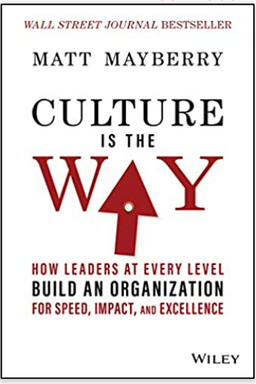
Culture Is the Way cover

Culture Is the Way

by Matt Mayberry

Culture Is the Way provides leaders with a comprehensive guide to fostering a workplace culture that maximizes employee potential and drives organizational success. Learn how to build a culture of excellence, engagement, and impact, ensuring your organization''s long-term success.

Culture Is the Way: How Leaders Build Excellence from Within

How can you turn your organization into a force for both performance and purpose? In Culture Is the Way, former NFL linebacker turned leadership expert Matt Mayberry argues that the most powerful driver of any organization—whether a team, a company, or a community—is its culture. He contends that while business leaders often chase new strategies or technologies, true success hinges on the invisible network of beliefs, behaviors, and mindsets shaping daily decisions: the culture.

Drawing on experiences as a professional athlete and a decade of consulting with leading enterprises, Mayberry insists that culture is not a side project or an HR initiative—it’s the main game. When leaders embed culture deeply into every process and decision, they unlock speed, impact, and excellence that strategy alone cannot produce. The book explores how intentional culture building is a long-term, high-energy pursuit requiring commitment, clarity, and continuous reinforcement from every level of leadership.

Culture as the Competitive Edge

Mayberry begins with a question from his former football coach Terry Hoeppner: how did a losing team at Indiana University become a bowl contender without changing talent or schedule? The answer was culture—a bold belief system built around shared purpose, positive energy, and fanatical commitment. Similarly, Mayberry points to business leaders such as WD-40’s Garry Ridge, whose “tribal culture” based on care, candor, accountability, and responsibility lifted WD-40’s market cap tenfold. Culture, he says, transforms ordinary organizations into dynasties and sustains them through crisis. Studies cited in the book (like Harvard’s research showing a 756% increase in net income for firms with strong cultures) confirm that culture is not just a feel-good idea—it’s strategic performance at its best.

Why Now? A Post-Pandemic Imperative

The context Mayberry describes is urgent. In a world of remote work, AI disruption, and record employee disengagement (only 20% of global workers are actively engaged), culture has become the defining challenge of twenty-first-century leadership. The pandemic exposed the fragility of old management styles focused only on performance metrics. Companies that thrived through crisis did so because they had strong cultural foundations—clarity, trust, and human connection. Mayberry references voices from Mark Cuban to Simon Sinek to show that the post-COVID era, dubbed “America 2.0,” demands leaders who view culture not as perks or slogans but as systems of behavior that enable resilience and innovation.

The Book’s Structure: From Philosophy to Playbook

Mayberry organizes the book like a coach designing a winning season. The early chapters define what culture really is—debunking myths that equate it with casual dress codes, ping-pong tables, or flexible schedules—and clarify the five key elements of a positive culture: energy, alignment, clear expectations, execution, and talent development. Then he warns leaders about the “dilemma traps” such as shiny-object distractions, impatience for results, and lack of leadership buy-in. Later chapters move from mindset to method with his Five-Step Process for Building a World-Class Culture: define your culture, discover through collaboration, launch and embed, drive long-term impact, and lead relentlessly.

Leadership as the Cultural Catalyst

At its heart, the book asserts that leadership and culture are inseparable. Citing insights from transformational leadership research (James Burns, Bernard Bass, and Carol Dweck among others), Mayberry shows that leaders must first transform themselves—shifting from command-and-control to coaching and inspiration—before they can transform others. He argues that leaders’ daily behaviors define the organization’s DNA: their vision sets the tone, their consistency establishes trust, and their coaching cultivates excellence. The final chapters challenge every reader, from executives to frontline managers, to become “Chief Culture Drivers”—leaders who champion purpose, people, and long-term impact through relentless daily action.

The Promise and Challenge

Ultimately, Culture Is the Way offers both inspiration and a manual. It promises transformation, but insists on fanatical consistency. You’ll learn how to create cultural purpose statements (like SGWS-IL’s “Get Better Today…Together”), align strategy with behaviors, and connect culture to commercial execution. Mayberry’s message is simple yet demanding: in any organization, culture isn’t one aspect of the game—it is the game. Those who lead with purpose and systemize behaviors around shared values will not only outperform rivals but also make their people—and the world—better in the process.


Defining Culture: The Invisible Glue

Mayberry insists that before leaders can change a culture, they must understand what culture actually is. Drawing from organizational theorist Edgar Schein, he defines culture as “the deeper level of basic assumptions and beliefs shared by members of an organization.” It’s not visible but influences everything: decisions, communication, innovation, even how people respond when leadership isn’t in the room. He compares culture to the human body—DNA invisible to the eye but dictating health and performance. Through habits, environment, and relationships, we can change the body’s future. Likewise, leaders can rewire an organization’s cultural DNA.

Culture by Design, Not Default

Every organization has a culture—whether intentionally shaped or accidentally inherited. Mayberry recounts a conversation with Cecilia, an advertising employee who lamented “we don’t have a culture.” His response: they did—it was just a chaotic, reactive one created by neglect. The takeaway is that leaders either build culture proactively or suffer under one created by default. Healthy cultures require deliberate design and constant reinforcement, much like continuous training in sports.

Dispelling Misconceptions

Mayberry lists common myths that leaders mistake for culture: flexible schedules, casual dress codes, managers who never challenge employees, or recreational perks. These, he warns, may create mood but not meaning. Real culture goes beyond comfort—it establishes expectations for performance, accountability, and innovation. He writes that the most harmful misconception is believing culture equals employee happiness; true culture balances care with challenge, enabling growth and excellence.

Five Elements of Positive Culture

A positive culture, Mayberry explains, electrifies the organization through five elements: energy and value (employees feel included and valued); alignment and togetherness (departments move in unison); clear expectations (everyone knows what winning means); accelerated execution (culture drives strategy forward); and talent attraction and development (people want to join and grow there). When these five are present, culture becomes a magnet for excellence—the heart and lifeblood of organizational success.


Overcoming the Dilemma Traps

In Chapter 3, Mayberry explores why so many leaders talk about culture but fail to act on it. His diagnosis: the “dilemma traps” that sabotage cultural focus. Chief among them is the Shiny Object Syndrome—leaders who chase new technologies, initiatives, or profit goals while neglecting culture, the foundation that supports all else. He recalls coaching a senior executive named Peter, who regretted ignoring culture until the pandemic forced him to confront its absence. The lesson? You shouldn’t wait for crisis to prioritize culture; the next best moment to start is now.

The Illusion of Instant Results

Culture isn’t sexy, Mayberry warns. Leaders prefer visible metrics like sales charts or shiny transformations that deliver quick returns. But building culture requires patience and persistent repetition. Drawing inspiration from Steven Pressfield’s The War of Art, he notes that what resists you most is usually what transforms you most. Leaders resist culture because it demands them to evolve. Yet, like quitting smoking or losing weight, the painful process eventually leads to lasting health.

Lessons from Boeing and Ford

Mayberry contrasts Boeing’s 737 MAX scandal with Alan Mulally’s turnaround at Ford. Boeing’s leadership succumbed to greed—the shiny object of short-term profit—allowing ethical failure and loss of life. Ford, conversely, recovered from billions in losses under Mulally’s mantra “One Ford,” based on teamwork, people first, and culture-driven leadership. These case studies illustrate that culture can either destroy or save a company. The difference lies in what leaders choose to prioritize: ego or ethics, profits or people.

Avoiding the Traps

Mayberry summarizes three antidotes: don’t underestimate culture’s power; balance addition with subtraction (for each new initiative, eliminate a distraction); and be ruthlessly clear on priorities. Simple, but often ignored. Leaders who resist the trap of chasing superficial success and instead protect cultural consistency will build organizations capable of surviving disruption, crisis, and change.


Five Roadblocks to Cultural Excellence

Change frightens people—even when improvement is essential. Mayberry opens with examples of corporate giants like Blockbuster and Toyota to illustrate how resistance to change corrodes culture. Blockbuster’s lack of innovation, rooted in a complacent culture that refused to evolve (“If it ain’t broke, don’t fix it”), doomed it while Netflix thrived by anticipating disruption. Toyota’s temporary failures were traced to straying from its core cultural pillar of continuous improvement. For every business, complacency—culture’s enemy—signals decline.

The Five Common Roadblocks

  • Lukewarm leadership buy-in: Some leaders agree in theory but fail to act with passion. Mayberry recounts SGWS-IL’s leaders like Terry Brick and Michael Thompson, who initially resisted cultural initiatives until results proved the power of unity.
  • All slogans, no action: Corporate posters and slogans aren’t culture. Real change occurs when values turn into repeatable behaviors measured daily.
  • Temptation of instant gratification: Culture-building takes time and energy without immediate results. Leaders must manage expectations and reward consistency over speed.
  • Distortion and distraction: Trying to copy other companies’ best practices without introspection dilutes authenticity. Focus on what your organization uniquely needs.
  • Lack of cascading change: Without scalable communication and behavioral integration, culture remains confined to the top. Sustainable excellence requires embedding culture through every layer.

Solutions That Stick

Mayberry’s advice echoes coaching fundamentals: practice every day, not just when it’s easy. Leaders must hold regular alignment meetings, translate values into behaviors, over-communicate patience, avoid distractions, and map cascading communication calendars. By facing these roadblocks head-on, organizations fortify their internal core—their cultural DNA—to adapt faster than the external world changes.


Creating a Cultural Purpose Statement

One of Mayberry’s most practical contributions is the concept of a Cultural Purpose Statement (CPS)—a concise motto or theme that defines what a culture stands for. This statement becomes the organization’s North Star, aligning people around meaning and behavior. He illustrates with Southern Glazer’s Wine and Spirits of Illinois (SGWS-IL), where leaders settled on four simple words: “Get Better Today…Together.” The statement united the team through crisis and became embedded in both business and personal life.

Purpose in Action

SGWS-IL’s “Get Better Today…Together” evolved from brainstorming about what improvement really meant. Leaders realized their previous culture was undefined—every manager had a different answer. Once defined, the CPS guided behaviors and decisions. Employees like Joshua and Edward later shared how that motto helped them overcome personal hardship and retirement fears. Mayberry underscores that good culture reverberates beyond office walls; it helps people become better humans.

Lessons from College Football

Mayberry draws parallels to elite coaches who use anchor statements to define team ethos: Mel Tucker’s “Relentless” (Michigan State), Tom Allen’s “L.E.O – Love Each Other” (Indiana), Nick Saban’s “The Process” (Alabama), and P.J. Fleck’s “Row the Boat” (Minnesota). These mantras create shared language that translates values into performance. Businesses, like teams, must rally behind simple phrases that encapsulate beliefs and actions. (Similarly, Jon Gordon’s Row the Boat expands on Fleck’s formula for resilience.)

How to Craft Your Own CPS

Mayberry instructs leaders to begin with introspection: What do we care about? Where are we now? What do we want to stand for? A great CPS should inspire, clarify, and align. It’s not a mission statement—it’s a behavioral compass. He advises focused leadership meetings (preferably multiple sessions), pre-reads with clear goals, and open discussion. Once chosen, the CPS must permeate everyday conversations, meetings, and coaching. As SGWS-IL proved, four words can fuel a decade of excellence when they capture both emotion and execution.


Winning Hearts and Minds Through Engagement

Culture change succeeds only when employees’ hearts and minds are engaged. Mayberry references Google’s Project Aristotle study, which identified psychological safety—the ability to speak freely without fear—as the hallmark of great teams. Many organizations, he notes, still struggle with this. Employees censor themselves out of fear, stifling innovation. True leaders create climates where trust and vulnerability drive ideas.

Top-Down Directed, Bottom-Up Created

Mayberry interviews Joe Walsh, CEO of Direct Federal Credit Union, who distills culture building into a paradox: leaders must direct culture from the top but allow creation from the bottom. His view—supported by Mayberry’s own consulting experience—is that employees must help shape behaviors and mindsets, not just be told what culture means. SGWS-IL applied this approach by involving every manager in defining behaviors linked to their FAMILY values.

The Collaborative Four-Step Model

  • Identification: Diagnose cultural problem areas honestly.
  • Engagement: Involve every manager and gather employee feedback through small-group meetings.
  • Transformation: Convert values into specific daily behaviors relevant to business results.
  • Managerial Development: Train front-line managers regularly and build personal connection across departments.

Breaking Silos with Empathy

SGWS-IL’s monthly management meetings became emotional bonding experiences where managers shared personal stories—sometimes through tears—and realized the humanity behind their colleagues. Such engagement dismantled silos and reinforced cultural purpose. Mayberry concludes that collaboration isn’t slow bureaucracy—it’s speed through trust. When hearts align with business objectives, culture transforms from policy into passion.


The Culture Implementation Playbook

Mayberry’s coaching roots shine in his Culture Implementation Playbook, a structured game plan for launching culture at scale. He recounts helping leaders like Angela, newly promoted and overwhelmed, realize that what she needed most wasn’t more strategy—it was a playbook. Implementing culture is like running football plays: clear, repeatable steps practiced until automatic.

Common Pain Points

Across industries, Mayberry sees six recurring mistakes: poor planning, lack of clarity, miscommunication of old behaviors, inconsistent messaging, missing shared examples, and failure to highlight early wins. Most cultural rollouts resemble scripted speeches and slides rather than authentic inspiration. Without a real plan, enthusiasm evaporates after launch.

The SGWS-IL Playbook

Partnering with SGWS-IL, Mayberry helped develop four components: Drive Alignment Forward (get every leader unified), Behavioral Manifesto (translate values into daily norms), Communication Strategy (tell the story with meaning and purpose), and a Culture Rollout Roadmap with three phases—Communication, Embed, and Engage. Each phase included detailed steps, from distributing printed manifestos to recognizing employees who embodied cultural behaviors.

Urgency and Adaptability

The rollout faced unforeseen challenges, including a global pandemic, yet SGWS-IL thrived because its leaders moved with urgency and adaptability—a reminder that culture isn’t frozen by crisis. Mayberry advises leaders to treat launches like championship games: coach preparation, practice delivery, adapt midplay, and celebrate impact. He concludes that winning organizations don’t wing culture—they playbook it.


Fanatical About Sustained Impact

Culture isn’t a campaign—it’s an obsession. In Chapter 9, Mayberry argues that lasting impact comes only when leaders become fanatical about nurturing culture daily. Drawing on WD-40’s Garry Ridge and Microsoft’s Satya Nadella, he insists that culture must be treated as the “heart of the business.” Many leaders stop after launching a new culture; fanatical ones integrate it into operations, systems, and behavior long after the excitement fades.

The Five-Step Fanatical Framework

  • Continuous attention and development: Never let focus drop; culture requires constant energy.
  • Consistency and alignment: The message and behaviors must sync across all levels.
  • Focus on the vital few: Prioritize actions with the biggest impact rather than chasing too many projects.
  • Relentless follow-through: Avoid the start-stop cycle by honoring commitments and finishing what’s begun.
  • Make the business case: Connect cultural practices directly to performance and results to cement credibility.

Full System Embedment

Sustainable cultures embed into every function—training, talent, communication, and recognition. Mayberry outlines eight strategies: rigorous training, cross-level cultural impact committees, defining imperatives, drafting cultural handbooks, inspiring teams through storytelling, recognizing achievements, mentoring, and connecting learning with culture. He highlights Yum! Brands’ Rubber Chicken Award and Pfizer’s learning framework as proof that vivid rituals and continuous development sustain energy and excellence.

Fanatical leaders, therefore, don’t just maintain momentum—they amplify it. They make culture a living system that grows stronger with each iteration, like compounding interest for human energy.


Leadership: The Ultimate Differentiator

Mayberry devotes an entire chapter to the idea that leadership quality is what ultimately differentiates organizations. Culture rises and falls on leadership. Drawing inspiration from John Maxwell (“Everything rises and falls on leadership”), he integrates examples from Chick-fil-A’s Dan Cathy, who transformed his company by first transforming himself, to Howard Schultz of Starbucks, who personally trained baristas to restore excellence. Leaders, Mayberry asserts, cannot delegate culture; they must embody it.

Three Actions for Leaders

  • Set the vision: Paint a vivid picture of where the organization is headed and why it matters.
  • Lead the way forward: Model behaviors, confront resistance, and charge first toward transformation.
  • Coach for excellence: Replace command-and-control with coaching and growth-oriented feedback.

Transformational Leadership in Practice

Adapting theories from James Burns and Bernard Bass, Mayberry presents a four-part framework: transform yourself, transform others, transform the culture, and transform the organization. Each stage builds momentum for performance excellence. He connects psychology from Carol Dweck’s Mindset and Matthew Kelly’s The Dream Manager to emphasize growth, purpose, and personal goal alignment. When leaders grow, employees follow, culture shifts, and business outcomes soar.

Building a Leadership Factory

Finally, Mayberry calls for leadership factories—ongoing development systems that train every manager, not just executives. Using SGWS-IL’s program and Starbucks’ nationwide barista re-training as examples, he argues that consistent learning, coaching, and reflection sustain leadership excellence. The message: leadership isn’t a rank—it’s a daily practice of influence and growth. When leaders evolve, culture and performance accelerate together.


Commercial Execution and the Power of Results

After culture is strong, it must fuel commercial success. Mayberry reminds readers that while Peter Drucker famously said “Culture eats strategy for breakfast,” strategy still matters. His point: culture and strategy must dine together. A great culture drives execution—not just harmony. He cites research from Oxford showing happy employees boost sales 13%, yet happiness alone is not the goal; meaningful, purpose-driven work is.

SGWS and the Seven Commandments

Southern Glazer’s Wine & Spirits exemplifies culture-led execution. Chief Commercial Officer John Wittig operationalized founder Harvey Chaplin’s “Seven Commandments”: hire great people, invest in training, serve customers relentlessly, innovate boldly, and prepare for the future. Their mantra—“Embed, Embrace, Execute”—aligns culture and commerce. Weekly “Commercial Huddle” newsletters cascade strategy across all state divisions, connecting communication, clarity, and action.

Commercial DNA

The world’s best brands know their DNA: Disney’s optimism and storytelling, New England Patriots’ discipline, Ritz-Carlton’s service excellence. Mayberry recounts a story from speaker Kevin Brown, whose autistic son received custom-made pancakes from a Disney chef who went above and beyond—proof that organizational DNA becomes visible through action. In business, DNA means clarity about your unique advantage and unwavering adherence to it.

Talent Obsession

Execution depends on talent; Mayberry compares great companies to NFL teams constantly scouting for better players. He urges leaders to obsess over hiring, coaching, and feedback. Leaders like Horst Schulze personally onboard new employees to infuse purpose. The takeaway: culture drives execution, execution rewards culture. When both align, excellence becomes inevitable.


Becoming a Chief Culture Driver

Mayberry closes with a call to arms: every leader, at any level or age, can become a Chief Culture Driver. Culture transformation begins and ends with people and purpose. He profiles Terry Brick of SGWS-IL, who late in his career led a culture shift that united hundreds of employees during COVID, proving it’s never too late to change leadership identity. Brick’s empathetic, authentic approach inspired loyalty and profitability—a reminder that great leadership begins with humility.

The Bigger Picture and Magic Ingredient

Mayberry invokes Oskar Schindler’s story from Schindler’s List and Steven Spielberg’s reflections on purpose: leadership is about hearing the quiet whisper that guides one to serve humanity. In business, that whisper is “people first.” He calls people the magic ingredient—those who design, sell, and deliver every result. Richard Branson’s creed—“Clients don’t come first. Employees do.”—encapsulates this truth. Culture thrives when leaders connect work to meaning and care deeply for those who perform it.

What Leaders Can Do Now

  • Ask questions and listen—real dialogue replaces presentations.
  • Redefine HR’s role—make it a strategic partner driving skills and business alignment.
  • Measure people-related performance as rigorously as financial metrics; feedback must be continual.
  • Start small, act daily—urgency plus consistency fuels long-term transformation.

He ends with the Chief Culture Driver Pledge: simple daily commitments to improve culture, celebrate team members, and remind everyone that culture is the ultimate competitive advantage. The book closes not with theory but renewal—a call to action urging every reader to lead as if people are the purpose, because in truth, they are.

“Culture is how we behave, not what we say.”

Mayberry’s final message reminds leaders to act—not announce—their commitment to culture. In a world of slogans and speed, this simple idea stands as the enduring truth of transformative leadership.

Dig Deeper

Get personalized prompts to apply these lessons to your life and deepen your understanding.

Go Deeper

Get the Full Experience

Download Insight Books for AI-powered reflections, quizzes, and more.