
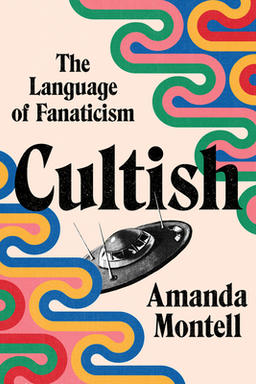
Cultish cover

Cultish

by Amanda Montell

In ''Cultish,'' Amanda Montell explores the captivating power of language in shaping beliefs and communities. From fitness circles to spiritual sects, discover how words can both empower and manipulate, and learn to decode the linguistic tricks that bind us. Equip yourself with insights to reclaim your autonomy.

The Language of Fanaticism and Belonging

Why do certain words make us feel chosen, connected, or even spiritually reborn? And why can those same words make others lose themselves completely? In Cultish: The Language of Fanaticism, linguist Amanda Montell argues that the power of cults—whether spiritual movements, health trends, fitness empires, or online conspiracy communities—depends not on psychedelics, isolation, or shaved heads, but on words. Language, she contends, is the true drug. It’s how leaders seduce, divide, and control; it’s also how ordinary communities inspire, organize, and make meaning. By revealing how persuasion works through speech, Montell simultaneously delivers a cultural critique and a psychological survival guide for the 21st century.

Montell challenges the way we use the term “cult.” In a world where we casually call SoulCycle a “cult” or describe fans as having a “cult following,” she unpacks how our language has blurred—and sometimes distorted—the meaning of extremism. Cultishness, she explains, exists on a spectrum. At one end are destructive groups like Jonestown or Heaven’s Gate; at the other lie everyday organizations, brands, and online fandoms that still harness the same linguistic tools but for less dangerous (and sometimes beneficial) ends. Her work invites you to look not only at the Yogi Bhajans and Greg Glassmans of the world but also at your favorite influencers, workplace slogans, and group chats to see where you might already be speaking in tongues.

The Power of Words as a Medium for Belief

Montell builds her argument from both linguistic research and real stories. Consider Tasha Samar, a former devotee of the 3HO spiritual movement, who entered a Los Angeles yoga group as a lonely teen and ended up reciting Gurmukhi mantras to an abusive guru. Or Alyssa Clarke, who joined CrossFit for a workout and found herself fluent in acronyms like WoD and AMRAP, part of a tight-knit world of ritual and pressure. These two women—one scarred by trauma, one merely left with sore muscles—both demonstrate the book’s central point: when we learn and repeat a group’s unique lexicon, we internalize its reality. The language becomes the ideology. As philosopher Maurice Merleau-Ponty once wrote, “Language is to humans what water is to fish.” Montell uses that insight to show that without language, there would be no belief, no loyalty, and no cults at all.

From ‘Cults’ to ‘Cultish’: A Necessary Redefinition

Part of Montell’s brilliance lies in redefining “cultish” as a spectrum rather than a yes/no label. Influencers, multilevel marketers, and “cult-fitness” instructors may not seem as menacing as Jim Jones, but their rhetorical strategies overlap. Through loaded slogans, euphemisms, and insider talk, they create belonging and compliance. Montell critiques how labeling any out-group a “cult” can cause moral blind spots—like the FBI’s deadly raid on the Branch Davidians at Waco, which many Americans justified simply because “they were a cult.” The language of condemnation can dehumanize just as much as the language of devotion can seduce.

Why This Matters Now

Why is “Cultish” so urgent today? Because modern life has made us more linguistically vulnerable than ever. As traditional religion declines, people seek identity and meaning in alternative spaces: yoga studios, Peloton classes, Instagram spirituality, or political conspiracy forums like QAnon. Each uses language—catchy phrases, hashtags, “thought-terminating clichés”—to bind members together and quiet dissent. Montell’s exploration moves from Jonestown’s deadly “revolutionary suicide” to Scientology’s jargon-filled “Bridge to Total Freedom,” to MLMs’ “boss babe” mantras, and onward to influencer micro-cults that thrive in the algorithmic age. The through line? People crave connection, and language makes that connection feel divine.

A Linguistic Survival Tool for a Cultish Age

Ultimately, Cultish is both diagnosis and defense manual. Montell doesn’t tell you to distrust all communities or stop chanting “I am blessed with all I need” at your barre class. Instead, she encourages awareness. Language, she says, is performative—it doesn’t just describe reality but builds it. Understanding the spell of words helps you choose which “magic” you want to be part of. As she closes, Montell leaves you with a disarming reminder: the most fulfilling life may not be one without cults, but one where you consciously join many—diverse, open, and non-destructive—so no single vocabulary owns your soul.


Language as the Core of Cult Power

Montell begins her linguistic dissection with the stories of 3HO and CrossFit—two radically different cultures united by their shared devotion to words. Tasha, the yoga adherent entranced by mantras, and Alyssa, the CrossFitter fluent in acronyms like WoD and PR, both demonstrate how language creates belonging and belief. To feel chosen, you must first speak the tongue.

Cult Creation Through Speech

For cult founders like Yogi Bhajan or Greg Glassman, vocabulary is everything. The moment followers adopt their words—“vibration,” “clean and jerk,” “EIE (everything is everything)”—they signal loyalty. Montell clarifies that this process doesn’t require brainwashing, which she calls a myth. Instead, leaders create linguistic worlds: inside meanings differ from outside meanings. Followers find comfort, identity, and superiority in that exclusivity. The transformative act is not drinking Kool-Aid but repeating the phrases that rewire how reality feels.

Redefining Belief Through Language

Language doesn’t merely express belief—it performs it. Chanting “I’m at a higher vibration,” for instance, doesn’t describe enlightenment; it creates it in practice. Montell aligns this with linguistic theories by J. L. Austin and Judith Butler, showing that speech shapes identity. Once you internalize a group’s “linguistic rituals,” it becomes difficult to separate thought from jargon. Even after leaving, ex-members continue to use their leaders’ lexicon—Tasha still avoids saying “old soul,” haunted by its cultish definition.

Everyday Cultishness

You don’t have to join Jonestown to experience this. Every workplace slogan, viral hashtag, or motivational affirmation draws from the same linguistic arsenal. Brands, instructors, and influencers craft solidarity through borrowed “cult speech”—coded mantras, acronyms, and catchphrases. Montell urges you to listen for these linguistic fossils in everyday life. Are they bonding tools or subtle leashes? The difference depends on recognition. Cultish language can inspire collective strength or conceal manipulation, but only if you forget who’s teaching you to speak.


The Spectrum of Cultish Influence

Not all cults end in tragedy. Montell maps a “continuum of influence” that runs from ethical devotion to dangerous coercion. What differentiates a healthy community from a deadly one is not belief itself, but transparency and consent. She borrows from mental health counselor Steven Hassan’s framework, which distinguishes between constructive groups—like sports fandoms—and destructive movements like Jonestown or NXIVM, where deception, isolation, and fear dominate.

Healthy vs. Unhealthy Cults

A healthy “cult” is upfront about its goals, lets members leave freely, and doesn’t weaponize shame or fear. SoulCycle or Harry Styles fandoms fit this mold: you may be a little obsessed, but nobody threatens your afterlife if you quit. Destructive cults, however, rely on three types of manipulation—omission, distortion, and lies—to keep members compliant. Jim Jones’s Peoples Temple disguised exploitation as equality; CrossFit’s founder masked ideology as health. When speech replaces critical thinking, Montell warns, you slide down the spectrum.

How the Label 'Cult' Shapes Morality

Language also shapes how outsiders treat cult victims. After the 1978 Jonestown massacre, calling members “cultists” made Americans see them as foolish, not human. Their bodies weren’t autopsied; families couldn’t claim remains. Similarly, at Waco in 1993, labeling the Branch Davidians a “cult” justified the FBI’s use of lethal force, killing nearly eighty. Montell reminds you that words can harm both within and outside a group. Dismissive labels create moral distance that excuses cruelty.

Redefining the Word 'Cultish'

To navigate this murky terrain, Montell proposes using “cultish” as a flexible term—a linguistic tool to describe influence without condemnation. “Cultish” lets you talk about Apple fans, wellness influencers, and political movements without equating them to Jonestown. Recognizing the gradient helps you analyze power without fear. In her view, everyone participates in something cultish; awareness, not avoidance, is liberation.


The Seductive Grammar of Devotion

Across religions, brands, and belief systems, Montell identifies recurring verbal techniques that forge loyalty and submission. In both Jonestown and your office Slack channel, the same linguistic devices—“us versus them,” euphemism, loaded language, and thought-terminating clichés—keep followers aligned and discouraged from dissent.

Us vs. Them and the Promise of Specialness

Jim Jones addressed his followers as “my children”; outsiders were “the enemy.” Similar tactics appear when corporate teams call employees “family” or MLM leaders address recruits as “boss babes.” Such inclusive language feels empowering but conceals dependency. By creating an emotional in-group, leaders gain moral authority. This tribal grammar binds individuals through chosen terminology, replacing independent thought with automatic camaraderie.

Euphemisms and Loaded Language

Cultish rhetoric thrives on redefining ordinary words. At Jonestown, suicide became “revolutionary forgiveness.” In Scientology, “clear” ceased to mean transparent and came to mean spiritually perfected. MLM sellers transform “quit” into “failure” and “investment” into “opportunity.” Euphemism silences doubt by making harsh realities sound noble. Meanwhile, loaded terms like “negative energy,” “limiting beliefs,” or “toxic people” externalize blame and manipulate emotion.

Thought-Terminating Clichés

Perhaps the most pervasive tool is the “thought-terminating cliché”—catchy phrases that lull you into agreement. “It is what it is.” “Trust the plan.” “Everything happens for a reason.” These neat soundbites, Montell explains (borrowing from psychiatrist Robert Lifton), relieve cognitive dissonance by stopping critical thought in its tracks. Leaders from Applewhite to Instagram influencers wield them to soothe followers into compliance. When you find yourself repeating such lines without thinking—pause. You may be chanting in a language not your own.


The Psychology of Followers

Montell dismantles the stereotype of the weak-minded follower. People join cults not out of ignorance but from deeply human needs: belonging, purpose, certainty. Drawing on psychology, she shows it’s often optimism—not brokenness—that recruits you. “We’re cultish by nature,” she writes, because community feels like survival.

Why We’re All Susceptible

From the 1950s Asch conformity experiments to Harvard Divinity School’s studies on the “remixed” spiritual generation, Montell grounds her point in data: humans conform because isolation hurts. In the digital age—when faith in institutions has cratered and loneliness is epidemic—the need for belonging drives people toward peer-led microcultures. Whether it’s a start-up’s corporate lingo, an influencer’s hashtag community, or a political subreddit, language fulfills the ancient urge for tribe and transcendence.

Confirmation Bias and Sunk Costs

Once inside, psychological biases take over. Confirmation bias makes you ignore evidence that contradicts your chosen truth (“Maybe he yells because he loves us”). The sunk cost fallacy keeps you invested after wasting time or money (“I’ve already come this far”). For Jonestown survivor Laura Johnston Kohl, even horror couldn’t erase hope that collective living might still work someday. Similarly, MLM sellers stick around because accountability and shame make quitting feel unimaginable.

How to Resist

Awareness, not cynicism, is the cure. Montell cites her father’s story—growing up in the commune Synanon and escaping through curiosity and education—as proof that skepticism can be lifesaving. The solution is to stay conscious of why something feels transcendent, not to avoid transcendence entirely. As she reminds you: wanting to believe doesn’t make you foolish. Forgetting why you believe does.


Mainstream Cults of Capitalism

In one of her sharpest chapters, Montell turns to America’s most socially accepted cultish movements: multilevel marketing (MLM) and corporate culture. Beneath all the pink PowerPoints, “boss babe” hashtags, and motivational jargon lies a linguistic empire as manipulative as any guru’s commune.

The Gospel of Toxic Positivity

MLMs like Amway, Arbonne, and Optavia recruit through love-bombing messages (“Hey girl! You’d be perfect for this!”) laced with pseudo-feminist empowerment. According to Montell, this rhetoric hybridizes the “prosperity gospel” and the American Dream. Participants learn to fear negativity—“stinkin’ thinkin’”—and idolize optimism: “You’re not failing; you’re just not believing enough.” Through slogans and hashtags (#girlboss #blessed #riseandgrind), language becomes the product. These women aren’t selling oils or shakes; they’re selling a vocabulary of infinite hustle.

Religion, Patriotism, and Profit

Montell traces MLM language back to Protestant work ethic and Cold War capitalism. Leaders like Amway founders Rich DeVos and Jay Van Andel fused Christianity with free-market rhetoric, claiming success was proof of divine favor. At Amway rallies, distributors chant in ecstasy, “Freedom! Family! Faith!”—a linguistic resurrection of revivalist tent meetings. Montell draws parallels between this capitalistic cult language and that of political populists who equate personal triumph with moral virtue.

Corporate Jargon as Modern Chant

Even “respectable” workplaces employ cultlike speech: meaningless buzzwords (“synergy,” “whiteboarding,” “move the needle”) become a dialect of loyalty. Amazon’s “Leadership Principles” mirror commandments—employees recite them as mantras and are judged by how devoutly they “live the values.” For Montell, this corporate religiosity proves that America itself runs on linguistic worship. The cult of capitalism doesn’t hide in communes; it holds annual performance reviews.


From Fitness to Faith: The Gospel of Sweat

“Be your best self.” “Find your power.” If you’ve ever repeated these in a workout studio, you’ve spoken Cultish. Montell surveys today’s “cult fitness” boom—SoulCycle, CrossFit, and intenSati—as modern temples where exercise doubles as spiritual practice. These groups raise heart rates and belief systems in equal measure.

Sweat as Salvation

From Patricia Moreno’s intenSati mantras (“I am strong; I am blessed with all I need”) to Angela Manuel-Davis’s evangelistic SoulCycle sermons, instructors fuse bodily effort with moral transformation. Language is central: chants, affirmations, and rhythmic repetition replicate religious rituals, releasing endorphins along with euphoria. For many millennials who’ve abandoned church, a boutique gym fills the same need for ritual and belonging (as Harvard’s Casper ter Kuile observed in How We Gather).

Boundaries of Consent

When handled ethically, cultish fitness offers healing—clear entry and exit points, transparency, and community. But devotion can curdle. Wide-eyed worship of instructors like CrossFit’s Greg Glassman or yoga’s Bikram Choudhury slid into exploitation and abuse. Montell points out that the shift happens when leaders fail to honor ritual time: when reverence lingers after class, when adoration becomes instruction in life decisions.

Why It Feels So Good

Language here isn’t sinister by default—it’s medicinal. Chanting recalibrates self-narrative: shame becomes strength, exhaustion becomes transcendence. The goal is awareness, not avoidance. “You don’t need to stop saying ‘I am powerful beyond measure,’” Montell writes. “Just remember whose voice you’re echoing.”


Digital Gurus and the Cult of the Algorithm

Social media, Montell argues, is the largest cult ever devised—one without a single leader but millions of micro-gurus. From Instagram mystics like Teal Swan and Bentinho Massaro to the sprawling conspiracies of QAnon, she reveals how language fused with algorithmic design spreads ideology faster than any sermon.

The Influencer as Modern Prophet

Bentinho Massaro’s followers believed he could “vibrate higher than Jesus.” His soft-lit videos and “oneness” mantras merged spirituality with Silicon Valley branding. Montell shows how platforms reward such charisma—the more engagement your “light codes” or “quantum language” elicits, the higher your reach. “The Algorithm,” she writes, behaves like a god: omniscient, unknowable, responsive to devotion measured in clicks and hashtags.

Conspirituality and the Language of QAnon

Montell traces how New Age wellness jargon—“ascension,” “awakening,” “true vibration”—merged with political extremism into “conspirituality.” QAnon’s coded acronyms and memes (“Trust the plan,” “Sheeple,” “Calm before the storm”) function like digital scripture, creating an online fellowship that feels righteous and secret. Each repost becomes a ritual of belonging, echoing ancient patterns of cult organization now amplified by algorithms.

Why Awareness Is Salvation

Montell’s conclusion is not hopeless. We can’t log off from culture, but we can listen more carefully. Language leaves fingerprints—of manipulation, of comfort, of control. The key is to engage critically without cynicism: follow, chant, share, but remember which metaphors you’re blessing. On the internet, both the preacher and the platform are selling faith. The difference is who profits from your belief.


Speaking Cultish Without Losing Yourself

Montell closes on a hopeful, personal note: you can learn to recognize cultish language without shutting down curiosity or connection. To live fully is to participate—and to participate wisely, you must stay aware of the words shaping your worldview.

Skepticism as Self-Defense

Healthy skepticism, Montell insists, is not cynicism. Her father, who escaped the commune Synanon and became a scientist, modeled an approach where questioning is love, not rebellion. Cultish awareness doesn’t mean rejecting groups altogether but diversifying them: belong to many communities, so no single vocabulary becomes absolute truth.

The Balance Between Openness and Caution

Borrowing from science writer Michael Shermer, she suggests that openness to experience and conscientious thinking together form protection. Be curious enough to entertain unusual ideas, but disciplined enough to verify them. Not all rituals are traps, and not all slogans are lies—but every mantra deserves translation before acceptance.

The Final Lesson

“We’re all lost,” Montell writes, “but we’re searching to be found.” Cultish language will always seduce because it promises meaning in a chaotic world. The antidote isn’t silence; it’s multiplicity. Speak many dialects, join many tribes, think for yourself. The only dictionary you need is already open—you just have to keep reading in your own voice.

Dig Deeper

Get personalized prompts to apply these lessons to your life and deepen your understanding.

Go Deeper

Get the Full Experience

Download Insight Books for AI-powered reflections, quizzes, and more.