
Idea 1
Food, Family, and the Language of Grief
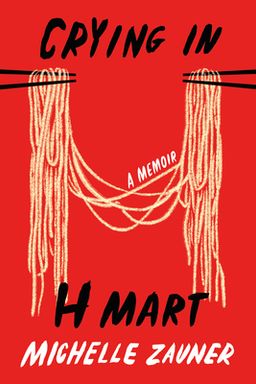
How do you remember where you come from when the person who connected you to that place is gone? In Crying in H Mart, musician and writer Michelle Zauner transforms that question into an exquisite meditation on food, identity, love, and loss. When her Korean mother dies of cancer, Michelle finds herself unmoored—suspended between her American upbringing and her Korean heritage. H Mart, the Korean-American supermarket chain, becomes both literal and symbolic ground where she rekindles her identity. Amid shelves of nostalgic snacks and familiar smells, she rebuilds her relationship to her roots, her grief, and herself.
Zauner contends that food is memory made edible. Her memoir argues that through taste, smell, and ritual, you can reconnect to the people who have passed, and to a culture that might otherwise fade with them. Yet to do so, you must confront pain—the pain of losing family, of cultural dislocation, and of resentment. Her story is not just about mourning a mother, but about learning to inhabit the spaces that her mother left behind. Through Crying in H Mart, Zauner develops a new lexicon of love built from recipes, rituals, and small acts of devotion.
The Heart of the Book: Food as an Emotional Language
At its core, Crying in H Mart is about how food serves as the primary way Koreans express affection—especially within families that might not verbalize love openly. Zauner recalls her mother’s constant culinary care: tender short ribs, perfectly fermented kimchi, and steaming noodle bowls crafted just the way her daughter liked them. Food was a form of connection, control, and communication. After her mother’s death, each Korean dish becomes a portal to memory and mourning. When Michelle stands crying in the aisles of H Mart, what really breaks her is the smell of gochujang and the sight of tteokbokki—pieces of her mother’s love rendered as ingredients.
Through H Mart’s aisles, Zauner reconstructs familial intimacy, one jar and one bite at a time. Her journey mirrors the experiences of second-generation immigrants who find themselves distanced from ancestral culture and language. For Michelle, food remains her only fluent dialect of Koreanness.
The Daughter’s Inheritance
Zauner’s emotional core is her relationship with her mother, Chongmi—a formidable, elegant woman whose exacting standards and fierce love shaped Michelle’s early life. Their bond roils with tension: her mother’s criticism, her teenage rebellion, and the chasm of cultural misunderstanding that often sits between immigrant parents and American-born children. Yet even through fights and resentments, food and shared rituals tether them together. Her mother’s recipes serve as the threads binding a fragile legacy, a way of teaching Michelle who she was and how to exist in the world.
When cancer enters their lives, their kitchen becomes a battlefield. Cooking replaces words neither can muster. Michelle tries to nourish her mother with small, careful dishes, trying to reverse time. In the process, she learns that cooking is not a cure—but it is a prayer, a conversation that grief can’t silence.
A Journey of Identity and Inheritance
Beyond the immediate grief, Crying in H Mart reflects on belonging. As a biracial Korean-American woman, Zauner struggles to locate herself between worlds: never fully American, yet not fully Korean. Her fluency in the kitchen becomes a way to prove her belonging. When Korean family members doubt her authenticity, she turns to learning dishes—doenjang jjigae, jatjuk—as proof of her cultural legitimacy. In doing so, she joins a long literary lineage of writers who tie identity to food (see also Ruth Reichl, M. F. K. Fisher, or David Chang’s essays on Korean-American food identity). Through recipes and rituals, she claims her heritage in her own voice, no translation needed.
From Memory to Music: Transformation and Art
The memoir eventually expands beyond mourning into creation. The same pain that breaks Michelle transforms into art. Writing songs for her band Japanese Breakfast becomes her way of preserving her mother’s memory and expressing what cooking cannot. Where recipes restore the past, art projects her love into the future. This duality—feeding and creating—mirrors her growth from dependency into authorship, from daughter into artist.
Grief, Zauner shows, is not about getting over loss but about metabolizing it. Like fermentation, it changes what’s left behind into something sustaining—a new flavor, a new life.
By the end of Crying in H Mart, you understand that Michelle’s story is both intensely personal and universally human. To mourn is to cook, to love is to feed, and to remember is to taste again. This memoir offers an unforgettable recipe for how to survive the loss of home, heritage, and mother: one bite, one song, and one memory at a time.