
Idea 1
Kant’s Revolution in Philosophy
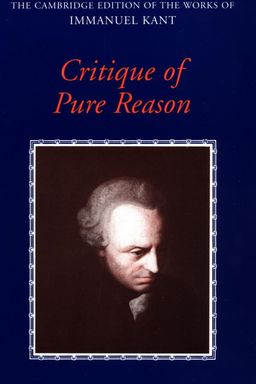
Immanuel Kant’s Critique of Pure Reason reshapes philosophy by asking the most audacious question: how are synthetic a priori judgments possible? In simple terms, how can human reason produce knowledge that is both necessarily true and yet extends our understanding of the world—knowledge essential to science and morality? You are invited to join Kant’s ambitious "critical project" that limits speculative reason to make room for faith and freedom.
From Dogmatism and Skepticism to Critical Philosophy
Before Kant, philosophy was divided between dogmatists (like Christian Wolff), who claimed we could know things in themselves such as God or the soul, and skeptics (like David Hume), who doubted we could justify necessary causal laws. Empiricists (Locke) reduced knowledge to sensation, while others retreated to indifferent common sense. Kant’s solution strikes a new balance: he preserves metaphysics as a disciplined science but confines its legitimate reach to the conditions that make experience possible. Instead of claiming knowledge of noumena (things in themselves), he establishes critical knowledge of phenomena (things as they appear to us).
The Transcendental Turn: Investigating Conditions of Experience
Kant’s most radical insight is methodological: you must shift from asking what exists externally to asking how your mind must be structured to have the experiences it does. This is called the transcendental turn. He proposes that knowledge arises only from the unity of sensibility (which provides intuitions) and understanding (which supplies concepts). His famous dictum captures it: “Thoughts without content are empty; intuitions without concepts are blind.”
Dual Aims: Science and Morality
The Critique has two grand purposes. First, it secures the foundations for natural science by explaining how necessary laws like causation and substance are conditions of possible experience. Second, it protects human freedom and moral responsibility by showing that these ideas belong to the practical, not the speculative, use of reason. The critical method limits metaphysical speculation precisely so moral faith can have room to operate without contradiction.
The Copernican Revolution in Thought
In the 1787 second edition, Kant compares his discovery to Copernicus’s shift in astronomy. Just as Copernicus explained planetary motion by assuming the observer moves, Kant explains experience by assuming objects conform to our modes of cognition rather than cognition conforming to objects. This reversal—known as the Copernican revolution in philosophy—allows him to justify necessary knowledge (synthetic a priori) and still reject metaphysical dogmatism.
Why This Matters
Understanding Kant’s critical revolution gives you the map for all modern philosophy. His inquiries yield transcendental idealism (space and time as forms of intuition), analytic and dialectic divisions of reason, and methodological limits that safeguard science while grounding ethical faith. He is not destroying metaphysics; he is rebuilding it upon the recognition that the mind actively shapes experience through its own structures. In this new architecture, knowledge is possible, science is justified, and moral freedom is preserved within its rightful domain.
Core Thesis
The Critique of Pure Reason is thus a single, unified enterprise: to show that reason itself provides both the form and limit of human knowledge. You gain certainty not by escaping experience but by uncovering the conditions that make experience—and science, morality, and meaning—possible at all.