
Idea 1
Thinking Deeply to Live Wisely
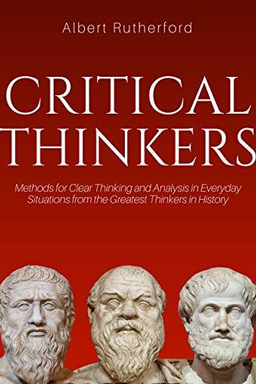
When was the last time you paused to really think about what you believe and why you believe it? In Elements of Critical Thinking, Albert Rutherford argues that most of us cruise through life making decisions based on habit, emotion, or belief—rarely pausing to examine the roots of our thoughts. He contends that to live wisely, we must learn to think deeply: to question assumptions, recognize bias, assess evidence, and deliberately process information rather than simply react to it. Critical thinking, in Rutherford’s view, is not just an academic skill—it is a survival tool for rational living.
The book walks you through how we form beliefs, the traps of irrational thought, and ways to strengthen reasoning across reading, writing, learning, and decision making. Drawing from thinkers like Daniel Kahneman, Aristotle, Socrates, and modern psychology, Rutherford frames critical thinking as both art and discipline—a lifelong method of asking the right questions, analyzing facts, and adjusting your worldview in light of new evidence.
The Battle Between Instinct and Reason
Rutherford anchors his argument in Daniel Kahneman’s discovery that humans think in two systems: System 1 (fast, automatic, emotional) and System 2 (slow, deliberate, rational). Because our brains crave energy efficiency, we default to System 1, making snap decisions and filling gaps with assumptions. But the more complex or consequential a decision—the more we need to call System 2 into action, even though it feels slower and mentally expensive. Critical thinking is, in essence, the skill of consciously choosing rational analysis over automatic reaction.
A Cure for Bias and Indoctrination
Rutherford shows how our thoughts are constantly shaped by external forces—media, social norms, culture, and authority figures. He explains how propaganda and indoctrination work by exploiting emotional triggers and repetition, using examples from Nazi Germany to modern advertising. Critical thinkers resist manipulation not by rejecting all influence, but by questioning influence. They examine motives, check evidence, and look at multiple viewpoints before forming conclusions.
Building a Practical Toolkit for Independent Thought
The book is structured around developing practical tools: Bloom’s Taxonomy and SOLO Taxonomy as models for learning, Paul and Elder’s framework for analyzing reasoning, and logical methods like Occam’s Razor or syllogisms for testing arguments. These frameworks act as mental scaffolding—you learn to construct arguments carefully, distinguish between valid and invalid logic, and apply fairness, precision, and depth to every claim you examine.
From Doubt to Mastery
Rutherford sees skepticism as healthy—not cynicism, but the discipline of not accepting claims until you’ve verified them. He encourages readers to adopt the mindset of scientist-philosophers: people like Marie Curie, Einstein, and Newton who viewed knowledge as something earned through curiosity and reason. To think critically is to embrace uncertainty with rigor—to realize that understanding evolves, and that changing your mind in light of evidence is a sign of strength, not weakness.
Why This Matters
In an age of misinformation, polarized beliefs, and emotional arguments, learning to dissect, analyze, and rethink is essential. Rutherford positions critical thinking as a modern form of mental armor—a way to navigate complex moral, political, and personal decisions without being swayed by crowd mentality or emotional bias. The goal is not to strip thinking of feeling, but to align emotion with reason so that what you feel and what you know are in harmony rather than conflict. Ultimately, he challenges readers to stop taking life at face value and start examining how they know what they know—and to become curious, open, evidence-driven thinkers who guide their lives with clarity instead of confusion.