
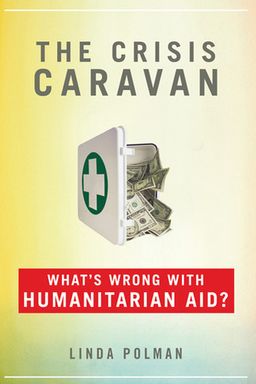
Crisis Caravan cover

Crisis Caravan

by Linda Polman

Crisis Caravan delves into the complex realities of humanitarian aid, uncovering how good intentions can sometimes lead to disastrous outcomes. With a critical eye, Linda Polman explores the political and economic obstacles that can cause aid to exacerbate conflicts, and offers thoughtful recommendations for improvement.

Aid as a Moral Minefield: The Crisis Caravan’s Central Argument

When you picture humanitarian aid, do you see selfless people rushing to help war victims or starving children? What if, in doing so, they unintentionally fund warlords, empower corrupt governments, and prolong suffering? In The Crisis Caravan: What’s Wrong with Humanitarian Aid?, journalist Linda Polman confronts this painful paradox. Drawing on years reporting from conflict zones including Rwanda, Sierra Leone, Sudan, and Afghanistan, she argues that modern humanitarian aid—the sprawling $120-billion industry of NGOs, UN agencies, and private donors—is not always the unmitigated good we imagine. Often, it becomes entangled in the very violence it tries to stop.

Polman contends that aid organizations cling to noble principles—neutrality, independence, and impartiality—without acknowledging their consequences. In war zones where 90% of casualties are civilians, neutrality can mean cooperating with mass murderers. Independence can mean ignoring politics that cause suffering. And impartiality can turn into moral blindness, where everyone—including killers—gets help. Like Dunant and Nightingale, the twin ancestors of modern aid, Polman poses an ancient question in a world that’s lost its moral compass: Is doing something always better than doing nothing?

The Humanitarian Paradox

Polman opens her journey in Goma, Zaire (now the Democratic Republic of Congo), in 1994. After the Rwandan genocide, hundreds of thousands of Hutu extremists—many of them perpetrators—fled into refugee camps. International aid workers, following their humanitarian instincts, poured in, providing food, shelter, and medical care. But these camps weren’t filled with innocent refugees alone. They became militarized enclaves where genocidaires regrouped, recruited new fighters, and launched attacks back into Rwanda. Aid kept them alive, sustained their armies, and prolonged the region’s bloodshed for years. “Feed the killers or go under as an organization,” one aid worker confessed.

This incident sets up the book’s central tension: when aid enters a war zone, it cannot be neutral. Food, medicine, vehicles, and salaries become part of the local economy—and therefore part of the conflict. Aid doesn’t just relieve suffering; it redistributes power. Wherever Polman travels—from Sierra Leone’s amputee camps to Afghanistan’s contractor-filled aid bubbles—she finds this tragic irony repeated.

The Humanitarian Industry

Behind the moral rhetoric lies an industrial complex. Polman describes the humanitarian world as a competitive market—a “moral economy,” in the words of one Oxfam director—where NGOs vie for contracts, publicity, and donor loyalty. Like private corporations, they expand, brand, and market suffering. Journalists become their collaborators, chasing gripping visuals while NGOs race to appear on television. This “CNN effect” drives donations but also distorts priorities: crises with compelling images receive millions, while quiet famines languish. As Polman notes, “Aid is a lottery. Twenty-five equally desperate communities play each week; twenty-four lose, and one wins.”

Money, she shows, isn’t the problem—accountability is. Governments delegate moral responsibility to NGOs, NGOs scramble to find operational space, and local elites learn to manipulate both. In Sierra Leone, former rebels and corrupt ministers turned amputee camps into donor spectacles, trading children’s stumps for photo opportunities. In Afghanistan, billions in reconstruction funds vanished into what locals called “Afghaniscam”—a contracting pyramid that enriched foreign consultants and warlords while villages crumbled.

Why This Matters to You

At its core, Polman’s book challenges how we interpret morality in the face of suffering. If you give to NGOs, she asks, do you know where the money goes? If you advocate intervention, do you understand its costs? Her stories suggest that well-intentioned compassion, unexamined, can cause immense harm. As political scientist Alex de Waal (in Famine Crimes) and journalist David Rieff (in A Bed for the Night) have argued, humanitarianism often becomes a substitute for political courage. We soothe our consciences by feeding victims instead of confronting the systems that create them.

Polman ends where she begins—with a plea for questions over blind action. Humanitarianism, she insists, is not beyond criticism. Aid organizations must admit their complicity in cycles of war, donors must demand transparency, and journalists must stop echoing sanitized narratives. For ordinary readers, the lesson is unsettling yet liberating: doing good requires confronting evil, not ignoring it. Neutrality might save your reputation—but not lives.

Throughout the chapters ahead, we’ll follow Polman through the war economies of Goma, Sierra Leone, Darfur, and Kabul. We’ll see how idealism mutates into business, how victims become commodities, and how the very caravans meant to deliver relief often carry the seeds of the next disaster. It’s a sobering exploration of what happens when compassion becomes an industry—and why asking difficult questions may be the most humanitarian act of all.


Goma: The Birthplace of Modern Cynicism

Polman begins her case study in Goma, the epicenter of post-genocide humanitarian disaster. In 1994, after Hutu extremists massacred 800,000 Rwandan Tutsis, the perpetrators fled across the border into Zaire. There, international NGOs descended en masse, driven by heart-wrenching media images of cholera-stricken refugees. Few realized—or admitted—that many of the “victims” were the same people who’d committed genocide weeks earlier.

A Camp of Killers

Inside Goma’s refugee camps, the Hutus recreated a miniature Rwanda: militias patrolled the perimeters, warlords levied “taxes” on aid distributions, and extremist radio stations called Tutsis “cockroaches.” Aid—food, medicine, tents—flowed freely despite this. To deny it would violate humanitarian law; to give it, Polman writes, meant feeding an army. The United Nations’ peacekeepers stood by, constrained by their neutrality. NGOs handed out supplies while militias siphoned off 60% or more for resale or military use. The camps soon sustained 20,000 armed men and their families.

The carnivalesque chaos of NGOs was equally staggering: 250 organizations, eight UN departments, and dozens of donor governments arrived. Flags fluttered over the huts, logos adorned every tent, and relief workers competed for attention and funding. Fiona Terry of Médecins Sans Frontières later called it “a total ethical disaster.” By treating Hutu killers and their victims as morally equivalent, the aid community became an accomplice in prolonging the genocide’s afterlife.

The “Landing Strip Effect”

Goma, easily accessible by air, became a textbook case of how logistics shape morality. The proximity of an airstrip ensured floods of journalists and NGOs—it was literally the most convenient tragedy to cover. This “landing strip effect” created a feedback loop: media coverage attracted donations, donations attracted NGOs, and NGOs needed more coverage to justify their presence. Meanwhile, places with equal or greater need but no easy landing zones were ignored.

The results were perverse. Hospitals overflowed with genocidaires treated for cholera; aid groups paid salaries to former militias as “drivers” or “security guards.” Donor governments, satisfied by televised compassion, moved on. Two years later, when the Rwandan army invaded the camps to dismantle the Hutu insurgents, hundreds of thousands died again—this time indirectly, with humanitarian fingerprints on the weapons.

For Polman, Goma isn’t only a tragedy; it’s the prototype for aid in the modern age. It set the precedent for what she calls “the crisis caravan”—vast, rolling convoys of good intentions that sustain as much as they save. Goma’s lesson is hauntingly clear: in humanitarianism’s rush to act, ethics are often the first casualty.


Contract Fever: When Compassion Becomes Business

After Goma, Polman exposes the financial underbelly of aid—what insiders call “contract fever.” In a crowded market of 37,000 international NGOs, survival depends less on saving lives than on securing donor contracts. Governments want fast, visible results; NGOs compete to deliver them, often at the expense of coordination or ethics. The result is a self-perpetuating market where suffering equals opportunity.

The Free Market of Misery

Each new conflict or tsunami is a bidding round. Aid groups rush to “plant their flags,” hoping to secure a project first and lock in funding. Contracts are short—three to six months—forcing perpetual competition. Organizations that withdraw for ethical reasons risk being replaced instantly by less scrupulous rivals. In Goma, when Médecins Sans Frontières–France pulled out, its Belgian and Dutch counterparts immediately stepped in. Neutrality becomes not moral purity but a business obligation.

Polman likens donor competition to brand warfare. Like Coke and Pepsi, NGOs invest heavily in logos, press releases, and TV coverage. “Each one gives higher death tolls,” journalist Richard Dowden recalled of daily briefings in Goma, “because whoever had the biggest number got on the evening news.” Publicity equals lifeblood—without it, no donations flow.

Aid and the Media Economy

The alliance between media and NGOs is central. Donors respond to spectacle; journalists deliver it. From famine to floods, aid stories are framed through emotional shorthand—fly-covered children, barren mothers, white saviors. Subtle ethical questions vanish behind dramatic visuals. As Nick Davies notes in Flat Earth News, much of modern journalism has devolved into “churnalism”—press releases disguised as reporting. Polman shows this with brutal clarity: reporters embedded with NGOs often accept free flights and guided tours, writing “sponsored” news that doubles as fundraising.

“Aid,” Polman writes, “has become a lottery.” Crises with camera-ready victims win millions; others starve in silence. Underneath, donors, consultants, and bureaucrats thrive on recycling the same language—capacity-building, empowerment, sustainable development—while accountability disappears in the fog. The humanitarian market rewards visibility, not virtue. And as with any market, where money goes, ethics follow.


MONGOs: The Rise of Amateur Humanitarianism

Next, Polman turns her journalist’s eye on a surprising frontier: the do-it-yourself aid movement. She calls them “MONGOs”—My Own NGOs. These are ordinary citizens, church groups, or celebrities who, frustrated with bureaucracy, start their own charities. Their motivations are pure; their results, often disastrous. Dunant’s “isolated enthusiasts” have returned with credit cards and social media.

From Kansas to Chaos

Polman recounts the story of Lonny Houk, a retired health administrator from Kansas who founded “Feed My Lambs International.” With friends and nurses, he flew to war-torn Sierra Leone to perform surgeries on amputees—without hospital infrastructure, proper sterilization, or training for combat trauma. In hours, they operated on dozens using hand saws and bottled water. One baby died during surgery. Back home, they were celebrated in church bulletins and hometown papers. For Polman, it’s a chilling example of good intentions unchecked by expertise. “You’d think war victims had a right to protection from amateurs,” she writes. “But no law exists to stop them.”

The Democratization—and Commodification—of Compassion

Bill Clinton once called this trend the “democratization of charity.” Polman calls it the “fetishization of empathy.” MONGOs multiply because they’re easy to start, require no oversight, and thrive on instant gratification. One can post pictures of orphans online, raise funds overnight, and fly supplies next week. Yet their shipments often contain absurd donations—fur coats to Sri Lanka, dog food to Kenya, or expired drugs to hospitals. In Goma, crates of ski gloves were airdropped on equatorial refugees. As one Red Cross worker told Polman, “They love giving, but they don’t think about what they’re giving.”

By tracing these personal crusades, Polman broadens her criticism beyond institutional corruption to cultural narcissism. We don’t just want to help; we want to be seen helping. The “Facebookification” of aid turns tragedy into self-branding. Yet the cost is borne by the recipients who become props in someone else’s redemption story. In Polman’s telling, the road to hell—and to the next donor gala—is still paved with good intentions.


Sierra Leone’s Amputee Camps: Exploitation as Aid

Polman’s most disturbing reporting comes from Murray Town Camp in Freetown, Sierra Leone, home to hundreds of amputees whose limbs were hacked off during the civil war. These men, women, and children became global symbols of compassion—donor darlings. Their images appeared in fund-raising brochures, documentaries, and benefit concerts. Everyone wanted to be associated with their suffering—and profit from it.

The Circus of Compassion

Journalists, politicians, and aid groups visited daily, turning the camp into what one diplomat called “the Volendam of West Africa”—a tourist attraction. Ministers brought foreign delegations to pose for photos; NGOs filmed the same children again and again; even religious groups from Japan and Virginia dropped in with secondhand clothes and sermons. Amid the chaos, amputees learned to perform their misery for visitors—children waved their stumps because photographers paid them.

Max Chevalier, a physiotherapist from Handicap International, told Polman that some amputees refused prosthetics because their injuries were more lucrative. When donations arrived, fights broke out over who deserved them—the “real amputees” mutilated by rebels or the “war wounded” treated by doctors. Donor money divided the victims themselves. Meanwhile, foreign NGOs supplied redundant prostheses, sometimes hundreds per person, while others tried bribing recipients with wristwatches.

The Commodification of Suffering

As if exploitation inside the camp weren’t enough, American evangelicals and charities began flying child amputees to the U.S. for publicity tours and adoption. “Gift of Limbs” and “Christ End Time Movement” whisked children away under the pretense of advanced prosthetic care. Many were featured on shows like Oprah. One girl sat on Bill Clinton’s lap at a fundraising picnic. Their parents, often illiterate, had signed papers they couldn’t read. Polman tracks them down—bewildered fathers staring at photos of children they’ll never see again.

In this grotesque theater, everyone gained: charities raised millions, politicians earned goodwill, and even the amputees learned to manipulate pity for survival. But the moral cost was unbearable. Murray Town Camp, Polman concludes, shows how humanitarianism turns people into currency. Once your story has earned enough donations, your humanity becomes expendable.


Aid as a Weapon of War

Polman pulls no punches describing how aid directly feeds conflict. In Liberia, Sierra Leone, Somalia, and Afghanistan, both governments and warlords tax, steal, or extort humanitarian supplies. “We have guerrillas and generals who don’t care if people die,” one UN official told her. “As long as their prestige is massaged.”

How Aid Becomes Ammunition

In Somalia, militias demanded up to 80% of aid shipments as tolls. In Sudan’s Darfur, humanitarian convoys paid protection money to the same militias attacking villages. Even hiring local staff pumped salaries into the war economy—one NGO in Darfur inadvertently paid $11,000 a month in “taxes” to rebel leaders. In the name of neutrality, NGOs refused to resist. As one said, “We shake hands with the devil, or we leave people to die.”

Meanwhile, aid distorted local economies. Landlords in Kabul charged $5,000 a month to rent ruins to expatriates. Governments invented new bureaucracies to “supervise” aid projects and collect fees, as in Sierra Leone’s Ministry for NGO Affairs. Local elites learned to monetize pity: ministers demanded vehicles, chiefs taxed well water, and militiamen extorted protection payments. Foreigners, exhausted by corruption, retreated behind barbed wire—and called it progress.

Ultimately, Polman argues, humanitarianism has become militarized: a logistical arm of global politics. By supplying food, medicine, and legitimacy, NGOs sustain wars under the banner of peace. Aid no longer just alleviates suffering—it funds it.


When Recipients Call the Shots

Some dictators and rebel leaders, Polman observes, have become masters at manipulating aid flows. Ethiopia, Sudan, and other regimes learned to weaponize famine and refugees long before the West noticed. Humanitarianism needs victims; warlords provide them.

Ethiopia and the “Charity Famines”

In the 1980s Ethiopian dictator Mengistu Haile Mariam used Western aid—and Bob Geldof’s Band Aid millions—to relocate rebellious populations, starving hundreds of thousands in the process. Aid convoys, airlifted by well-meaning NGOs, delivered food straight to Mengistu’s army. Villagers were herded into forced-labor “resettlement camps” under the Red Cross banner. When tens of thousands died en route, Geldof shrugged: “Numbers don’t shock me.” For Mengistu, famine wasn’t catastrophe—it was strategy.

Two decades later, Sudan’s government perfected the method in Darfur. By controlling which NGOs could deliver where, they rewarded loyal tribes and starved rebels. Every flight required permission. Each bag of grain paid taxes twice—once to the army, once to militias. Yet donor governments kept paying, terrified of appearing indifferent. “Aid or no aid,” Polman writes, “the regime wins.”

The Political Logic of Humanitarianism

Aid may claim neutrality, but to tyrants it’s just another currency. When Tony Blair praised Ethiopia’s prime minister as a reform hero, the same regime was jailing journalists and blocking food deliveries. Western donors applauded “good governance” while funding repression. For Polman, these episodes show that aid rarely strengthens democracy—it often stabilizes authoritarianism. As long as the West defines success by dollars spent rather than lives changed, the world’s worst governments will keep inviting the crisis caravan in.


Afghaniscam: Aid in the War on Terror

In one of her sharpest chapters, Polman dissects Afghanistan’s reconstruction after 9/11—a trillion-dollar experiment where humanitarianism merged with military occupation. What was sold as rebuilding became what locals darkly called “Afghaniscam.”

Aid as a “Force Multiplier”

After the U.S.-led invasion, Colin Powell famously told aid groups they were “an arm of the U.S. combat team.” European governments followed suit, aligning their aid with counterterrorism. Neutral NGOs vanished behind razor wire in Kabul, managing projects remotely while subcontracting locals to do the dangerous work. Meanwhile, 35–40% of aid money vanished into corruption, kickbacks, and ghost projects. Roads were built with inferior materials; schools existed only on paper. Donors, unable to travel, relied on falsified photos and receipts. One U.S. road project turned $15 million into a crumbling track within five years.

Even the “hearts and minds” campaigns—soldiers distributing sweets and sewing kits—became propaganda. To many Afghans, the blurring of humanitarian aid and military force destroyed trust. “If a school burns,” one aid worker told Polman, “it’s because someone thought Americans built it.” Violence against NGOs soared. By 2008, humanitarians had retreated into fortified compounds, venturing out only under armed escort.

Polman’s portrait is chilling: a nation rebuilt for foreign eyes. Restaurants in Kabul’s Green Zone served steak and margaritas while only 2% of residents had electricity. Security contractors earned $1,000 a day, more than entire Afghan ministries. “Aid” became a mirror of war: lucrative, self-justifying, and endlessly renewable. As historian Joseph Stiglitz warned, the bookkeeping in Iraq and Afghanistan “would shame a grocery store.” For Polman, Afghaniscam proves that when humanitarianism becomes political, compassion turns into commerce.


The Logic of the Humanitarian Era

In her final chapters, Polman steps back from individual scandals to reveal a grim pattern—the logic governing the “humanitarian era.” Aid, she argues, functions like celebrity attention: fickle, competitive, and deeply political. Some crises become “donor darlings,” others “donor orphans.” Victims must compete for pity.

Aid as Lottery

During Rwanda’s genocide, Tutsis dying inside the country received almost nothing, while Hutu militants in Goma received billions. In Namibia, famine victims starved unnoticed; in post-tsunami Sri Lanka, survivors received $1,200 per capita in aid. The rules of the game are simple: visibility attracts virtue. As UN official Jan Egeland confessed, “Twenty-five equally desperate communities compete each week. Twenty-four lose.”

Victims learn to perform their roles accordingly. In wars from Congo to Sierra Leone, survivors display wounds and tell rehearsed stories to entice donors. Governments stage-manage hunger to qualify for assistance. Even rebels grasp the equation: greater horror equals greater relief funds. One RUF commander told Polman he escalated amputations during the war because international coverage had been good for business.

The New Morality of Relief

In this system, compassion becomes currency. Aid organizations—not bound by elections or accountability—exercise geopolitical power through budgets larger than many states. Yet their moral authority remains unexamined. As Polman concludes, their refusal to confront politics ensures that every future war will have its own Goma, its own Murray Town, its own Afghaniscam. True humanitarianism, she insists, begins not with doing but with questioning—asking who benefits, who decides, and who pays.

“Without violence and devastation,” one rebel told her, “no aid. And the more horrific the violence, the more comprehensive the aid.” That, Polman writes, “is the logic of our age.”

Dig Deeper

Get personalized prompts to apply these lessons to your life and deepen your understanding.

Go Deeper

Get the Full Experience

Download Insight Books for AI-powered reflections, quizzes, and more.