
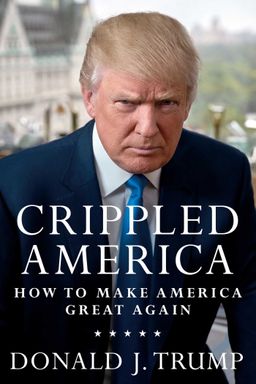
Crippled America cover

Crippled America

by Donald J Trump

In Crippled America, Donald J. Trump outlines his vision to restore America’s greatness by fixing economic, security, and political issues. His controversial plans involve bold changes to immigration, education, military, and energy policies that promise to transform the nation.

Rebuilding a Crippled America Through Action and Leadership

Have you ever looked around and felt that something once great—your community, career, or even country—was slowly slipping away? In Crippled America: How to Make America Great Again, Donald J. Trump channels that same frustration and argues that the United States, once the beacon of strength, prosperity, and pride, has grown weak through incompetence, political paralysis, and an absence of strong leadership. Trump contends that America’s decline is not inevitable—it is reversible—but it demands the kind of bold, pragmatic leadership found in a successful business rather than in a career politician.

At its core, the book is both diagnosis and manifesto: America has become, in Trump’s terms, “crippled” by bad deals, bureaucratic gridlock, ineffective foreign policy, broken immigration enforcement, and an eroding education system. To rebuild it, he insists on applying principles of efficiency, competitiveness, and common-sense decision-making—ideas drawn from his own experience constructing skyscrapers, negotiating contracts, and managing billion-dollar enterprises.

A Nation That’s Forgotten How to Win

Trump opens with a striking question: Why has America stopped winning? He paints a picture of a once powerful nation taken advantage of by trade partners, weakened by indecisive leaders, and confused by endless political bickering. Winning, for Trump, isn’t just about military power—it’s about excellence across business, education, and spirit. He compares ineffective negotiations with Iran, China, and other nations to poor business deals that any competent negotiator would reject. His recurring message is simple: leadership is about results, not rhetoric.

Leadership Like a Business

Trump draws direct parallels between governing a country and running a corporation. He argues that America needs “smart businesspeople” who understand how to manage costs, negotiate effectively, and make decisions quickly. Like a CEO rescuing a failing company, he believes that the next leader must “hire the best people,” cut bureaucratic waste, and restore a culture of accountability. He touts his independence from lobbyists and donors—claiming that self-financing makes him uniquely free to act in America’s interest rather than catering to special interests.

Confronting the Status Quo

For Trump, the greatest enemies of American greatness are the entrenched forces of complacency: the media, the political establishment, and career bureaucrats. He portrays them as out of touch, self-serving, and disconnected from everyday citizens. In his view, politicians are “all talk and no action,” more skilled at fundraising than at governing. The media is painted as biased and manipulative, twisting his words for attention (“They don’t report what I say—they report what they wish I had said”). This critique shapes one of the book’s guiding philosophies: direct connection between leader and citizen, bypassing conventional political filters.

Restoring Pride and Purpose

Beyond policy details, Crippled America is emotionally driven by a desire to restore national pride. Trump repeatedly invokes images of prosperity, confidence, and the joy of winning—the hallmarks of what he deems “making America great again.” That goal, he argues, begins by putting American interests first in every decision, whether in trade, military protection, or immigration. His rhetoric mirrors self-help philosophy more than traditional political ideology: believe in yourself, refuse to settle for mediocrity, and act boldly.

What You’ll Learn

The chapters following this opening vision expand into concrete topics—immigration, foreign policy, education, energy, health care, and economic reform. Trump’s solutions often rely on the same underlying formula: cut inefficiency, strengthen enforcement, and negotiate better deals. He advocates a wall along the southern border, rebuilding America’s crumbling infrastructure, scrapping the tax code for simplicity, and reviving personal accountability. In later sections, he connects these policies back to values: hard work, faith, family, and patriotism.

This book matters not only as political commentary but also as a reflection of an enduring American yearning—for leadership that promises tangible results and national renewal. Whether you agree or disagree with Trump’s tone, Crippled America captures a raw sense of urgency: that greatness comes not from government programs or diplomacy, but from the power of belief, action, and boldness in the face of decline.


Winning Again: Restoring the Culture of Success

In Donald Trump’s view, America must recover its habit of winning, the mindset that once made it the world’s superpower both in economics and morale. He argues that for too long politicians have tolerated losses—bad trade deals, failed wars, weak negotiations, and national shame. To make America great again, he insists, we have to rebuild a culture where success is rewarded and failure isn’t excused.

From Losing Deals to Winning Mentality

Trump contrasts his business strategy with recent U.S. foreign policy, especially deals like the Iran nuclear agreement, which he calls “one of the worst negotiations in history.” In his analogy, the politicians acted like poor businessmen, accepting concessions without firm conditions. He uses Reagan’s famous phrase “trust but verify” and argues that modern leaders don’t even verify—they simply trust and sign. Winning again means demanding accountability from both allies and adversaries and refusing deals that weaken America’s position.

Leadership Through Action, Not Talk

As a self-described doer rather than talker, Trump emphasizes execution. Congress, in his criticism, spends years debating budgets without actually passing one. The cure, he says, is management—something politicians don’t understand but business leaders do. He recounts how, in his corporate life, indecision means bankruptcy; in government, it means national paralysis. For Trump, winning requires decisive leadership, measurable goals, and visible progress.

Why Business Principles Matter

Trump’s argument rests on translating business acumen into political leadership. He sees America’s failures not as ideological but managerial. In business, you hire talent, cut waste, and negotiate strategic deals. In politics, you pander to donors, stall legislation, and chase polls. His campaign promise is to bring the efficiency and drive of “The Apprentice” boardroom into the Capitol. He boasts that unlike other candidates, he is self-funded, immune to lobbyist pressure—a direct extension of his winning philosophy.

The Power of Belief and Toughness

This chapter’s deeper insight is psychological: winners believe and fight relentlessly. Trump claims his success came from refusing to quit when setbacks came. He recounts personal battles—critics calling him names, media ridicule, colleagues predicting failure—and contrasts that persistence with politicians’ fragility. Winning again, he says, starts with mental fortitude and pride. Americans must rediscover that emotional toughness, the refusal to be bullied or accept decline.

Key lesson:

If you believe your country—or company—can win, you must act as if losing is not an option.

(In business literature, this echoes Jim Collins’s concept in Good to Great: “confront the brutal facts but never lose faith.” Trump’s version is less about introspection and more about aggressive dominance.)

Ultimately, “Winning Again” becomes a metaphor for all of Trump’s policy proposals. A strong military deters war, fair trade rebuilds wealth, and accountability rekindles national respect. Trump’s call is energetic, combative, and emotional—but beneath it lies a genuine management principle: results matter more than rhetoric.


Immigration: Borders as a Symbol of Sovereignty

Few issues define Trump’s worldview as vividly as immigration. He positions border control not merely as policy but as the foundation of national identity. For him, a nation without secure borders isn’t a nation at all. Trump’s proposed solution—the now-famous wall—is both literal infrastructure and symbolic restoration of order.

Illegal vs. Legal Immigration

Trump stresses that he supports legal immigration, citing his own mother’s emigration from Scotland and his German ancestry. However, he condemns illegal immigration as chaotic and unjust, arguing that it undermines law-abiding immigrants who wait in line. He highlights criminal data about incarcerated aliens and frames open borders as a humanitarian and national security disaster. His tone is confrontational but driven by fairness: laws must matter again.

The Wall as Solution and Symbol

Trump’s wall proposal represents his signature principle: practical simplicity. To critics who claim it’s impossible, he cites historical precedents—the Great Wall of China and Israel’s border barrier—to prove that determination can overcome scale. The wall, he insists, will not only deter illegal crossings but also restore respect for sovereignty. He famously declares that Mexico will pay for it through leverage—tariffs, impounded remittances, or renegotiated agreements. Whether realistic or not, the idea captures his belief in assertive negotiation.

Reforming the System

Beyond the wall, Trump’s broader plan includes tripling border officers, cutting funds to sanctuary cities, enforcing visa overstays, and ending birthright citizenship—arguing that the Fourteenth Amendment was never meant to grant automatic citizenship to children of illegal immigrants. His tone blends outrage and pragmatism: laws ignored are meaningless, and national generosity must never come at the expense of citizen welfare.

Attracting the Best

Interestingly, Trump also calls for increased legal immigration of skilled talent—students and innovators educated in American universities who currently return home due to system inefficiency. He wants to “flip the system” so excellence, not illegality, determines entry. America’s immigration laws, he argues, should prioritize contribution over quota.

“A country either has laws or it doesn’t,” Trump writes. “Having laws that we don’t enforce makes no sense.”

Ultimately, his immigration stance embodies the book’s overall message: strength comes from boundaries—physical, moral, and institutional. The wall is not only about who enters America but about reestablishing the nation’s authority to decide who it wants to be.


Foreign Policy: Fighting for Peace

Trump’s foreign policy philosophy centers on strength, leverage, and unpredictability. He rejects traditional diplomacy as weak and bureaucratic, arguing instead that a strong military and economic resolve are the best guarantees of peace. His motto mirrors Teddy Roosevelt’s in reverse: speak loudly and carry an even bigger stick.

Operating From Strength

Trump insists that America must fund and expand its military to restore global respect. Weakness, he says, invites aggression—pointing to Russian success in Syria and China’s assertiveness in trade as proof. He would compel allies like Germany, Japan, and South Korea to contribute financially to their own defense since they benefit from U.S. protection. “If we’re the world’s policeman,” he asks, “shouldn’t we be paid for it?”

Dealing With Adversaries

Trump is openly critical of the Iran nuclear deal, calling it a “disgraceful giveaway.” He argues that U.S. negotiators walked into talks desperate for success, letting Iran reap billions while keeping nuclear capabilities. His rule of negotiation: the side that needs the deal least wins the most. He vows never to reveal military plans—“You don’t announce your withdrawal dates”—and praises unpredictability as strategic advantage. He compares his own business deal-making to geopolitical strategy, emphasizing secrecy and leverage.

China and Economic Warfare

Trump treats China as both rival and opportunity. He condemns currency manipulation and intellectual property theft but claims China’s dependence on American consumers gives the U.S. leverage. His plan: use “tough negotiators” like corporate magnate Carl Icahn to strike better trade terms. He admires China’s efficiency but insists America must stop being “rolled over.”

An Unpredictable Commander

Perhaps Trump’s most unconventional foreign policy idea is the value of unpredictability. He likens it to his business tactics—never revealing the next move keeps opponents off balance. He argues that diplomacy has become too transparent, with presidents publicly announcing strategies and red lines only to be ignored. “Tipping your hand is one of the dumbest mistakes in a confrontation,” he writes.

In the end, “Fighting for Peace” reflects Trump’s belief that peace emerges from fear and respect, not negotiation. It’s a realist doctrine stripped of idealism—focused on power, deals, and deterrence. He positions America as a competitor fighting not just wars but deals, demanding leadership that treats diplomacy like high-stakes business.


Education and the Need for Competition

Trump sees America’s educational decline as another symptom of bureaucratic failure. The country spends more per capita on schooling than any other nation, yet ranks 26th globally. He argues that Washington’s “one-size-fits-all” approach has crushed innovation and accountability.

Local Control Over Federal Mandates

The federal Department of Education, in his view, is a disaster. He calls for eliminating or severely limiting it, replacing federal oversight with local control. Programs like Common Core, No Child Left Behind, and Race to the Top have turned teachers into bureaucrats following centralized curricula. “We don’t want our children educated from Washington,” he declares. His model: empower parents and local communities to choose the best schools.

Bring Back Discipline and Competition

Trump associates his own success and character with the discipline he learned at New York Military Academy, where strict expectations and hard consequences taught responsibility. He criticizes the modern obsession with self-esteem, arguing that real confidence comes from hard-earned success. “You know what makes a kid feel good? Winning,” he says. Failing students shouldn’t be shielded from failure; they should learn persistence through challenge.

School Choice as a Catalyst

His centerpiece solution is school choice—letting parents pick the best schools and forcing underperforming ones to improve or close. He cites research showing charter school students learn faster than public school peers. Competition, he argues, drives excellence; monopoly drives mediocrity. Teacher unions, however, are portrayed as barriers to reform, protecting bad teachers through rigid contracts and resisting innovation.

Higher Education and Cost

Trump also confronts the soaring cost of college. He condemns government profit from student loans (“one of the few things the government shouldn’t make money from”). For him, education should empower—not enslave—students. He encourages lowering costs, rewarding merit, and treating student loans as national investments, not debt traps.

His education philosophy mirrors his business worldview: reward results, eliminate waste, and let natural competition sort the good from the bad. Like charter schools competing for enrollment, America itself must compete globally for excellence.


The Economy, Taxes, and the American Dream

Trump’s economic argument blends populism with business pragmatism. He identifies the core problem: overregulation, unfair foreign competition, and a tax code that punishes success. To revive the American Dream, he proposes simplifying taxes, bringing jobs home, and empowering workers.

An Entrepreneur’s Diagnosis

Rejecting the political elite’s ivory-tower theories, Trump argues that only business experience teaches real economics. Politicians talk about growth and budgets but have never made payroll. He presents his own financial disclosures—with pages of businesses, assets, and earnings—as proof of competence. Economic recovery, he says, requires negotiation, not academic debate.

Fixing the Tax Code

He condemns America’s 74,000-page tax code as insanity. His reform would remove millions from tax rolls, simplify rates to 0%, 10%, 20%, and 25%, abolish the death tax, and reduce corporate taxes to 15%. He envisions this as “putting H&R Block out of business.” For small businesses and freelancers—the real job creators—he offers identical tax relief and a flat business rate. Wealth should be earned, not eroded by paperwork.

Trade and Jobs

Global deals are Trump’s battleground. He cites job losses from poor trade agreements with China and Mexico, where American firms move plants abroad. He vows to renegotiate trade deals so “made in America” becomes profitable again. Corporations hoarding trillions overseas would repatriate funds under his proposed 10% rate, fueling infrastructure investment and domestic jobs.

Rebuilding Industry and Infrastructure

Trump views construction as the metaphor for national revitalization. America’s bridges, roads, and airports resemble “third-world countries,” he says. Fixing infrastructure would create 13 million jobs and restart the economy. “Before we build bridges to Mars, let’s fix the potholes to O’Hare.” It’s business logic applied to government spending: invest where return is tangible.

His economic vision—lower taxes, simpler systems, tougher trade, and bold investment—unites his philosophy throughout the book. Strength, whether fiscal or moral, depends on efficiency, self-reliance, and pride in creation.


Values and Patriotism: The Heart Behind the Empire

In later chapters, Trump shifts from policy to personal reflection. He reveals the family, faith, and values that shaped his worldview—the foundations of his belief in America’s greatness. These values, not money or fame, are presented as the moral core beneath his ambition.

Family and Work Ethic

Trump attributes his resilience and drive to his father, Fred Trump, a tough but principled builder. From him, he learned the ethics of hard work, discipline, and excellence. His mother instilled moral faith, while military academy instilled leadership and respect. “Do it right or do it again” became his lifelong code, echoing the American ethic of accountability.

Faith and Freedom

Trump describes his religious background—from Presbyterian origins to influence from Rev. Norman Vincent Peale. He admires Peale’s The Power of Positive Thinking, citing belief in oneself and God as essential to happiness and success. He laments the erosion of Christian traditions—banning nativity scenes and shying from “Merry Christmas”—as signs of cultural decline. Faith, for him, is inseparable from patriotism.

Pride in America

The book’s emotional climax celebrates America as the greatest chance anyone can be given. Trump recounts his battles with city officials over flying oversized flags at Mar-a-Lago and other properties, turning those fights into symbols of national pride. “The day you need a permit to fly an American flag,” he writes, “is a sad day for this country.” His stubborn defense of the flag illustrates his belief that patriotism requires defiance.

Trump’s moral message is unmistakable: success without gratitude is hollow. The happiest Americans, he insists, are those who honor family, faith, and the nation that made their dreams possible. Behind the combative businessman persona stands an old-fashioned theme—love of country as the ultimate motivation.

Dig Deeper

Get personalized prompts to apply these lessons to your life and deepen your understanding.

Go Deeper

Get the Full Experience

Download Insight Books for AI-powered reflections, quizzes, and more.