
Idea 1
Britain’s Betrayal of Disabled People
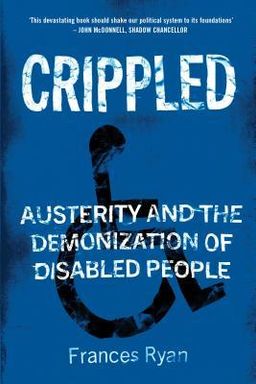
What happens when a wealthy nation decides that its sick and disabled citizens are no longer worth protecting? In Crippled: Austerity and the Demonization of Disabled People, journalist and activist Frances Ryan poses this haunting question, arguing that Britain’s decade of austerity was not simply an economic response to recession—it was a moral and political war against disabled people. Through intimate human stories and rigorous evidence, Ryan contends that the United Kingdom has turned its back on the very population that once symbolized its compassion and decency.
Ryan’s thesis is bold and clear: austerity was never neutral belt-tightening for the sake of fiscal responsibility. Instead, it was a set of deliberate choices made by politicians to cut disability benefits, dismantle social services, and promote media campaigns that painted disabled people as lazy, fraudulent, and expensive burdens on “hardworking taxpayers.” She demonstrates how these cuts pushed millions into poverty, isolation, and despair—reversing decades of progress achieved by disability rights movements since the postwar welfare state.
The Arc of History: From Welfare to Warfare
Ryan situates austerity within a long historical continuum. Early chapters trace how Britain’s approach to disability evolved from Victorian workhouses—where the “feeble-minded” were confined—to the creation of welfare safety nets after World War II. That postwar vision saw disability as a shared national duty, with programs like the Disability Living Allowance and the Care Act promising dignity and independence. But under David Cameron’s coalition government, aided by George Osborne and Iain Duncan Smith, that duty transformed into suspicion. In speeches and tabloids alike, disabled people became “scroungers” milking the system. This cultural demonization was not accidental—it was propaganda designed to justify slashing benefits while promising tax cuts for corporations and the wealthy.
Austerity’s Human Toll
What makes Ryan’s argument so moving are the portraits of everyday people living its consequences. Susan, a wheelchair user in East London, can’t afford to heat her home after the bedroom tax forces her to pay for a spare room used by her carer. She goes to bed hungry, relying on cereal because her specialized food is now unaffordable. Bessie, a former shopkeeper in Nottingham with Asperger’s and digestive illness, sells her jewelry to pay for heating after her disability benefits are revoked. Their stories reveal the cruelty beneath policy jargon—human lives squeezed by arbitrary reassessments and bureaucratic indifference.
Beyond these personal accounts, Ryan combines statistics that expose systemic devastation: four million disabled adults below the breadline, one in five skipping meals, families forced into debt or homelessness, and local councils too starved of funding to provide care. She cites the Equality and Human Rights Commission’s finding that households with both disabled adults and children lost over £6,500 annually due to benefit changes. The UN went so far as to classify Britain’s treatment of disabled people as a “human catastrophe.”
Why This Matters
Ryan’s argument matters because it reframes austerity from a matter of budgets to a matter of human rights. She urges you to see how myths—like the “something-for-nothing” culture promoted since Thatcher’s era—warp empathy into contempt. This book connects economic policies to cultural attitudes: it’s easy to cut benefits if the public believes disabled people are undeserving. Yet, Ryan reminds us that disability is not a niche issue; it touches nearly every life, whether through personal illness, family care, or aging. The fate of disabled citizens is everyone’s fate, because, as she writes, vulnerability is a political choice, not a natural one.
Where We Go from Here
In the book’s conclusion, Ryan calls for a rediscovery of solidarity—a renewed sense that compassion must be the core of public life. She envisions an inclusive social safety net where equality means empowerment, not pity. By returning to the principles of the welfare state and rejecting fear-driven narratives, she argues that Britain can reclaim its moral compass. Her message goes beyond disability: it’s a broader reflection on how societies treat those deemed “unproductive.” For Ryan, the mark of civilization is not GDP growth or market efficiency but the dignity extended to its most vulnerable citizens. In exposing how policy reshapes culture, Crippled challenges you to ask: what kind of society do we want to live in—and whose humanity are we willing to defend?