
Idea 1
Investigating Power at the Intersection of Politics and Intelligence
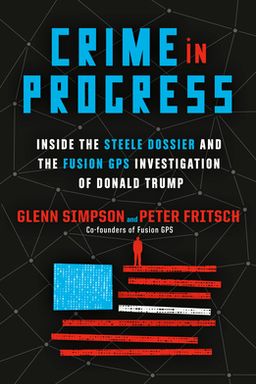
How do you investigate corruption when it crosses borders, merges politics with intelligence, and threatens democracy itself? In Crime in Progress, Glenn Simpson and Peter Fritsch—the founders of Fusion GPS—recount their investigation into Donald Trump’s business and political ties, explaining how their work evolved from opposition research into a far-reaching probe of Russian influence, foreign money, and institutional weakness.
The book argues that serious investigative work must marry document-based journalism with human intelligence (Humint), balancing verification with source protection. What began in 2015 as routine political vetting for a conservative client became, by mid‑2016, an alarm bell about foreign interference in U.S. democracy. Fusion’s methodical data gathering and Christopher Steele’s MI6-sourced intelligence aligned—sufficiently enough—to alert law enforcement and later shape public understanding of the Trump‑Russia nexus.
From Public Records to National Security
Fusion GPS treated Trump not as a political icon but as a business system riddled with litigation, licensing deals, and opaque financing. Through Project Bangor, they built a digital archive spanning decades of lawsuits and filings. Patterns emerged: shell corporations recurring across failed ventures, foreign buyers overpaying for real estate, and Deutsche Bank repeating as lender of last resort. When Felix Sater and Bayrock surfaced in the Trump SoHo development, Fusion’s researchers spotted Russian capital threads running through multiple projects. This transition—from domestic business probe to international money network—defined the book’s early momentum.
(Note: This archival method parallels historical investigative models like I.F. Stone’s document-driven work and overlaps with modern open-source intelligence frameworks used by groups such as Bellingcat.)
The Steele Memos and Human Intelligence
Into this structured records environment entered Christopher Steele, a former MI6 Russia expert. His short-term 2016 assignment—interviewing Kremlin-connected contacts—produced field reports that alleged coordination between Trump associates and Russian operatives. Steele’s method emphasized access and discretion: every memo traced the chain of source attribution but carried inherent uncertainty. Fusion viewed these reports as leads to test, not conclusions to print. The contrast between open-source verification and confidential human insight became the book’s defining tension.
Escalation: Leaks and Media Exposure
The dossier’s leak in January 2017 exposed this delicate balance. CNN’s disclosure that intelligence chiefs briefed Obama and Trump triggered BuzzFeed’s decision to publish Steele’s memos in full—unredacted. The fallout was enormous: source safety compromised, Fusion and Steele vilified, and partisan warfare ignited. Journalistic ethics clashed with the dangers of raw intelligence publication, showing how transparency can imperil investigations. Within hours of the leak, both Fusion and Orbis scrambled for legal counsel and personal security.
Institutional Inquiry and Political Backlash
Those leaks fed directly into the FBI’s Crossfire Hurricane investigation, alongside separate triggers (Papadopoulos’s comments to an Australian diplomat, the DNC hack). But as the inquiry widened, congressional committees—led by Chuck Grassley and Devin Nunes—turned their focus on Fusion GPS itself, using subpoenas and leaks to frame the research as partisan disinformation. The narrative that began as a counterintelligence alarm became ammunition in political theater, illustrating how congressional oversight can act as both protector and destroyer of truth.
From Survival to Public Mission
Facing lawsuits and security threats, Fusion shifted strategy. With help from investigator Daniel Jones, they established The Democracy Integrity Project (TDIP)—a nonprofit designed to continue investigations into foreign interference under a public-interest framework. TDIP allowed Fusion and Steele to pursue global influence research, from European elections to Brexit networks, without the optics of partisan contracting. The firm’s work ultimately influenced parts of Mueller’s probe and several media investigations.
The Book’s Core Argument
Simpson and Fritsch’s thesis is that investigative truth depends on records, corroboration, and protection—but loses power when filtered through political polarization. Whether tracking Manafort’s Cyprus companies or Cohen’s Moscow communications, they show that following the money reveals foreign leverage but that media exposure and congressional warfare can obscure, not clarify, the stakes. The book chronicles how legal attrition, leaks, and partisan distortion transformed a sober inquiry into a survival saga.
Core takeaway
Investigating power demands patience and protection: public records establish patterns; human sources reveal motives; and institutional alliances decide whether truth survives exposure. Crime in Progress teaches you that democracy depends not only on facts uncovered but also on how those facts are handled once politics enters the frame.