
Idea 1
Reimagining Education for Human Flourishing
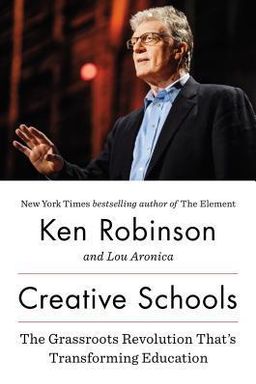
What if schools were designed not to manufacture workers but to cultivate human potential? In his wide-ranging work on educational transformation, Ken Robinson argues that modern schooling still operates under an industrial model—a legacy of the nineteenth century built around standardization, regimentation, and sorting—rather than one that grows organically from how people actually learn.
He insists this design mismatch fuels disengagement, waste, and frustration worldwide. The old system was engineered to produce uniform clerks and factory operatives; today’s economies and societies depend on creativity, collaboration, and adaptive intelligence. To flourish, schools must shift from factory metaphors to organic ones—from linear pipelines to living ecosystems that nurture varied human capacities.
The Failure of the Industrial Model
Industrial-era schooling standardized everything: age batching, rigid timetables, narrow subjects, high-stakes tests, and hierarchies that privileged certain types of intelligence. Robinson compares it to an assembly line where students are processed in cohorts, tested, and labeled. Predictably, such systems produce conformity, not creativity. Even reform movements touting 'higher standards' often double down on these same mechanisms, generating pressure rather than improvement.
Around the world, we’ve seen the shadow side of the standards movement—the stress and suicides in high-pressure systems like South Korea, the disengagement and dropouts in the United States, teacher burnout, and the economic paradox of unemployed graduates. The global rush to improve test rankings (spurred by PISA comparisons) has often narrowed the curriculum, marginalized arts and vocational learning, and eroded professional morale. The result: we measure what’s easy to count, not what counts.
A Shift Toward Organic Education
Robinson’s central metaphor—a farm rather than a factory—captures the alternative. In living systems, growth depends on conditions: climate, soil, care. Education should work the same way. He outlines four principles adapted from organic farming: health (nourishing whole students—intellectual, emotional, physical), ecology (recognizing interdependence among people and ideas), fairness (providing equitable paths that value diverse talents), and care (making compassionate, evidence-based decisions).
Schools, Robinson argues, are complex adaptive systems. They evolve through relationships, not commands. Much like ecosystems, healthy schools depend on local conditions and community culture. Finland’s system—trusting teachers, minimizing testing, broadening curricula—illustrates how organic principles create excellence without coercion.
Human Potential and Personalization
Central to Robinson’s argument is that children are natural learners: inherently curious, playful, and imaginative. The industrial model suppresses these instincts; the organic model amplifies them through personalization. Examples like Sugata Mitra’s 'School in the Cloud' show how self-directed learning thrives when children receive freedom and minimal guidance. Free play, too, is vital for cognitive and emotional growth (Peter Gray’s research underscores this point).
Personalization means adjusting pace, pathways, and assessment to every student’s strengths. Schools like North Star, Everton Free School, and Grange Primary demonstrate how flexible schedules and authentic projects reignite motivation. Once you accept that intelligence is diverse—echoing Howard Gardner—you realize personalization isn’t luxury; it’s justice.
Leadership, Community, and Practical Change
Transformation, Robinson emphasizes, starts locally. Principals become cultural architects—setting emotional climate, building trust, and inviting families as partners. Stories like Laurie Barron’s revival of Smokey Road Middle School show how safety, relationships, and purpose precede academic gains. Grassroots innovation—Minddrive’s electric car, High Tech High’s student exhibitions, Big Picture Learning’s internships—proves change is possible without waiting for systemic overhaul.
Policy still matters: enabling autonomy, intelligent accountability, and equitable resources helps scale success. Yet, Robinson warns, command-and-control reforms rarely nurture creativity. A healthy education ecosystem requires vision, skilled practitioners, incentives for innovation, and adaptive feedback loops (Tim Brighouse’s five elements summarize this well).
Across the book, the same moral thread runs through every example: treat education as a living culture. When you design for conformity, you get predictable outcomes. When you design for curiosity, compassion, and connection, you unlock possibility. Robinson’s revolution begins not in policies but in classrooms—where learners discover who they are and what they might become.