
Idea 1
Creating Space in a Crowded World
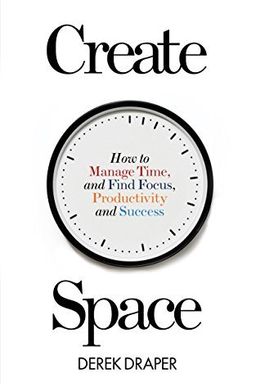
How can you lead, think, and live well when everything around you speeds up? In Create Space, Derek Draper argues that the defining challenge of modern life is not scarcity but saturation. For the first time in human history, we are not struggling to fill space but struggling to create it — mentally, emotionally, and physically — so we can act with intention rather than default reaction.
Draper begins with two vivid scenes: an open valley seen from Mount Longonot in Kenya and a jam-packed London airport canteen where he and Katya, a supply chain manager, can’t find a quiet seat. These contrasting spaces become metaphors. On the mountain, you can breathe, think, and see far; in the canteen, you drown in noise, interruptions, and competing demands. His assertion is simple yet radical: your ability to create space is the foundation for all growth.
The Four Domains of Space
To make the idea practical, Draper maps four domains — Think, Connect, Do, and Be — each with three sub-themes: reflect, learn, decide; check in, share, relate; plan, deliver, lead; dream, balance, grow. Across twelve chapters, he shows that overwhelmed leaders don’t mostly need new techniques; they need the capacity for depth. Without that foundation, life becomes a blur of reacting rather than choosing.
Evidence backs this up. Draper’s analysis of 1,000 leadership assessment reports found that 93% of leaders had development needs related to creating space. Nearly half lacked time to think; three-quarters struggled to connect meaningfully. Space, not more activity, is the missing ingredient for resilience, strategy, and emotional intelligence.
From Saturation to Sovereignty
Draper emphasizes sovereignty — regaining control of attention and time. Modern life indiscriminately fills your bandwidth: meetings, emails, notifications, and micro-decisions drain energy. Creating space means making deliberate choices about when and how to think, relate, act, and rest. This isn’t about doing less for its own sake; it’s about doing better with more awareness.
Core insight
“We have become the first generation in a thousand generations who, rather than having the need to fill space, have the need to create it.”
The Path Forward
The rest of Draper’s framework helps you operationalize this idea: in the Space to Think chapters, you’ll learn how to reflect, learn, and decide more effectively; in Space to Connect, how to build emotional presence and psychological safety; in Space to Do, how to plan, deliver, and lead without burnout; and in Space to Be, how to align your life with purpose, balance, and growth.
Each domain explores practical habits and psychodynamic insights. The stories of Raku, Hans, Nick, Beata, Yulia, Oscar, and others illustrate real transformations — from compulsive reacting to conscious creation. (Note: Draper’s approach blends executive psychology, leadership science, and personal development in the tradition of contemporary thinkers like Daniel Goleman and Carol Dweck.)
The message is clear: stop letting life fill your space by default. Instead, choose space — time to think deeply, connect authentically, act wisely, and be fully alive. It’s not indulgence; it’s mastery. That act transforms both work and self into something deliberate, sustainable, and profoundly human.