
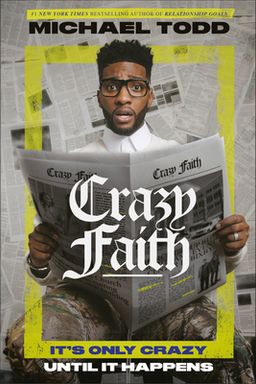
Crazy Faith cover

Crazy Faith

by Michael Todd

Crazy Faith by Michael Todd reveals how modern challenges can be overcome through empowering biblical stories. It offers actionable faith-based solutions to life''s stresses, illustrating how audacious belief and active engagement can transform dreams into reality.

Crazy Faith: Believing Beyond Reason

Have you ever felt like the dream in your heart was too big, too impossible, or maybe just plain crazy? In Crazy Faith, pastor Michael Todd invites you to consider that the very dreams that sound absurd might actually be divine instructions. Through raw storytelling, biblical teaching, and personal transparency, Todd argues that faith becomes truly transformative only when it passes the limits of reason. What he calls "Crazy Faith" is not blind optimism—it’s having thoughts and actions that lack human logic but rest entirely on the invisible truth of God’s promises.

Todd contends that modern believers often have comfortable, cautious faith—faith that believes in theory but hesitates to act. Yet, he says, God is looking for people willing to step out onto the limb of uncertainty, just as biblical heroes did. Faith that seems irrational to the world often becomes the seed of miracles. His argument echoes the biblical refrain, “It’s only crazy until it happens.” Once it happens, the very thing others mocked becomes the testimony that transforms lives.

The Foundation of Faith

Todd begins by reminding readers that faith is built, not inherited. Using his childhood experiences—drawing prophetic sketches of shoes he would eventually own and praying for a drum set he could not afford—he shows how baby faith develops muscle through practice. Like physical training, each small act of belief builds spiritual strength. He roots this in Hebrews 11:1: “Faith shows the reality of what we hope for; it is the evidence of things we cannot see.” You start with faith small enough to fit inside a mustard seed, and over time, that initial spark grows into a wildfire of conviction.

From Baby Steps to Bold Confidence

Throughout the book, Todd describes a journey with distinct phases: baby, maybe, waiting, wavy, lazy, trading, fugazi, stating, fading, and saving faith. Each chapter marks a stage in spiritual maturity—moving from cautious beginnings toward unshakeable boldness. The transformation church story becomes a living metaphor: starting as a small congregation in Tulsa and growing, step by step, into a multiethnic, multi-campus movement. Todd attributes this growth to Crazy Faith—a willingness to act on God’s word before seeing tangible proof.

Faith That Challenges Logic

Todd reinforces his argument through vivid narratives—from Noah building an ark before the first drop of rain to Peter walking on water in a raging storm. Each story reminds the reader that real faith does not wait for perfect conditions. It thrives in uncertainty. This is "wavy faith," when you trust God enough to step out onto the waves even though they might swallow you. He juxtaposes wavy faith against "lazy faith," which watches miracles happen for others but never invests effort to reach its own breakthrough. As he says, “If you don’t confront your lazy faith, you’ll end up sleeping on His promises.”

Faith’s Progression and Purpose

The book’s structure underscores progression over perfection. You don’t suddenly wake up with mountain-moving faith; you grow through obedience and endurance. Waiting faith teaches patience; trading faith teaches ownership; fading faith teaches dependence; saving faith completes the circle. Each phase represents what Todd calls “prophetic work” — the fusion of belief and disciplined action. As he explains, “Everybody wants to get a prophetic word, but most are too lazy to do the prophetic work.”

Why Crazy Faith Matters Now

In an age of skepticism and self-reliance, Todd’s message is intentionally countercultural. He challenges readers to believe like it’s 1979 again—when talking about cell phones, airplanes, and racial harmony seemed insane. His point: today’s normal was yesterday’s crazy. By daring to trust God beyond logic, you empower breakthrough not only for yourself but for others waiting to see faith in action. (Similar to Henry Blackaby’s concept of joining God where He is at work in Experiencing God.) It’s about being willing to look foolish before success makes sense.

Living in the “Crazy Until It Happens” Moment

Ultimately, Todd’s message is simple but revolutionary: faith is not merely an idea—it’s an active force. Your Crazy Faith becomes contagious; it inspires others to believe higher and dream bigger. To Todd, it’s not about wild stunts or magical thinking—it’s about disciplined trust in a limitless God. By living as if His promises are already true, you become part of the divine pattern that turns impossibility into testimony. Crazy Faith matters because the world desperately needs believers willing to look crazy long enough for heaven’s plans to be fulfilled.


Baby Faith: Small Steps, Big Power

Todd says you don’t start with Crazy Faith—you crawl before you walk. Baby Faith is the humble first stage of belief, where you trust God for seemingly small things. His own childhood stories—drawing the shoes he wanted and praying for an expensive drum kit—illustrate how God honors early belief. What may look childish becomes training for spiritual adulthood.

Imagination as a Tool of Faith

Todd insists imagination isn’t just fantasy—it’s a sacred power given by God. When you close your eyes and picture the future God promises, you’re participating in divine creativity. Just as a child imagines without limitation, you can visualize the miracle before it arrives. This imaginative faith transforms vision into preparation. (Note: Todd aligns with Napoleon Hill’s idea from Think and Grow Rich that mental imagery precedes achievement.)

Faith in Seed Form

Todd references Jesus’s mustard seed metaphor: faith doesn’t need to be massive—it only needs life. A seed may appear insignificant, yet when planted, it multiplies into unimaginable growth. In practice, this means praying small prayers, taking one step toward your goal, and believing even if results seem distant. He calls such moments “baby faith reps,” invisible workouts that strengthen belief over time.

Childlike Trust and Rudiments

Faith also demands humility—trusting God like a child trusts a parent. Todd’s story of his daughter Ava learning to walk reveals this innocence. Each wobbly step builds momentum. Likewise, he learned “rudiments” on a drum pillow instead of a full kit—a metaphor for spiritual discipline. Returning to the basics often unlocks greater mastery later. Even small acts—praying for parking or confessing gratitude—can fortify faith’s foundation.

Hope as the Fuel of Faith

Finally, Todd warns that hopelessness kills faith. Hope functions as fuel—it powers your belief vehicle. Just as a luxury car can’t move on an empty tank, your dreams stall without hope. He encourages readers to “hope again,” even after disappointment, anchoring belief in the consistency of Jesus rather than circumstances. This stage teaches that nothing is too small for God’s concern and every faith seed—no matter how tiny—contains the power to move mountains.


Maybe Faith: Trusting Without Certainty

In the next stage, maybe faith bridges doubt and confidence. Todd admits that in real life, we rarely get 100% certainty from God. Instead, we operate at what he calls “51% faith”—just enough to tip the scale toward belief. The critical lesson is that perfection isn’t necessary; progression is. Faith grows stronger through practice and obedience, not through absolute understanding.

Faith Beyond Logic

Todd defines faith as “trust in something you cannot explicitly prove.” He shows how biblical figures—Abraham, Joshua, and the widow who filled jars of oil—acted on God’s Word even amid uncertainty. You see results only after motion. Acting on “maybe” opens the supernatural realm just as a seed breaks the ground. Uncertainty isn’t evidence of weak faith; it’s the arena where faith proves itself.

Invisible Evidence

Todd’s vivid analogy of a shop receipt illustrates invisible evidence. God doesn’t require tangible proof; instead, faith itself is the receipt for promises purchased at heaven’s register. You may not see the manifestation, but your belief is the transaction record. This mindset replaces fear with assurance: what looks irrational in one season will look inevitable in the next.

Promise Over Pain

Drawing on Abraham’s story, Todd emphasizes that faith usually requires sacrifice. Leaving comfort zones—jobs, relationships, or safety nets—often precedes blessing. Pain is real, but promises are greater. He echoes authors like Rick Warren (The Purpose Driven Life), reinforcing that obedience always outweighs sacrifice. God won’t show the entire path; He offers one direction at a time, expecting trust before details.

Put Your Weight On It

Todd closes with a memorable metaphor: faith is like sitting on a chair. You trust its design enough to rest your weight. Knowing it’s there isn’t enough—you must act. Likewise, knowing God’s promises intellectually means little until you lean into them fully. “Put your weight on it” becomes his rally cry, urging readers to transition from awareness to embodiment. Maybe faith, he insists, is where miracles begin.


Waiting Faith: Don’t Waste Your Wait

Many believers stumble when God’s promise doesn’t arrive on time. In waiting faith, Todd teaches endurance by recounting his five-year journey to purchase the SpiritBank Event Center. Between the vision and its fulfillment lay years of silence, setbacks, and almost-mistakes. Through this process, he discovered that waiting is never passive—it's preparation.

The Gap Between Promise and Provision

Todd compares waiting to his wife cooking dinner while he’s hungry. You can eat a snack early and ruin the meal—or endure the gap knowing the feast is worth the discipline. He warns against “false starts,” using King Saul’s impatience as a case study: Saul offered a sacrifice too soon and lost his kingdom. Acting before divine timing turns blessing into burden. “The right thing in the wrong timing is a curse,” he says.

Serving While You Wait

Waiting faith means using delays to develop character. Instead of scrolling or complaining, Todd advises you to serve others—volunteer, mentor, or pray for someone else’s dream. Waiting builds empathy and readiness for favor. He reminds readers, “Don’t waste your wait.” Every act of service trains you to sustain blessings once they arrive.

Breaking False Starts

Todd describes moments when he almost settled for lesser buildings—a Sears and a Kmart—because they were available. Each near-miss served as a lesson against settling for substitutes. God’s true promises require patience and an inner battle against fear of missing out (FOMO). He suggests replacing “Feelings Over My Obedience” with “Faith Over My Opinion.” Spiritual maturity learns to trust timing over impulse.

Waiting Produces Readiness

Finally, Todd concludes that waiting faith cultivates the inner capacity to hold the weight of blessing. When the SpiritBank deal finally closed, it wasn’t luck—it was readiness meeting faith. To wait well is to build patiently toward the miracle rather than micromanage it. God’s pace may stretch your patience, but the reward comes “at just the right time” for those who refuse to give up.


Wavy Faith: Stepping Out of the Boat

Todd’s favorite stage, wavy faith, is about trusting God when life feels unstable. Through the story of Peter walking on water, he illustrates faith that thrives amid chaos. “Wavy faith becomes Crazy Faith when exposed to greater faith,” he says. Once you’ve seen Jesus stride through a storm, staying in the boat becomes unbearable.

It Might Be God

Todd uses humor and depth to explore how God often appears differently than expected—sometimes through adversity or setbacks. The disciples mistook Jesus for a ghost because He looked unfamiliar walking on water. Similarly, when your circumstances shift, don’t assume it’s evil; it might be God redirecting you. The unfamiliar is often the doorway to revelation.

Safer Versus Savior

Many believers prefer “safer faith”—remaining inside the boat of comfort. But Todd insists the safest place is wherever Jesus is, even on the waves. Peter’s miracle didn’t occur inside the boat; it happened when he stepped toward the Savior. Wavy faith means taking steps that could make you look foolish, trusting divine mastery over human logic.

Don’t Strive—Stride

Todd’s analogy of Jesus walking faster than the disciples could row illustrates spiritual efficiency. Striving drains energy; striding in God’s timing accelerates progress. When others exhaust themselves rowing through life, grace allows you to walk freely. He echoes the principle seen in Henry Blackaby’s Experiencing God: alignment with divine movement overtakes human effort every time.

Prayer As Preparation

Before walking on water, Jesus withdrew to pray. Todd points out that miracles are birthed in solitude before they manifest in public. He introduces “WAVY prayer”: Withdraw, Ask, Vulnerable, Yes—a model for approaching God transparently and obediently. Wavy faith isn’t recklessness; it’s deeply prepared trust built in private communion, making you capable of standing on what others drown in.


Lazy Faith: From Passivity to Prophetic Work

Do you ever feel inspired on Sunday but stuck by Monday? That tension is what Todd calls lazy faith—believing God can move but refusing to move yourself. He argues that inactive belief kills purpose. “If you don’t confront lazy faith,” Todd warns, “you’ll end up sleeping on His promises.”

Faith That Moves

Lazy faith likes to wait for miracles while doing nothing. Active faith looks for ladders, ropes, and roofs to rip open. Todd revisits Luke 5’s paralyzed man whose friends physically carried him to Jesus. They didn’t just pray—they worked. True faith manifests as effort. “Everybody wants to get a prophetic word,” he says, “but most are too lazy to do the prophetic work.”

Prophetic Work and Stewardship

He expands this idea into stewardship: faith demands excellence with what you already have. You can’t expect promotion while neglecting what’s in your hands. Prophetic work means practicing discipline even when enthusiasm expires. Whether it’s finishing education, starting therapy, or budgeting finances, obedience amplifies opportunity. (Comparable to James Clear’s Atomic Habits: small consistent actions build transformation.)

Faith to Figure It Out

Todd admires the anonymous “some men” who tore open a roof for their friend’s healing. He highlights their creativity—they didn’t quit when the crowd blocked the door. Creativity itself becomes an act of faith. Lazy faith stops after one try; active faith tries, tries again. As he notes humorously, “If you identify the right why, you’ll work for it like crazy.”

Faithfulness Over Feelings

Finally, Todd says real maturity prioritizes faithfulness over feelings. You won’t always “feel” like believing, but consistent obedience keeps faith alive. He compares church to a football huddle—encouragement means nothing if you never “run the play.” Lazy faith cheers but never acts; Crazy Faith executes God’s plan with diligence until results appear.


Trading Faith: Making the Exchange

Trading faith marks the transition from borrowed belief to personal conviction. Todd explains that while others’ faith can carry you to Jesus, only your own faith can make you whole. Using the story of Jerome—the paralyzed man healed through his friends’ active faith—Todd reveals how miracles unfold when we exchange passive dependency for personal ownership.

The Exchange

After his friends lower him through the roof, Jerome must trade their faith for his own. Jesus forgives his sins first, signaling inner transformation before physical restoration. Todd’s principle: “God never does something on the outside He hasn’t already done on the inside.” Trading faith demands inner healing—stewardship, repentance, and readiness—to manifest outward change.

Purpose of Miracles

Todd rejects prosperity gospel interpretations, insisting that miracles serve salvation’s purpose, not status. “When God does a miracle, He does it so people can get saved.” Healing, success, and restoration exist to testify of God’s authority. Trading faith means taking ownership of testimony—carrying your “mat” everywhere you go as evidence of freedom instead of shame.

Testimony and Transformation

Todd’s vulnerability shines when he confesses a decade-long addiction to pornography. Sharing this story publicly becomes his mat—his weapon against temptation. “We’ve got to leave the sin but take the mat,” he says, emphasizing transparency as spiritual warfare. True transformation happens when faith produces authenticity strong enough to help others find freedom.

Becoming the Exception

Finally, trading faith creates “exceptional believers.” Todd encourages readers to ask “Why not me?” instead of “Why me?”—echoing the faith of Daniel, David, and Sarah. Crazy Faith insists that divine exceptions rewrite norms. You can be the anomaly that defies statistics, not through arrogance but through distinction. “I’m no better than anyone else,” Todd declares, “but I’m different from everyone else.”


Fugazi Faith: Fake Belief and True Authority

Fugazi Faith—the fake kind—looks spiritual but lacks substance. Todd uses humor, slang, and scripture to expose counterfeit belief systems that imitate faith’s language without its lifestyle. “Hell isn’t afraid of fake faith,” he writes, “because demons have that kind.” Real faith terrifies darkness because it flows from relationship, not repetition.

Hell’s Faith and Borrowed Belief

Through Acts 19’s story of the seven sons of Sceva, Todd shows how borrowed faith ends in defeat. The demons mocked men who tried to invoke Jesus’s name without intimacy. Crazy Faith must be personal—it’s not transferable by association. You can’t “write faith checks against someone else’s account.” Authentic belief starts with acceptance, grants access to the Holy Spirit, leads to action, builds authority, and culminates in abundance.

Faith vs. Optimism

Todd distinguishes blind optimism from faith. Optimism says, “It’ll all work out.” Faith says, “By His stripes, I am healed.” Optimism throws hope at a wall; faith assigns it to Jesus. Martha’s proclamation to Jesus after Lazarus’s death—“Even now”—models stubborn belief amid grief. Crazy Faith calls while blind; optimism merely waits for sight.

Faith Made Complete

In Abraham’s willingness to sacrifice Isaac, Todd finds a picture of faith made complete. Fake faith wants the results without responsibility; real faith loves enough to give. “What are you sacrificing?” he asks. Love and faith are inseparable; without action, belief is dead. God does everything we can’t—but nothing we can. Action turns theory into testimony.

Crazy Faith Confirmed

Todd concludes with the triumphant story of Transformation Church’s building miracle. When offered millions to walk away, he said no, proclaiming ownership for God’s glory. His refusal embodied faith made complete through obedience and love. The deal closed debt-free in 2019, and the church burned its mortgage within five months. “Don’t tell me what God can’t do,” he declares. Fugazi faith folds under pressure; Crazy Faith finishes the race.


Fading and Saving Faith: God’s Sustaining Grace

Even the strongest believer faces seasons when faith fades. Todd introduces fading faith with empathy, reminding us that loss—of health, loved ones, dreams—can dim belief. Yet fading faith attracts “crazy grace.” God doesn’t scold doubt; He meets it with tenderness, as Jesus did for Thomas.

Fading Faith

Todd describes his own struggle after his son MJ’s autism diagnosis. Drives to therapy became exercises in declaring God’s promises despite discouragement. He shows fading faith through real-world pain: miscarriage, business collapse, racial injustice, divorce. God’s grace never condemns the hurting; instead, He sustains them through valleys and losses.

From Doubting to Hoping Thomas

Todd reframes "Doubting Thomas" as "Hopeful Thomas." Thomas didn’t disbelieve; he grieved. Jesus met him personally, offering tangible proof. Likewise, when you keep showing up despite fading faith, God honors persistence. “Even in the fading,” Todd writes, “Thomas belongs.” Faith survives when we remain among community—where Jesus most often shows up.

Saving Faith

Closing the book, Todd celebrates faith that rescues—the kind birthed in ordinary obedience. He uses Mary and Joseph’s story as metaphor: God’s crazy words often arrive in inconvenient timing but carry world-changing purpose. Their walk, wait, and worship show the rhythm of saving faith: Receive God’s word, resist worry, walk in obedience, wait with service, watch God make a way, and respond in worship.

Don't Take Your Foot Off the Gas

Todd concludes with contagious conviction: “Your new normal is Crazy Faith.” Once you experience breakthrough, the journey restarts. Keep believing beyond reason and keep giving glory to God through Crazy Worship. Life doesn’t stop at one miracle—faith becomes a wave continually renewing itself. Saving faith isn’t about surviving tomorrow; it’s about living eternally transformed today.

Dig Deeper

Get personalized prompts to apply these lessons to your life and deepen your understanding.

Go Deeper

Get the Full Experience

Download Insight Books for AI-powered reflections, quizzes, and more.