
Idea 1
The Dollar System and the Global Financial Order
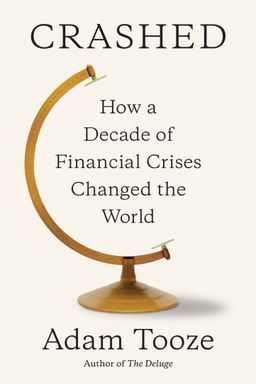
Why did the 2008 financial crisis spread from American subprime mortgages to every major economy? Adam Tooze argues that the core reason lies in the dollar system — an immense web of cross‑border balance sheets, shadow funding mechanisms, and political dependencies that made global finance inseparable from US monetary power. You’re asked to see the world not as a series of isolated national economies but as one giant dollar network whose plumbing binds New York, London, Frankfurt, Beijing and beyond.
The transatlantic root of the crisis
Tooze insists that the 2008 collapse was not merely an “American” story. European banks were heavily exposed to dollar assets and funded themselves through short‑term dollar markets in London and New York. When confidence vanished, these banks couldn’t roll over dollar funding. The Federal Reserve—the only institution able to supply dollars at scale—had to rescue non‑US banks via emergency swap lines. (Note: BIS data showed European banks owed $1.1–1.3 trillion more dollars than they held in assets.) This intervention made the Fed, momentarily, the world’s lender of last resort.
The dollar as global apex
You’re encouraged to think of the dollar as the top of a pyramid. Global banks, sovereigns and asset managers held dollar assets—Treasuries, MBS, and repo collateral—as their ultimate stores of safety. When the pyramid trembled, liquidity crises cascaded through this hierarchy. The “North‑Atlantic system” linking US and European banks proved more entangled than trade flows suggested: in 2007 money moved from Britain to the US at magnitudes larger than China’s holdings.
Macrofinance replaces the island model
Traditional macroeconomics—the one that treats nations as self‑contained islands—missed how the crisis propagated. Hyun Song Shin’s macrofinance lens that Tooze adopts teaches you to map the interbank matrix instead: trace liquidity channels, repo chains, and SIFI connections. Once you see the global system as linked balance‑sheets, you grasp why the Fed’s interventions were decisive and why Eurozone policy lagged. It’s a network, not a market of countries.
Core insight
The 2008 financial system was globalized through private balance sheets, not trade. When short‑term dollar funding froze, the Fed—not the IMF—became the global stabilizer, revealing the hierarchy of modern finance.
Why this redefines crisis politics
Tooze’s story is not only economics; it’s politics. The Fed’s swap lines to Europe quietly propped up banks outside US jurisdiction, while politicians debated bailouts at home. Europe’s weak institutions—no unified fiscal mechanism, no deposit guarantee—meant national governments resorted to unilateral fixes. The asymmetry between the US’s federal capacity and Europe’s fragmented architecture became the central dividing line of post‑2008 recovery.
Preview of what follows
Across the rest of Tooze’s argument, you’ll watch how this North‑Atlantic implosion transformed into sovereign stress inside the eurozone, political breakdowns across Europe and America, and a renewed geopolitical cycle—from China’s massive stimulus to Russia’s assertive return. The dollar system’s reach shapes everything: who rescues whom, who bears the costs, how inequality and populism rise, and why today’s global order still depends on one central currency hub whose power—and fragility—define our age.