
Idea 1
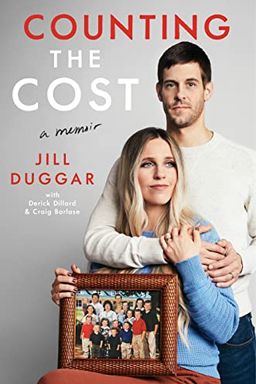
Counting the Cost of Agency, Faith, and Family
How much of your voice would you trade for belonging, calling, or a public platform? In Counting the Cost, Jill Duggar (with Derick Dillard and Craig Borlase) argues that recovering your agency inside a high-control faith culture—and while under the gaze of reality TV—requires a painful, deliberate reckoning with authority, secrecy, money, and loyalty. Jill contends that obedience packaged as “ministry” can quietly become coercion; that “family” plus celebrity can blur consent; and that healing demands boundaries, truth-telling, and a reframed faith anchored in conscience rather than control.
The memoir charts her journey from “Sweet Jilly Muffin,” the eager rule follower in a Gothard-influenced home (IBLP: Institute in Basic Life Principles), to a woman who says no to cameras in the delivery room, questions opaque contracts signed on the eve of her wedding, wears pants and a nose ring against expectations, and chooses public school for her child despite a lifetime of messages to the contrary. It’s not just a celebrity tell-all; it’s a case study in how systems use scripture and smiles to sanctify control, and how you can rebuild trust—with yourself, with God, and with others—after you learn the difference between conviction and compulsion.
What the book argues
Jill’s core argument is that high-control religious environments (here, IBLP) and reality TV production both reward compliance and penalize dissent—often in the name of “ministry.” Inside IBLP, teachings like the “umbrella of protection” and the language of modesty, authority, and “defrauding” trained her to equate safety with submission. Inside the show, “a window of opportunity” became shorthand for surrendering privacy, decisions, and later, finances. Add crisis—family abuse, paparazzi, network deadlines—and the pressure to keep smiling hardens into an ethic: protect the brand, carry the burden, call it faithfulness.
Why this matters to you
You don’t need a TV crew to feel this conflict. If you’ve ever minimized your misgivings because an institution framed them as disloyalty, you’ll recognize Jill’s internal script: Conform, don’t stir “contention among the brethren,” keep sweet. The book shows how that script breaks you when real harm happens (Jill’s description of secondary victimization when juvenile records leaked is harrowing) and how recovery hinges on learning to say, “This doesn’t work for me”—even when the request comes wrapped in scripture or from a parent.
What you’ll learn in this summary
First, you’ll step inside IBLP’s world—its rules around music and dancing, its courtship playbook, and its fear-laden metaphors—and see how they shape children into compliant adults. Then you’ll enter the production economy of “a filming family,” where surprises are engineered, privacy is a commodity, and storylines outrank people’s needs. You’ll examine how secrecy around abuse metastasized into national scandal, re-traumatizing victims and forcing Jill into a televised defense of her parents—an ask she now recognizes as costly self-betrayal. You’ll also trace how marriage to Derick becomes a hinge for change: negotiating with producers in Nepal, saying no to honeymoon cameras, challenging contract opacity, and confronting the blurred line between father and boss.
The arc of unlearning
From mission work in El Salvador (under ransom insurance, with a guard later murdered) to a pressure-cooker phone call threatening lawsuits if she skips a Houston promo shoot, you see the toll of living inside overlapping authority structures. You also see the practical work of disentangling: retaining counsel; sending a 27-page letter and then learning how not to argue; insisting on the full contract after years of partial pages; settling; and, in therapy, naming “arrows” still embedded in the body (Ray McIntosh’s metaphor). Alongside this legal and therapeutic work come small, symbolic acts—wearing pants, sipping a piña colada on date night, enrolling a child in public school—that signal internal authority reclaimed.
A guiding line
“Sometimes you have to be okay with other people not being okay with you. And you have to be okay with you not being okay too.”
How this compares
If Tara Westover’s Educated chronicles emancipation from a survivalist father through academia, and Meghan Phelps‑Roper’s Unfollow maps leaving Westboro by learning to doubt, Counting the Cost is about negotiating adulthood under a public brand and a pious hierarchy—then trying to heal while the headlines won’t let your past die. What makes it distinctive is the double bind: religious submission culture + reality TV’s profit machine.
What you can take with you
You’ll leave with a vocabulary for coercion that wears a smile (“umbrella,” “window of opportunity,” “ministry”), a template for boundary-setting when family is also your employer, and concrete practices: get independent counsel, keep records, negotiate on your timeline, pursue trauma-informed care, and build a circle of attuned relationships. Above all, you’ll be invited to count costs honestly—financial, emotional, spiritual—and choose integrity over image, even if it means some people will never applaud.