
Idea 1
Conscious Business as an Integral Path
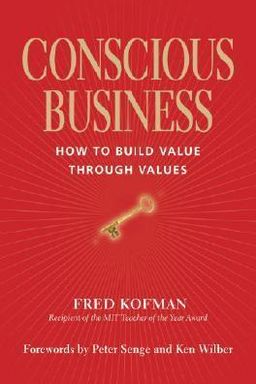
How can you build an organization that thrives economically while cultivating integrity, awareness, and human flourishing? In Conscious Business, Fred Kofman argues that true performance excellence arises when individuals and companies operate from consciousness: the integration of self-awareness, mutual respect, and systemic insight. A conscious business succeeds not only in profit but also in meaning, dignity, and sustainability.
Kofman’s project draws on philosophy, psychology, and management science to provide a practical guide to this ideal. Rooted in Ken Wilber’s integral framework and informed by Peter Senge’s systems thinking, he teaches you to see business not as a game of external tactics but as a field of human growth. The book’s core promise is simple yet radical: if you align behavior with awareness across the dimensions of self, culture, and systems, you unlock enduring value.
The Integral Map: Seeing the Whole System
Kofman begins by presenting an Integral Map—a pragmatic tool for personal and organizational navigation. It unites two axes: the axis of consciousness (body, mind, spirit) and the axis of domains (I, We, It). The I dimension concerns individual awareness and development; We concerns relationships and culture; It concerns systems, structures, and results. Each management problem, from strategy to motivation, spans these domains.
For example, employee disengagement often isn’t just a compensation issue (It domain). It may reflect a culture of blame (We domain) or lack of self-awareness and purpose (I domain). The integral leader integrates all three, leveraging psychology to build self-awareness, sociology to cultivate trust, and process design to improve systems. Missing any dimension creates hidden dysfunctions that erode performance.
From Self to System: The Journey of Conscious Leadership
The journey of a conscious business starts within the self. Before influencing culture or redesigning systems, you must cultivate your own awareness. Kofman describes this as a movement from victim to player, from unconscious reactivity to unconditional responsibility. When you stop blaming markets, bosses, or subordinates, you recover your power to act. This inner stance—response-ability—sets the tone for the entire organization.
From that base of ownership, leaders must then shape culture—the shared "We" that tells people what is valued. Symbolic acts matter more than slogans: when a CEO fires a disrespectful star performer or publicly admits an error, culture shifts toward responsibility and humility. Structure follows consciousness; tools and processes serve as expressions of shared values, not replacements for them.
Ethics and Excellence: Success Beyond Success
Kofman reframes success as a dual pursuit: outer excellence in results and inner excellence in integrity. A win without ethical process is hollow and unsustainable; a dignified loss with learning and alignment builds long-term credibility. He calls this posture success beyond success. Acting with essential integrity means tying yourself to the mast—like Odysseus against the Sirens—to maintain purpose amid temptations of expediency or short-term profit.
In practice this means delaying gratification, following disciplined processes, and evaluating choices on both outcome and process axes. The discipline that resists the quick fix becomes the foundation for enduring trust and innovation. (Note: Kofman here echoes Jim Collins’s idea of “Level 5 Leadership,” where humility and willpower coexist.)
Communication, Coordination, and Culture
Conscious business lives through communication. Kofman provides a suite of interpersonal tools to express authentic feelings, inquire productively, negotiate constructively, and make impeccable commitments. He teaches you to transform hidden thoughts (“left-hand column”) into clear, respectful dialogue and to shift workplace conflicts into mutual learning. Each technique reinforces the same philosophy: conversations are the bloodstream of culture. Integrity in speech creates integrity in action.
Coordination, meanwhile, is the operational litmus test of consciousness. Clear requests, precise promises, and clean repair of broken commitments build trust. Emotional mastery underpins all these skills: if you cannot regulate reactivity, no method will save the interaction. Consciousness is therefore both ethical and somatic—present in breath, tone, and timing.
Work as Spiritual Practice
Finally, Kofman widens the lens. Business, he suggests, can become a form of spiritual practice—not through dogma but through awareness. When you approach work as service and growth, ordinary tasks transform into opportunities for self-transcendence. Drawing from the Bhagavad Gita, he reminds you to act with integrity without attachment to results. True consciousness measures success by alignment, not applause.
In total, Conscious Business offers a unified system: a map for whole-person leadership that integrates ethics, systems, and humanity. It challenges you to see organizations not just as machines for output but as ecosystems of meaning. When you build businesses where awareness, truth, and love coexist with performance, you achieve what Kofman calls success beyond success—the integration of profit and purpose, excellence and enlightenment.