
Idea 1
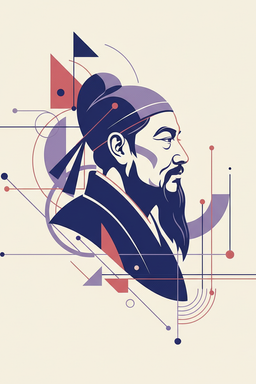
Confucius and the Art of Living Well
What does it mean to live a good life—not just materially successful or emotionally satisfying, but truly virtuous? In the teachings of Confucius, the ancient Chinese philosopher often called “Master Kong,” the answer lies not in sudden inspiration but in a lifelong project of moral cultivation. Confucius believed that virtue is something built day by day through ritual, respect, learning, and reflection. It's less about discovering new truths than faithfully transmitting and embodying old ones—the ones that connect us to others and to the Heaven-ordained moral order.
The heart of Confucian thought is that good behavior isn’t a set of rigid rules—it’s a way of being human among humans. He called this the practice of ren, meaning compassion or human-heartedness, coupled with li, the rituals and manners that express respect in everyday interactions. To Confucius, these two dimensions—feeling and form—must be woven together to create harmony in society and virtue in the individual.
A Philosopher of Transmission, Not Innovation
Confucius described himself as a ‘transmitter who invented nothing.’ Unlike philosophers who claimed to revolutionize thought (like Socrates or Nietzsche), he believed wisdom already existed—handed down by divine ancient masters—and our job was to receive and embody it. His followers later compiled his sayings into the Analects (Lunyu), a text filled with short, puzzling anecdotes and dialogues. In these exchanges, we glimpse a man more concerned with refining conduct than reforming metaphysics. He cared about how people treated their parents, rulers, friends, and even strangers. To him, ethics was relational, not abstract.
The Timelessness of Ritual
Confucius lived in a fragmented, unstable China, where political corruption was rampant and moral anchors had eroded. He noticed that when rituals disappeared, people became impulsive and society unraveled. That’s why he reminded his disciples about the power of ceremony. When his student Tsze-kung wanted to stop an offering of a sheep, Confucius replied, “You love the sheep; I love the ceremony.” This small exchange captures a profound truth: ritual isn’t about empty gestures—it’s about giving meaning to our roles and actions.
In modern life, we often pride ourselves on informality, seeing ceremony as stiff or pretentious. Yet, as Confucius points out, rituals give emotional and social order to our lives. The birthday traditions, the handshake, the holiday meal—all reinforce continuity and respect. For Confucius, li was a moral technology. Without it, compassion has no clear form; it becomes sentiment without structure.
The Family as the Seed of Society
For Confucius, moral cultivation begins at home. His emphasis on filial piety (xiao) might seem authoritarian to modern ears—he taught that we must obey our parents, care for them in old age, mourn long for them after death, and even excuse their faults. But beneath this strictness lies a profound insight: we learn empathy, patience, and reverence first through close relationships. If we can’t be kind to our parents, how can we be kind to humanity? Family becomes a moral training ground, and parental reverence is a miniature of civic responsibility.
Hierarchy and Respect
Modern egalitarianism teaches that everyone should be equal, but Confucius saw human relations as naturally hierarchical—and morally instructive. He said, “Let the ruler be a ruler, the subject a subject, a father a father, and a son a son.” These distinctions aren’t oppressive if understood rightly. They’re roles of mutual responsibility. The superior must lead with virtue and benevolence; the inferior must respond with obedience and respect. Harmony emerges not from flattening hierarchy but from ennobling it. Leadership, for him, was moral artistry—a ruler should rule like the wind, and subjects should respond like grass bending gracefully in its breeze.
Learning as Lifelong Practice
Confucius saw personal growth as gradual, lifelong cultivation. He outlined his own moral development: at 15 he sought learning, at 30 he stood firm, at 50 he knew Heaven’s will, and at 70 he could follow his heart without error. Wisdom, he said, is not an epiphany but a steady process. His “Five Constant Virtues”—compassion (ren), ritual propriety (li), justice (yi), knowledge (zhi), and integrity (xin)—constituted the foundation for this lifelong learning. To practice them is to till one’s inner garden daily, patiently transforming instinct into virtue.
Why Confucius Still Matters
In a world that feels increasingly impulsive, irreverent, and individualistic, Confucius’s emphasis on restraint and ritual may sound quaint—but that is precisely its value. His philosophy reminds you that harmony and respect aren’t obstacles to freedom; they are its structure. The ‘superior man’ he describes isn’t superior by wealth or intelligence, but by character—someone who balances compassion with discipline. Perhaps this is what we lack most today: not innovation, but integrity; not informality, but reverence. Confucius teaches that a good life flows from good behavior—and good behavior, from the careful art of being human.