
Idea 1
How Economic Hit Men Build Empires of Debt and Control
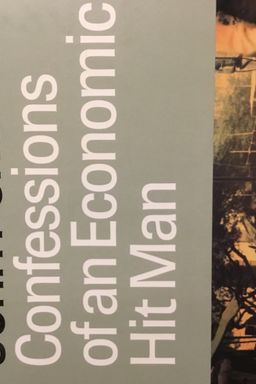
Have you ever wondered how nations fall into debt traps that seem impossible to escape, even when they are rich in natural resources? In Confessions of an Economic Hit Man, John Perkins pulls back the curtain on the hidden mechanisms that drive global inequality and bind developing nations to the will of powerful corporate and political interests. Perkins argues that modern empire building doesn't require armies or invasions—it relies on debt, deceit, and the illusion of development. The core argument: a global corporatocracy composed of banks, multinational companies, and government agencies quietly dominates the world through financial manipulation, trapping poorer nations in perpetual obligation to serve corporate interests.
Perkins, who once worked as a chief economist at a major consulting firm, describes his former role as an "economic hit man (EHM)"—a highly paid professional whose job was to convince developing nations to accept huge loans for infrastructure projects. These loans, often calculated to exceed a nation's means of repayment, went back to U.S. corporations hired to complete the projects. Once the country defaulted, the U.S. and its corporate allies demanded political favors, resource concessions, or military cooperation in return. Perkins reveals that this strategy—what he calls the modern equivalent of imperial conquest—relies on subtler weapons: spreadsheets instead of swords, contracts instead of cannons, and money instead of militaries.
The Machinery of Empire Building
The book’s opening chapters establish the machinery of this financial warfare. Perkins explains the hierarchy of manipulation: first come the EHMs, who sell debt and dependency to target countries under the guise of development aid. When they fail, “the jackals”—CIA-backed operatives trained for coups and assassinations—step in. Only if both fail does the military intervene, as witnessed in Iraq and Panama. This process ensures that no leader can oppose U.S. commercial interests for long without grave risk. Perkins ties the deaths of Ecuador’s Jaime Roldós and Panama’s Omar Torrijos, both reformist presidents who resisted imperial demands, to this shadowy system of enforcement. Their plane crashes, he claims, were acts of assassination designed to make examples of dissenters.
The Economics of Subjugation
Perkins uses his experience in Indonesia, Panama, Iran, and Saudi Arabia to demonstrate the standard script of economic coercion. He and his firm were paid to produce inflated forecasts that justified enormous development loans for power plants, ports, and highways. The projects benefited a small elite and foreign corporations but devastated local populations through debt and dependency. Perkins admits that he deliberately manipulated economic data to show wildly optimistic growth projections. The goal wasn’t development—it was control. Once indebted, nations had little choice but to align politically with the United States and provide access to natural resources, from oil in the Middle East to copper and forests in Latin America. “It is a system of slavery,” Perkins concludes, “by which the debtor nations are forever at our mercy.”
Moral Awakening and Confession
Deeply personal as well as political, the book tracks Perkins’s own moral reckoning. Recruited by a mysterious woman named Claudine, who seduced him into the profession and warned him he’d be “in for life,” Perkins recalls the lavish rewards that numbed his conscience: five-star hotels, enormous salaries, and access to powerful men. Yet guilt slowly wears him down. Encounters with indigenous peoples in the Amazon, with reformist leaders like Torrijos, and with ordinary citizens suffering the consequences of his work push him toward resignation. His eventual decision to quit, he writes, came while standing among the ruins of a Caribbean sugar plantation once worked by slaves—a moment when he realized his own complicity in a modern form of bondage.
Why It Matters Today
Published in 2004, Confessions of an Economic Hit Man remains profoundly relevant. Perkins ties the empire of debt to modern globalization, revealing how multinational corporations have supplanted old empires in exploiting developing nations. He warns that the same logic driving economic manipulation abroad also corrupts democracy at home. His message is both confessional and exhortative: acknowledging personal guilt is only the first step toward collective redemption. Like Thomas Paine’s Common Sense, his book seeks to awaken citizens to complicity in the machinery of empire and calls for a more ethical, sustainable world order. Perkins’s central claim is simple yet searing—you and I live at the heart of a global system that enslaves others in our name, and breaking that cycle begins with understanding how it works.