
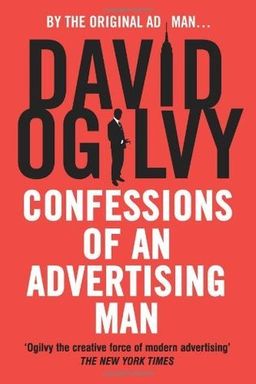
Confessions of an Advertising Man cover

Confessions of an Advertising Man

by David Ogilvy

David Ogilvy''s ''Confessions of an Advertising Man'' offers timeless strategies for crafting effective advertising campaigns and managing successful agencies. Through candid insights, Ogilvy shares how honesty, talent, and strategic client choices drive long-term success in the competitive advertising world.

The Art and Discipline of Persuasion

Have you ever wondered what truly makes people say “yes”? In Confessions of an Advertising Man, David Ogilvy—widely regarded as the father of modern advertising—argues that persuasion is not an act of manipulation but an act of disciplined empathy. He contends that great advertising blends art and science: it requires understanding human nature, applying rigorous research, and communicating truth with elegance. For Ogilvy, advertising is a mirror of civilization—a profession that must entertain, inform, and sell—all without insulting the intelligence of the audience.

Ogilvy didn’t set out to become an ad titan. His improbable journey—from Oxford scholar to Paris chef, Gallup researcher, and Pennsylvania farmer—culminated in his founding of Ogilvy & Mather in 1948, an agency built on the belief that research and creativity are inseparable partners. In this book, he presents his “confessions” not as repentance but as revelation—a methodical breakdown of everything he learned about leadership, persuasion, client relationships, and integrity in business. Each chapter doubles as a manual for anyone who wishes to manage creative people, win customers, or build enduring brands.

Selling with Integrity

At the center of Ogilvy’s philosophy is respect for the consumer. He famously declared, “The consumer is not a moron, she is your wife.” This insistence on dignity in communication pushed back against the patronizing tone common in mid-century advertising. For Ogilvy, persuasion begins with empathy—understanding the buyer’s desires and anxieties—and presenting the product truthfully as the best means to satisfy them. He rejected “creative for creative’s sake” and declared that advertising that doesn’t sell isn’t creative—it’s waste.

The Professional as Craftsman

Unlike the romantic image of a spontaneous creative genius, Ogilvy saw advertising as disciplined craft. “I prefer the discipline of knowledge to the anarchy of ignorance,” he wrote. The greatest campaigns—like his now-mythic Hathaway Shirts ad featuring a man in an eyepatch—were born not from whimsy but from patient observation and precise execution. Just as a master chef commands both art and method, Ogilvy believed that advertisers should know their product, research their customers, and painstakingly refine every word, image, and headline to serve the central promise.

Leadership and Morality in Business

Beyond selling, Ogilvy’s book is an ethical guide to managing people. He likens running an agency to leading a symphony or a Parisian kitchen: the conductor’s role is to inspire excellence, enforce high standards, and protect creative mavericks. His leadership principles—rewarding honesty, cultivating civility, and detesting office politics—make his insights relevant to any profession. In his agency, good manners, curiosity, and generosity were as vital as talent. “Hire people who are better than you are,” he insisted. “Pay them more if necessary.”

Why Ogilvy Still Matters

Reading Ogilvy today feels surprisingly modern. His advocacy of evidence-based creativity foreshadowed today’s data-driven marketing, while his warnings against superficial “brand image” tactics predict the digital age’s credibility crisis. Like Peter Drucker or Dale Carnegie, Ogilvy weaves moral reflection through professional advice, urging readers to view business as both vocation and art. Advertising, in his view, shaped culture—and with that influence came moral responsibility.

Over the coming sections, we’ll explore Ogilvy’s key lessons: how to manage creative teams; how to earn and keep clients; how to write and illustrate persuasive copy; how to maintain ethics and ambition in a ruthless industry; and how to lead a life of disciplined passion. If you’ve ever wanted to persuade without deception, lead without tyranny, or sell without shame, Ogilvy’s confessions remain an indispensable masterclass.


Building a Creative Organization

Ogilvy begins by comparing his agency to the bustling kitchen of the Hotel Majestic in Paris, where he once worked as a young chef. In that chaotic environment, he learned that excellence is born from obsession, not luck. The head chef, M. Pitard, was both tyrant and artist—a leader who inspired loyalty through mastery, rigor, and occasional terror. Ogilvy transferred these kitchen lessons directly into his own agency management style.

Setting High Standards

Like Pitard, Ogilvy demanded “exorbitant standards of service.” If a client was promised an ad by Monday, it would be delivered—even if it required “agony and overtime.” He believed that creative professionalism grows from exacting expectations. This insistence on reliability and quality created what he called “white-hot morale”—a sense of pride that turns creative drudgery into craftsmanship. (Similarly, management thinker Tom Peters would later echo this when he argued that passion and excellence, not process, drive performance.)

The Character of Creative People

Ogilvy admired what he called “high-strung, brilliant, eccentric nonconformists.” He saw advertising agencies as habitats for mavericks, where temperament must be protected rather than tamed. Drawing on psychological research by Dr. Frank Barron, he described creative people as observant, intellectually honest, curious, and prone to intensity. The leader’s role, therefore, is to build an atmosphere where such people can flourish—without descending into chaos. “To be a good father,” Ogilvy wrote, “you must be affectionate and fair.”

Rules for Employees and Leaders

Ogilvy famously laid out ten behaviors he admired in employees: hard work, brains paired with honesty, gusto, self-confidence, humility, organization, and kindness. He also set eight rules for himself: to sustain momentum, build trust, plan ahead, listen more than he spoke, and maintain moral integrity. His rejection of nepotism and office politics was revolutionary in an era when favoritism reigned. “I admire people who hire subordinates good enough to succeed them,” he said, “and despise those so insecure they hire inferiors.”

For Ogilvy, managing an advertising agency—or any creative enterprise—required the paradoxical balance of authority and affection. Like a kitchen master who inspects every dish yet still cooks alongside his staff, the leader must nurture both excellence and spirit. His conclusion is timeless: the pursuit of excellence is less profitable than the pursuit of size, but infinitely more satisfying.


Winning and Keeping Clients

No matter how brilliant your creative team, Ogilvy insists, an agency lives or dies by its clients. He recounts his own journey from penniless ex-farmer to sought-after adviser to Shell, General Foods, and the British government—proof that business acumen is as vital as creative genius.

The Strategy of Client Acquisition

Ogilvy’s approach to winning clients resembled a campaign itself. He started with a list of five dream companies, researched their needs, and studied their psychology. His tactics ranged from bold public speeches to private surveys—he once conducted speculative research on Helena Rubinstein’s cosmetics before even being hired. When he published findings that outperformed her son’s own agency, she switched accounts on the spot.

He compared agency growth to a biological life cycle: the “dynamite” of youth often decays into “dry rot” of complacency. To stay fresh, agencies must continuously chase ambition and reject bureaucratic bloat—advice echoed decades later by Silicon Valley entrepreneurs who warn against corporate inertia.

Psychology Over Salesmanship

Perhaps Ogilvy’s most counterintuitive insight is that persuasion begins with listening. He believed that skilled salesmanship comes from understanding human motives, not rehearsed pitches. When meeting prospective clients, he often let them do most of the talking—a technique he credited for landing the Ampex account, despite being too tipsy to speak. “Silence can be golden,” he quipped.

Choosing Clients Wisely

Equally vital was knowing which clients to avoid. Ogilvy refused to advertise products he couldn’t admire or managers he didn’t trust. He outlined ten criteria for ideal clients: ethical products, room for improvement, competence, mutual profit, and shared values. He scorned bullies, politicians, and association committees. “A lawyer may defend a murderer,” he said, “but an ad man must believe in his product.”

In essence, Ogilvy treated client relationships as marriages built on trust, respect, and shared vision. To keep clients, he urged constant candor—admitting mistakes before being blamed, and creating “icebox” campaigns ready to replace failures. The result was longevity: many of his accounts lasted decades, a rare feat in advertising. His rule remains simple but profound—play the long game, and you’ll never lack for partners.


The Science of Persuasive Advertising

Ogilvy’s passion for research set him apart from most Madison Avenue artists. He believed that advertising was not guesswork but applied psychology. To him, the “creative process” was part intuition and part experiment—“a groping with ideas, governed by hunches and fed by facts.”

Building Campaigns That Sell

Drawing from Gallup’s research studies, Ogilvy developed systematic methods for producing high-yield campaigns. First, define a single powerful promise—the benefit you can credibly own. Second, test variations of that promise, headline, and imagery. The best ideas proved themselves not in theory but at the cash register. His success with Dove (“Creams your skin while you wash”) and Rolls-Royce (“At sixty miles an hour the loudest noise comes from the clock”) came from these experiments.

The Power of Facts

Ogilvy’s cardinal belief: “The more you tell, the more you sell.” He derided vague slogans and urged advertisers to fill their copy with vivid detail. Consumers, he argued, crave information—not hype. He modeled his work on mail-order veterans like John Caples and Claude Hopkins, who measured results by response rates. In doing so, Ogilvy anticipated the data analytics revolution that now defines modern marketing.

Brand Image and Consistency

Every advertisement, Ogilvy said, contributes to a brand’s collective identity. While competitors chased novelty, he preached continuity: “It is tragically easy to be stampeded into change. But golden rewards await those who stick with a coherent image.” His decades-long campaigns for Guinness, Schweppes, and Dove exemplified how dignified consistency builds trust.

Ultimately, Ogilvy fused art and empiricism into a single philosophy: creativity should never deviate from purpose. The goal is not applause but action. When art serves strategy, persuasion becomes both ethical and effective.


The Craft of Writing and Design

While Ogilvy is remembered as a strategist, he was equally a master craftsman of words and visuals. His chapters on copywriting and art direction remain some of the most quoted in marketing history—practical enough for amateurs, yet profound enough for experts.

Headlines: The First Impression

“When you have written your headline,” Ogilvy warned, “you have spent eighty cents of your dollar.” Headlines must promise a benefit, speak plainly, and include the brand name. The best ones are long enough to sell, short enough to intrigue. His Rolls-Royce headline had eighteen words; his Helena Rubinstein line, “How women over 35 can look younger,” spoke directly to self-interest. In today’s click-driven world, his rule still applies: clarity beats cleverness.

Body Copy and Honesty

Ogilvy advised writing like you talk to a friend at dinner. His ads were conversational, informative, and unpretentious. He despised “fine writing” that drew attention to itself, insisting that long copy sells better than short when it’s genuinely useful. Every sentence, he believed, should respect the reader’s intelligence and patience. “Never write an advertisement you wouldn’t want your own family to read.”

Design That Communicates

For visuals, Ogilvy preached simplicity and story appeal. The illustration should dramatize the product’s promise—like the mysterious Hathaway man with the eyepatch that made people ask, “What’s his story?” Photographs trumped drawings for realism, and captions often doubled readership. He loathed “art directoritis”—layouts so self-indulgent they buried the message. Good design, he argued, should feel invisible, guiding the reader effortlessly to the sale.

At a time when Madison Avenue was dominated by ego and abstraction, Ogilvy’s disciplined craftsmanship was a quiet rebellion. It wasn’t about showing off; it was about showing results.


Television and the Power of Demonstration

When television became the new frontier of marketing, Ogilvy approached it with the same scientific precision he applied to print. His rules for commercials reflected one core conviction: visuals must do the selling, not just the soundtrack.

Show, Don’t Tell

Ogilvy urged advertisers to demonstrate their product’s benefit unmistakably. Words fade; images linger. He favored believable demonstrations—showing coffee percolate or makeup transform a model’s skin—over gimmicks or jingles. “Don’t sing your selling message,” he warned. “Selling is a serious business.” Subsequent research confirmed his instinct: people recall messages tied to real product visuals far longer than abstract entertainment.

Clarity Over Flash

He despised cluttered, fast-talking commercials that overwhelmed viewers with verbiage. Instead, he prescribed simplicity: one idea, crystal clear, repeated twice and reinforced visually. The brand name should appear multiple times, and the package shown prominently. Importantly, he reminded advertisers that commercials should start selling from the very first second—a principle remarkably aligned with today’s digital marketing where attention spans vanish instantly.

Ogilvy’s insistence on empirical testing ultimately helped establish television as a measurable, results-driven medium. To him, a good commercial was not one people liked—it was one that made them buy. “It is easier to double the selling power of a commercial,” he wrote, “than to double the audience of a program.” The lesson remains timeless: substance, not spectacle, sells.


Integrity, Culture, and the Purpose of Advertising

In his later chapters, Ogilvy steps beyond advertising technique to explore ethics, culture, and what he calls “the destiny of civilization.” He confronts critics—from economists to his socialist sister—who argued that advertising corrupts society. His defense remains one of the most articulate moral arguments for commerce ever written.

Advertising as a Civilizing Force

Ogilvy insists that when done ethically, advertising educates consumers, spreads innovation, and elevates living standards. Citing Franklin Roosevelt and Winston Churchill, he frames advertising as an engine of progress—the means by which “the knowledge of higher standards” reaches millions. He denounces deceitful exaggeration but defends persuasion rooted in truth. “The consumer,” he reminds us, “is better protected than she knows.”

Corporate Culture and Morality

Far from glorifying greed, Ogilvy closes his book with an unexpected testament to humanity in business. He envisioned his agency as a “teaching hospital” for talent—democratic, courteous, and moral. He praised honesty, detested ruthlessness, and believed culture was a company’s true edge. Long before “corporate culture” became a buzzword, he had already built one, guided by his own commandments: treat people like adults, hire for character, reject prejudice, and pursue excellence with “divine discontent.”

The Call for Reform

Still, Ogilvy acknowledges advertising’s dangers—vulgarity, deception, and television’s intrusive noise. He calls for reform rather than abolition. True to his moral pragmatism, he ends with this plea: “No, my darling sister, advertising should not be abolished. But it must be reformed.”

For Ogilvy, selling honestly was an act of respect. Whether you lead a team, write a tagline, or build a brand, his message endures: knowledge and decency are not opposites—they are partners in persuasion.

Dig Deeper

Get personalized prompts to apply these lessons to your life and deepen your understanding.

Go Deeper

Get the Full Experience

Download Insight Books for AI-powered reflections, quizzes, and more.