
Idea 1
The Fisher Philosophy of Finding Exceptional Companies
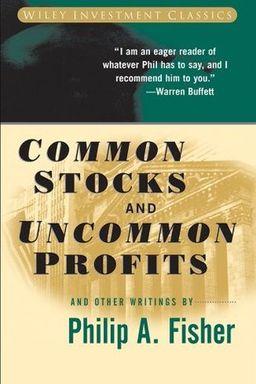
What separates ordinary investors from those who achieve enduring success? For Philip A. Fisher, the difference lies not in formulas or forecasts but in understanding the qualitative essence of businesses. In his landmark framework—expanded by his son Kenneth Fisher—he argues that superior returns come from deeply knowing a company’s people, products, and prospects better than the market does, then holding patiently while growth unfolds.
At the heart of Fisher’s method are two intertwined ideas: the "Fifteen Points", which define what makes a company outstanding, and "scuttlebutt", the practice of investigating those points in the field. Fisher’s philosophy is a blend of rigor and intuition—you learn to marry discipline with curiosity, numbers with human insight. Rather than speculate about markets or economies, you learn to study companies as living systems.
From Numbers to Narratives: The Core Argument
Most investors stop at financial statements, but Fisher contends that ledgers are snapshots—what really determines longevity are management integrity, innovation culture, and customer loyalty. Scuttlebutt transforms investing from a guessing game into detective work. You become a researcher: asking competitors, customers, and suppliers what they respect (or fear) about a firm. When you hear consistent praise from rivals or genuine admiration from customers, you’ve discovered something the market often underappreciates.
This fusion of rigor and curiosity reshapes the investor’s job: not predicting markets but understanding businesses before the crowd does. The Fifteen Points provide structure; scuttlebutt provides truth-testing. Together they form a template for identifying companies that can grow earnings and dividends for decades.
Building a Long-Term Perspective
Fisher’s philosophy is profoundly long-term. You buy only a handful of remarkable firms—companies that can expand through innovation, reinvestment, and durable advantages—and you let them compound. Market volatility, in his view, is background noise; time, not timing, compounds wealth. Hence his famous adage: “If the job was done correctly, the time to sell is—almost never.”
He warns that many investors sabotage themselves by selling winners too early or chasing cheapness without quality. Instead, you judge performance over years, not quarters—the Three-Year Rule forces patience and reflection. Short-term malaise is often just the prelude to long-term success, especially when product rollouts, plant expansions, or R&D investments are underway.
What to Buy and Why
The right companies combine wide market potential, effective R&D, strong sales organizations, healthy profit margins, and leaders of integrity. Fisher’s case studies—Texas Instruments, Du Pont, Motorola, Food Machinery, and others—show how these criteria translate into decades of growth. In each case, scuttlebutt revealed practical truths that financial statements obscured: management depth, culture, and operational agility.
Companies with disciplined reinvestment policies and trustworthy leadership achieve compounding in ways that mere high dividends cannot. Fisher encourages evaluating dividend restraint as a virtue when capital can earn superior returns internally. The measure of wisdom is not payout but intelligent capital deployment.
Risk, Diversification, and Conservatism
Fisher rejects the blanket notion that “more stocks equal safety.” Diversification, he argues, must fit the quality and character of the businesses. Through his A/B/C framework—large entrenched firms (A), mid-size growth plays (B), and speculative ventures (C)—he shows that true safety lies in knowing deeply, not owning broadly. A few excellent businesses studied in detail often protect you better than dozens followed superficially.
He broadens the definition of conservative investing: the most conservative move is not owning dull companies, but those with enduring people, processes, and products capable of long-term compounding. Firms like Motorola or Campbell Soup demonstrate how operational mastery and management continuity guard against inflation, competition, and volatility alike.
Character and Integrity: The Human Edge
Fisher elevates human qualities—integrity, teamwork, depth of management—to the same importance as margins or technology. The scuttlebutt process often exposes whether executives empower their teams or rule by ego. A company that trains, delegates, and renews its talent sustains innovation far better than one dependent on a single personality. Integrity, Fisher asserts, is not moral ornament but financial protection: it prevents insider abuse, accounting manipulation, and capital misallocation.
In essence, investing becomes both financial analysis and human anthropology. You learn to judge not just numbers but motivations, incentives, and relationships—the real levers of performance. Companies that foster trust and openness create compounding trust with shareholders too.
The Investor’s Discipline
Fisher ends with behavioral guardrails: avoid promotional fads, ignore macro forecasts, disregard minor price haggling, and don’t let elegant annual reports replace direct evidence. Think in decades, not in trading days. Measure opportunities by forward earnings potential rather than past prices—a perspective that keeps investors focused on business reality instead of market noise.
Philip and Kenneth Fisher together chart a complete system: find truth through scuttlebutt, judge quality through the Fifteen Points, diversify intelligently, buy on evidence not emotion, and hold with conviction. It’s a philosophy grounded in humility and persistence—the belief that patient, well-informed ownership of great businesses outperforms clever trading or fearful caution. For readers seeking lasting performance, Fisher’s lesson is enduring and simple: do the work, think long term, and trust quality more than price.