
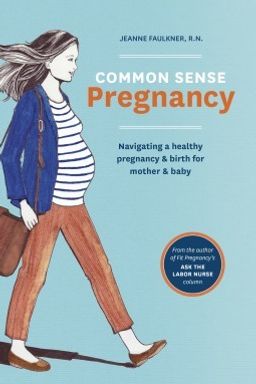
Common Sense Pregnancy cover

Common Sense Pregnancy

by Jeanne Faulkner

Common Sense Pregnancy provides essential guidance for expectant parents, covering everything from choosing the right healthcare support to maintaining a healthy diet. Empower yourself with insights on labor, pain management, and postpartum realities to navigate the journey of pregnancy with confidence and ease.

Common Sense Pregnancy: Reclaiming Birth with Knowledge and Confidence

What if pregnancy wasn’t a terrifying medical ordeal but a natural, empowering phase of life you could navigate with clarity, calm, and common sense? That’s the question Jeanne Faulkner challenges you to ask in Common Sense Pregnancy: Navigating a Healthy Pregnancy and Birth for Mother and Baby. Drawing from three decades as a labor and delivery nurse, writer, and maternal health advocate, Faulkner argues that modern American pregnancy culture—oversaturated with fear, medical intervention, and conflicting advice—has distanced women from their own instincts and power. Her mission is to restore that balance through evidence-based care and a good dose of no-nonsense wisdom.

At its heart, the book poses a simple but radical question: what if most pregnancies are not high-risk diseases to be managed, but ordinary biological processes that need care, support, and trust? Faulkner insists that informed women—backed by respectful healthcare providers—are best equipped to make decisions about their bodies and babies. But reclaiming that sense of control requires knowledge, flexibility, and common sense, not blind obedience to doctors or to social media influencers.

A Revolution Against Fear-Based Maternity Care

Faulkner paints a vivid picture of how fear became embedded in American obstetrics. Decades of litigation, insurance mandates, and defensive medicine turned birth into a series of risk-avoidance protocols rather than a physiological event. With nearly one in three births delivered by C-section—a rate she calls “out of control”—she calls for a cultural shift toward evidence-based, woman-centered care. Drawing on global maternal health data, she contrasts the U.S. with countries where midwives, not surgeons, attend the majority of low-risk births, and maternal outcomes are vastly better. (As she notes, the U.S. ranks around 60th worldwide in maternal health despite its wealth.)

Her antidote to fear is education. When women understand how their bodies work and what the risks and benefits of interventions truly are, she argues, they can make more collaborative choices. And when doctors and midwives replace paternalism with partnership, they not only protect mothers’ physical safety but elevate their emotional and psychological well-being.

Pregnancy as a Partnership Between Intuition and Information

Faulkner’s approach blends clear medical explanations with a deeply human touch. She doesn’t reject obstetrics—she’s worked in hospitals too long to romanticize unassisted births—but she wants women to see the full range of safe choices. Many complications, she notes, are rare; for most mothers, healthy habits, good prenatal care, and self-advocacy go farther than overtesting and intervention. “Making plans is good,” she writes, “but the best-laid plans require lots of flexibility and whopping doses of common sense.”

Through each stage—from deciding on a provider and birth plan to navigating labor, postpartum healing, and motherhood—Faulkner normalizes the messy realities and reassures women that the extremes of perfectionism and panic serve no one. She gives equal voice to physical wellness (nutrition, rest, exercise), mental health (processing fear and postpartum mood shifts), and social support (partners, doulas, friends, and community).

Real Stories, Real Parents, Real Solutions

What makes her writing stand out is its authenticity. Faulkner shares candid stories from years at the bedside: the nurse who whispered encouragement through a 24-hour labor, the mother who wrestled with disappointment after an unplanned C-section, the couple mourning a stillbirth yet comforted by a cook’s unexpected act of kindness. These stories reveal that birth isn’t a test of will—it’s a human experience filled with courage, loss, humor, and grace. By grounding statistics in real people, she bridges the gap between science and the soul of childbirth.

In tone, Faulkner resembles a mix of Ina May Gaskin’s faith in women’s bodies and Atul Gawande’s clear-eyed view of medicine. She acknowledges modern obstetrics saves countless lives, especially in high-risk pregnancies, but she also exposes how hospital routines—like unnecessary inductions and restricted movement during labor—can undermine safe and satisfying births. Her plea is not anti-medical but pro-balance: let evidence and empathy coexist.

Why Common Sense Matters Now

Modern mothers are bombarded by conflicting voices: the Internet’s flood of advice, media’s dramatized births, and society’s unrealistic expectations of mothers who “have it all.” Faulkner’s common-sense framework restores sanity. It encourages you to replace guilt with grace, competition with community, and fear with informed trust. Whether you plan to deliver in a hospital, birth center, or at home, she insists the end goal is the same: a safe, supported, and emotionally healthy transition into motherhood.

Ultimately, Faulkner’s book is both a manual and a manifesto. It invites women to become active participants in their own care, to question cultural myths, and to reimagine pregnancy as something profound and joyful rather than clinical and cold. With warmth and practicality, she reminds you that birth is not a problem to be solved—it’s a story you write with your body, your baby, and your choices.


Choosing Care That Honors You

One of the book’s most transformative insights lies in how you choose your care provider. Faulkner walks you through the spectrum—from obstetricians to midwives to family physicians—and reveals how each model carries different priorities. The U.S., she writes, has inverted the system: 92% of low-risk mothers see specialists trained for high-risk cases. In contrast, countries with the best maternal outcomes let midwives handle normal pregnancies and reserve obstetricians for complex cases.

Midwives, Obstetricians, and the Fear Factor

Faulkner debunks the myth that choosing a midwife means rejecting modern medicine. Midwives are not fringe alternatives; they’re experts in normal birth. She draws on research from the American College of Nurse-Midwives showing midwifery-led care produces fewer cesareans, fewer birth injuries, and higher maternal satisfaction. Yet U.S. women are often funneled toward surgery-based care by routine hospital policies and doctors’ fears of litigation.

Faulkner encourages realistic planning. If you’re at low risk, midwives or family doctors often provide the most holistic, time-intensive support. If you’re high risk—say, with hypertension or twins—obstetricians and maternal-fetal specialists are essential. What matters most, she insists, is choosing someone who listens and partners with you rather than commanding obedience. She warns that even the most prestigious title means little if your provider treats birth like an emergency waiting to happen.

Where You Give Birth Shapes How You Give Birth

Faulkner’s pragmatic take on birth settings mirrors her philosophy: no universal “best place,” only what’s best for your health, risk level, and comfort. Roughly 99% of U.S. births occur in hospitals, but she explores the growing appeal of birth centers and home births for women seeking calmer, lower-intervention environments. Studies show that for healthy women, these alternatives are as safe as hospitals—with far fewer C-sections.

Still, she offers no illusions: safety depends on qualified attendants, good backup plans, and proximity to emergency care. She describes European systems like the Netherlands, where seamless hospital transfers coexist with a strong home birth culture—an integration the U.S. lacks. Her advice? Choose a setting that balances your comfort and safety, not one dictated by fear or trendiness.

The Doula Equation

Faulkner also analyzes the rise of doulas—trained companions who provide emotional and physical support during labor. She praises their role in reducing interventions and boosting satisfaction but warns against “agenda-driven” doulas who create tension with medical staff. Her vision is cooperative care: nurses, midwives, doulas, and doctors working in sync to support mothers, not compete for control. In short, your care team should empower—not overwhelm—you with options and empathy.


Education and Flexibility: Building a Realistic Birth Plan

Faulkner believes information is a woman’s greatest tool, but it’s the combination of knowledge and adaptability that makes birth smoother. In her words, “The more you know, the better equipped you’ll be to be a good partner in your own birth.” Prenatal education, she argues, has shifted from empowering women to preparing compliant patients. Her goal is to return learning to its roots—so you walk into labor informed, confident, and flexible.

From Fear to Familiarity

She traces childbirth education’s evolution—from 1970s natural-birth classes that taught breathing and relaxation to today’s hospital sessions heavy on epidural and procedural details. Both have value but miss the middle ground. Independent courses like Lamaze and HypnoBirthing, she notes, still prioritize mind-body connection and self-trust. Faulkner urges women to sample multiple traditions and tailor their preparation to their personalities, pain tolerance, and circumstances. “Labor isn’t a performance,” she reminds you—it’s a collaboration between your body and your mind.

Writing a Birth Plan That Breathes

Birth plans are a double-edged sword: they help clarify priorities but can also create rigidity. Faulkner’s advice—treat them like compass points, not contracts. She’s seen too many mothers devastated when their “no-epidural” or “no-IV” ideals crumbled under real pain or medical necessity. Her best plans are humble, flexible, and built on communication: “We’d prefer…unless medically necessary.” That phrase, she says, opens doors for respect on both sides of the hospital bed.

Faulkner encourages couples to review interventions in advance—induction, epidural, fetal monitoring—so they know both the risks of doing them and of not doing them. A grounded plan empowers you to choose wisely when things change. In the end, she reveals, the most powerful word in labor isn’t “yes” or “no”—it’s “why?”


Pain, Power, and the Reality of Labor

In Chapter 10, Faulkner tackles a question most pregnancy books dodge: how bad is labor, really? Her short answer—pretty bad, but survivable. She’s honest: “For the vast majority of women, labor is painful. More painful than anything else.” Yet she reframes that pain not as suffering but as participation in a profound physical event. Instead of promising a pain-free birth, she gives you practical tools to balance pain with power.

Three Paths to Pain Relief

She organizes pain management into a spectrum: natural coping, intermittent medications, and epidurals. No one method is morally superior—they’re just tools. Natural methods (breathing, warm baths, movement, massage, meditation) keep labor active and instinctive. Narcotic pain meds offer temporary relief but can sedate both mother and baby. Epidurals, used by about 65% of U.S. mothers, are highly effective yet can slow labor and limit mobility. Faulkner demystifies the epidural process step-by-step, turning fear into informed choice. She admits she’s administered thousands of epidural patients and seen both miracle relief and complications, from hypotension to prolonged labor. “You’re not a wimp if you ask for one,” she assures the reader, “and you’re not a hero if you don’t.”

Cultural Comparisons and Unmet Potential

Why do U.S. women turn to epidurals more than others? Faulkner points to missing middle-ground options: nitrous oxide (laughing gas) and hydrotherapy are common in Europe but rare in American hospitals. She advocates reintroducing these moderate interventions to diversify pain control choices. (In the U.K., only 30% of women use epidurals, largely thanks to such options.) By widening the pain-management toolkit, she believes, women can rediscover agency and comfort without judgment.

Ultimately, Faulkner insists that coping with pain is as much emotional as physical. Supportive partners, respectful providers, and realistic expectations all lessen suffering. Labor hurts, she says, but it need not terrify. When women are “coached” by care teams who trust them, pain transforms into courage, not trauma.


The Postpartum Shift: Healing Body and Mind

Most pregnancy guides end with delivery. Faulkner refuses to stop there. She calls postpartum the ‘fourth trimester’—a critical, messy, transformative stage when your body, hormones, and identity recalibrate. In “Processing and Healing Postpartum,” she provides what new mothers rarely get: candid, compassionate instructions for recovery.

Physical Recovery Without Perfectionism

Whether you deliver vaginally or via C-section, Faulkner outlines what’s normal (bleeding, swelling, soreness) and what’s not (foul odor, fever, persistent pain). She shares clever, nurse-tested remedies—frozen pads, warm baths, stool softeners—and stresses that rest, not resilience, is the real hero of healing. Unlike American culture, which rushes women back to productivity within six weeks, she praises cultures that dedicate a full month to maternal rest. “You made a human,” she writes. “That’s your job right now.”

Naming the Emotional Roller Coaster

Faulkner speaks openly about postpartum mood swings, anger, numbness, and depression. She weaves stories of women blindsided by their lack of joy after birth, normalizing the experience rather than pathologizing it. Her advice: don’t wait to hit rock bottom before asking for help. Sleep deprivation and hormonal chaos can mimic depression, but persistent despair deserves professional care. “Whatever you need to stay afloat,” she reassures, “you deserve it.”

Perhaps her most radical point is compassion: you don’t have to be an ideal mother immediately. Healing is nonlinear. Motherhood is learned. The same common sense that guided pregnancy—trust your body, ask for help, stay flexible—applies here too.


Navigating Grief and Resilience After Loss

In a powerful appendix titled “When a Baby Dies,” Faulkner addresses the unthinkable with unwavering grace. Too few pregnancy books make room for grief, but she insists it’s part of the broader maternal story. Through hospital scenes and one extraordinary act of kindness—a cook delivering food adorned with white roses—she reveals that healing often begins not with answers but with presence.

She provides both data and empathy: stillbirth affects 1 in 160 pregnancies; neonatal mortality remains higher in the U.S. than in many nations. But she resists statistics as comfort. Instead, she offers practical guidance for families: hold the baby, keep mementos, don’t rush goodbye, and let others help. “Show up,” she urges friends and partners. “Not once, but for a long, long time.”

Her message transcends tragedy: even amid loss, kindness—whether from professionals or strangers—can restore humanity to medicine. In this, her philosophy circles back to the book’s core: pregnancy and birth are not just medical events. They’re human stories that demand compassion as much as competence.


Feeding Without Judgment: Redefining Success

By the book’s final chapters, Faulkner turns to one of the most divisive issues in motherhood: breastfeeding vs. bottle-feeding. Her take? “Breast is best—except when it’s not.” Having breastfed three children and formula-fed her fourth while battling cancer, she dismantles the moral hierarchy surrounding infant feeding. A good mother is not defined by how she feeds her baby but how she loves and sustains herself in the process.

Support Over Stigma

Faulkner acknowledges breastfeeding’s unmatched biological benefits yet notes that real-life barriers—pain, infection, work constraints—often derail even motivated moms. Her advice bridges idealism and realism: get lactation help early, lean on community, and forgive yourself for imperfection. For working mothers, she celebrates the 2010 U.S. law requiring employers to provide pumping space and breaks, reframing it as a right, not a privilege.

Breast. Bottle. Both. Enough.

Her most disarming line—“You don’t owe anyone an explanation for how you feed your baby.” Against the backdrop of mommy wars and Instagram comparisons, she argues for empathy over evangelism. Feeding is one more way to choose love over judgment—the same principle she applies to every aspect of parenting. In that sense, milk becomes metaphor: whether from breast or bottle, nourishment matters most when it flows from compassion.

Dig Deeper

Get personalized prompts to apply these lessons to your life and deepen your understanding.

Go Deeper

Get the Full Experience

Download Insight Books for AI-powered reflections, quizzes, and more.