
Idea 1
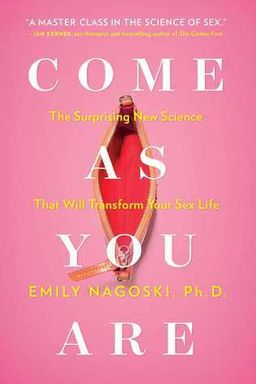
Come As You Are: The Science of Sexual Wellbeing
What if nothing about you was broken? That’s the radical idea at the heart of Emily Nagoski’s Come As You Are. Drawing on decades of sex research, Nagoski argues that most sexual distress—especially for women—comes not from biology but from context, culture, and misinformation. When you understand how your body and brain actually work, you can stop comparing yourself to unrealistic ideals and begin to build a sexual life worth wanting.
The book is both a scientific synthesis and an emotional guide. It reframes desire, arousal, orgasm, and body image not as moral or medical failures, but as variations of a healthy system responding to its environment. The central insight: you were born with all the same parts, just organized differently. Cultural shame, stress, and mismatched contexts are what often distort your experience of pleasure.
All the Same Parts, Organized Differently
Every human body starts with the same embryonic structures. Hormones later organize them into different configurations, meaning the clitoris and penis, labia and scrotum, are biological siblings. Realizing this dispels categories of defect and difference. For characters in Nagoski’s stories, like Olivia and Merritt, learning accurate anatomy becomes liberation: Olivia weeps with relief seeing her clitoris in the mirror, understanding there’s no “wrong” shape or size. Merritt finds empowerment by exploring with her partner’s support. These vignettes capture the shift from shame to agency that accurate knowledge allows.
Context Is Everything
Desire is never a static trait—it’s contextual. Nagoski introduces the Dual Control Model from the Kinsey Institute: your brain has a sexual “accelerator” that notices turn-ons and “brakes” that detect threats. Turn-ons and turn-offs don’t cancel each other—they coexist. Some people have sensitive brakes, others sensitive accelerators, but the mechanism is universal. Mismatched desire between partners often stems from contextual brake activation—stress, distraction, fear—not from incompatibility. Understanding this replaces blame with strategic compassion: you stop pushing the gas harder and instead release the brakes.
Responsive Desire and Arousal Nonconcordance
Most people expect spontaneous desire, the Hollywood version where lust appears uninvited. But many experience responsive desire, where desire follows rather than precedes pleasure. This revelation matters: it’s not low libido—it’s normal physiology. Related is arousal nonconcordance—the mismatch between genital response and subjective desire. Women’s genital blood flow often reacts automatically to sexual cues without emotional wanting: being wet doesn’t mean wanting sex, and dryness doesn’t mean rejection. Understanding this rescues countless people from unnecessary shame and dangerous myths like “her body said yes.”
Culture, Stress, and Attachment
Culture loads the sexual operating system with viruses: moralistic purity codes, medical pathologizing, and media distortion. These messages train disgust, not desire, and turn genitals into sources of shame. Stress adds another layer—it activates survival mode, hitting the brakes on arousal. Nagoski teaches that you must complete the stress cycle through movement, crying, or laughter to restore your body’s capacity for pleasure. Attachment—the system linking love and safety—can either nourish sex or distort it, especially when threatened. Healing means integrating love, trust, and safety into sexual contexts.
Pleasure as the Measure
Orgasm isn’t a moral hierarchy or achievement. The only valid metric of “good sex,” Nagoski insists, is pleasure. There’s no superior way to orgasm—clitoral, vaginal, multiple, or none. What matters is how safe, curious, and embodied you feel. She compares sexual pleasure to a flock of birds: multiple systems—stress responses, attachment, arousal, curiosity—move together. When all fly toward joy, sex becomes transcendent. But if some birds (like stress or disgust) fly away, desire evaporates. Rather than fixing any one bird, you bring the flock into sync by changing contexts and tending your body gently.
From Knowledge to Joy
Psychological liberation requires both confidence (knowing what’s true about your body) and joy (loving that truth). Nagoski’s final invitation—love what’s true—asks you to mourn the old “shoulds,” accept your real patterns, and practice nonjudging self-compassion. Using tools like mindfulness, mirror work, and “hedgehog communication,” you can reshape your inner narrative and emotional context so that pleasure feels safe again.
Core idea
Your sexual wellbeing isn’t about fixing your body—it’s about understanding its logic. When you align context, compassion, and accurate information, you reclaim agency and discover that you were already whole.