
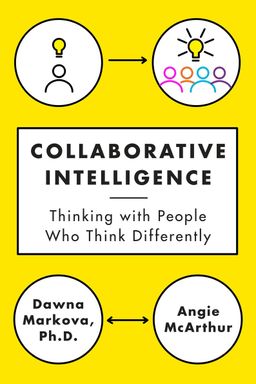
Collaborative Intelligence cover

Collaborative Intelligence

by Dawna Markova, PhD and Angie McArthur

Collaborative Intelligence unveils strategies to tap into your unique cognitive strengths and improve teamwork. By understanding diverse thinking styles and balancing competitive and collaborative mindsets, this guide empowers you to excel in today''s idea-driven economy.

The Promise of Discovery in Reading

When was the last time you felt truly captivated by a book — one that not only entertained you but transformed how you think? The essence of Discover Your Next Great Read lies in this very question. The premise is simple yet profound: reading isn’t just about consuming stories, it’s about discovering new dimensions of yourself. In an era flooded with content, the book argues that the key to rediscovering the joy of reading is to approach it as a journey rather than a checklist. Every page turned is a step toward self-understanding, creative enrichment, and emotional connection.

At its core, the author contends that discovering your next great read is about aligning your curiosity with deliberate exploration. It’s not simply following what’s popular or algorithmically recommended, but learning how to listen to the kinds of stories, voices, and perspectives that resonate with you personally. The book introduces practical strategies for identifying what kinds of narratives spark your imagination, for curating reading lists that feel uniquely yours, and for finding community among fellow readers who help amplify those discoveries.

The Value of Intentional Reading

The author emphasizes that reading intentionally helps you cultivate perspective in an age of shallow scrolling. When you choose books with thoughtfulness — guided by curiosity instead of convenience — you begin to rediscover the immersive power of literature. This approach isn’t about quantity, but quality. You may read fewer books, but those you do read will stay with you longer. Just as Marie Kondo talks about joy in minimalism, this book urges readers to experience joy in selectiveness. One great book can reshape your worldview more than dozens of forgettable ones.

From Recommendation to Resonance

The book also dives into how recommendations can often feel impersonal or repetitive. Instead, true discovery happens when you move beyond conventional categories and start exploring genres or authors outside your comfort zone. Personal resonance emerges when you find writing that mirrors your emotions, ambitions, or questions. The author suggests creating a journal or digital tracker of impressions — jotting down sentences or themes that moved you. Over time, these notes reveal hidden patterns about what you truly value in a story.

Connecting Through Stories

At a deeper level, this work stresses that reading isn’t solitary; it’s communal. By discovering new books, you’re also building bridges between yourself and others who love those same worlds. Whether you join an online reading forum or attend a live book club, the exchange of interpretations enriches your understanding. The author draws parallels to social theorists who have studied storytelling as a form of social currency—shared narratives that bind individuals and shape collective identity (as seen in Benedict Anderson’s concept of “imagined communities”).

Why This Matters

Ultimately, Discover Your Next Great Read invites you to rekindle curiosity at a personal level. Reading widely, and with intention, can deepen empathy, unlock creativity, and nurture lifelong learning. In an overstimulated world, books remain sanctuaries — places you go not just to escape but to connect. The author’s contention is clear: discovering your next great read isn’t a one-time event; it’s a mindset of continuous exploration. Every new page can become an invitation to rediscover joy, depth, and purpose — qualities that we often forget in the rush of daily life.


The Art of Curating Your Reading Life

The book encourages you to treat your reading life like a curated art collection — deliberate, reflective, and deeply personal. The author explains that building a meaningful reading list requires understanding what you want to learn, feel, and experience. When you know that, you can choose books that fit those intentions rather than chasing trends or recommendations that don’t align.

Know Your Reading Identity

Start by mapping your reading identity: what genres, topics, and voices have always drawn you in? Which ones have challenged you or left lasting impressions? For example, if you’re fascinated by human psychology, memoirs and case studies may bring more fulfillment than thrillers. This introspective exercise parallels the ‘why’ phase of Simon Sinek’s Start with Why — understanding your purpose before diving into action.

Balance Familiarity and Adventure

Curating your reading list also involves a balance: combine comfort reads with adventurous picks. Familiar genres can stabilize you, while new ones challenge your thinking. The author shares stories of readers who discovered unexpected passions by trying historical novels or translated works. Reading outside your norm can even improve empathy, as it exposes you to worlds that feel distant yet human.

Create a Dynamic Reading Ecosystem

Finally, the author suggests viewing your reading list as dynamic — not static. It should evolve as you do. Rotate between fiction and nonfiction, mix short stories and long sagas, pair classics with contemporary voices. This flexibility allows your reading experience to breathe and grow organically. It’s like gardening: the soil of your mind grows richer with each seed of perspective you plant.


The Joy of Slow Reading

In a world obsessed with speed, this book reminds you of the serenity found in slow reading. The author argues that savoring a book—pausing to reflect, rereading passages, and letting ideas settle—can deepen comprehension and emotional resonance. Unlike binge-reading or speed scrolling, slow reading transforms the act of reading into mindful meditation.

Depth Over Volume

Too often readers measure success by quantity — how many books they’ve finished. The author flips this mindset, showing how one book deeply studied can teach more than dozens skimmed. Like close reading taught in literature courses, you can engage with texts analytically and emotionally, underlining sentences that strike you or writing notes on character motivations.

Presence in Reading

The author evokes examples of ancient scholars who read slowly by candlelight, seeing reading as sacred practice. Their patience yielded wisdom still referenced today. As modern readers, adopting this pace invites a quieter, more attentive state of mind. You’re not only reading words—you’re listening to what they echo inside you.

Building Lifelong Reading Rituals

Slow reading is also about ritual. Create environments conducive to focus: cozy corners, evening quiet hours, or digital-free weekends. These rituals turn reading into a habit of self-care. As the author puts it, a single undistracted hour with a good book can restore balance to your week—an act of intentional stillness amid chaos.


Books as Mirrors and Windows

The author uses a compelling metaphor to describe books as both mirrors and windows. Mirrors reflect aspects of ourselves that we might not otherwise see, while windows allow us to view perspectives outside our experience. This dual function makes reading an act of self-reflection and empathy.

Reading for Self-Discovery

Mirror books show you your own thoughts, fears, and aspirations through someone else’s story. They help you articulate what you believe and question assumptions. Memoirs, relatable novels, and philosophical texts often serve this purpose. The author recounts how one reader found clarity in reading Viktor Frankl’s Man’s Search for Meaning during a personal crisis—it reflected the resilience she needed.

Reading for Perspective

Window books expand empathy by immersing you in unfamiliar worlds—different cultures, eras, and ideologies. These texts challenge biases and reveal shared humanity. When you experience life through these windows, your worldview widens and your compassion deepens.

Balancing Both Views

The most enriching reading experience combines mirrors and windows. Read what reveals yourself, and what reveals others. It’s through this duality that literature fulfills its purpose: connecting individual reflection with collective understanding.


Finding Community Through Stories

This book powerfully asserts that reading is a communal act. Even when you read alone, you’re participating in centuries of dialogue between authors and readers. The discovery of great reads becomes richer when shared — whether through online discussions, book clubs, or even friendly conversations.

Shared Reading Creates Shared Meaning

By talking about books, you uncover interpretations you might never reach alone. Discussion deepens comprehension and reveals multiple angles to truth. This collaborative dimension echoes the Socratic method, where dialogue builds wisdom through collective inquiry.

Digital Communities and Global Conversations

The author also embraces technology’s role in reimagining reading as a global interaction. Platforms like Goodreads or Reddit’s book circles allow cross-cultural exchanges that make reading borderless. When stories travel digitally, empathy travels too.

Connection Beyond the Page

In the end, every shared read becomes a shared identity: we connect over words and worlds. The author affirms that discovering your next great read is not only about finding the right book but also about finding the right people who help you see it differently.

Dig Deeper

Get personalized prompts to apply these lessons to your life and deepen your understanding.

Go Deeper

Get the Full Experience

Download Insight Books for AI-powered reflections, quizzes, and more.